
Last updated October 30, 2026
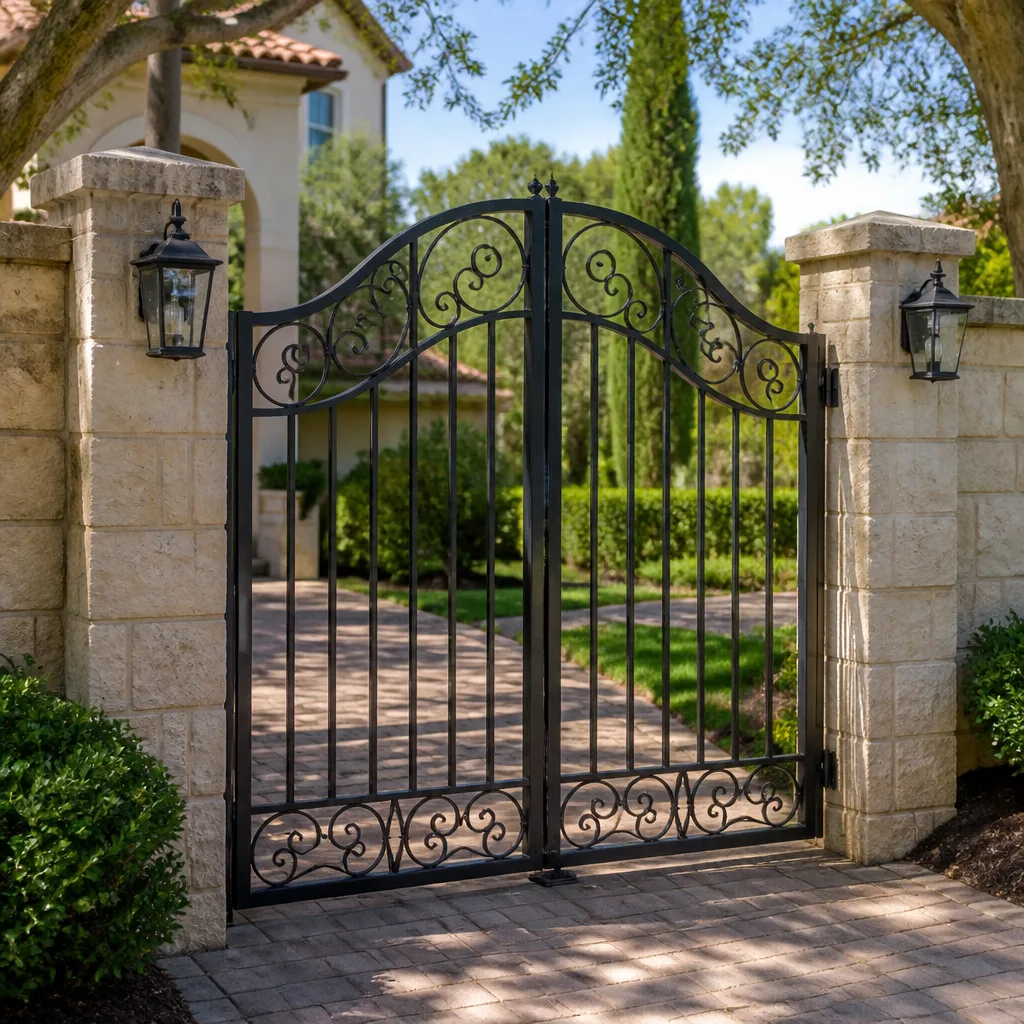 Wrought iron
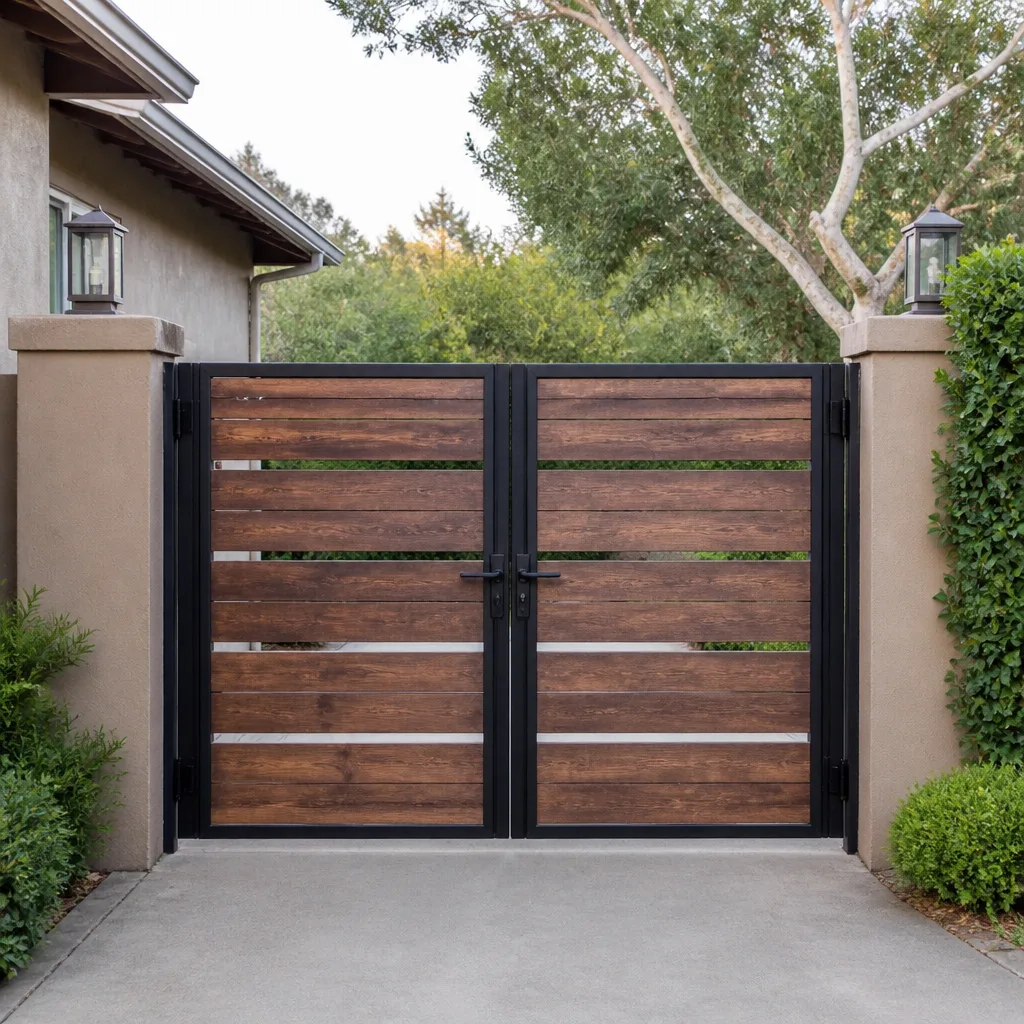 Wood & steel frame
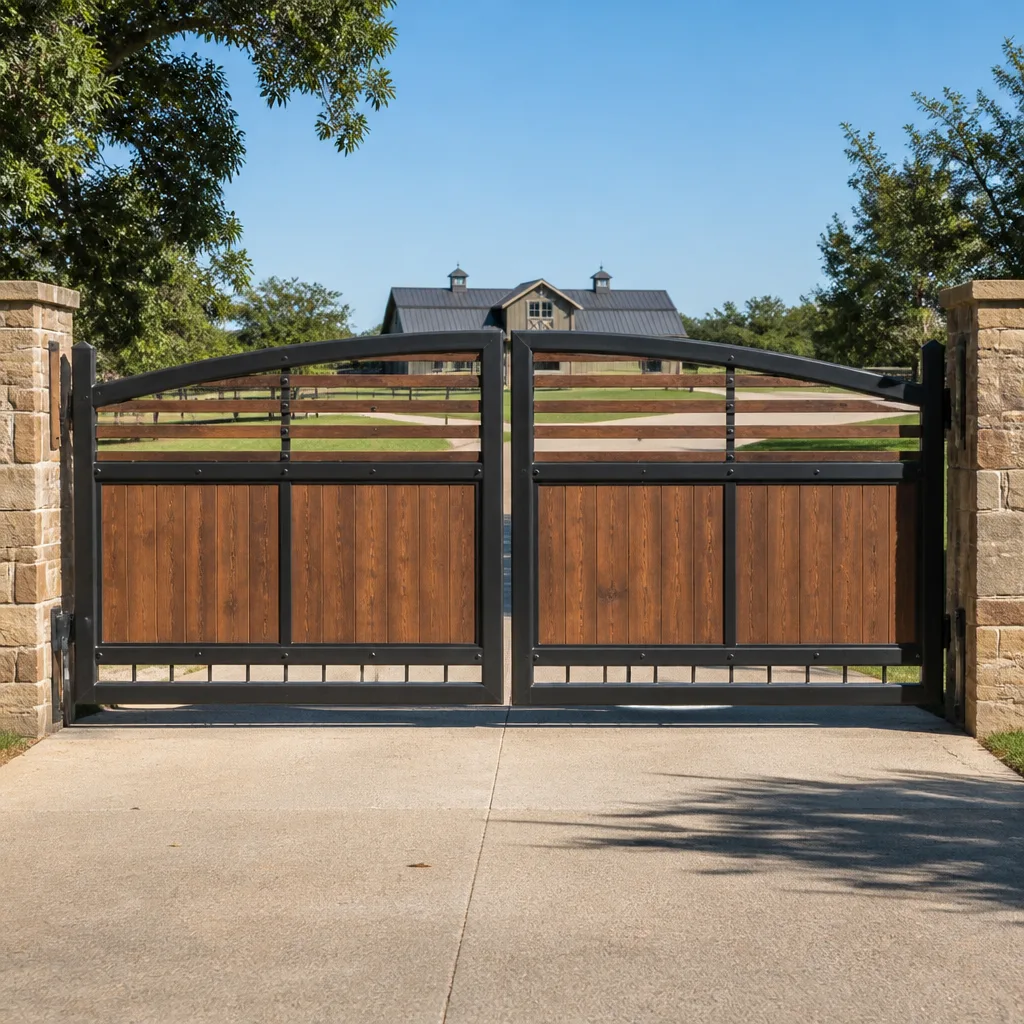 Farm & ranch
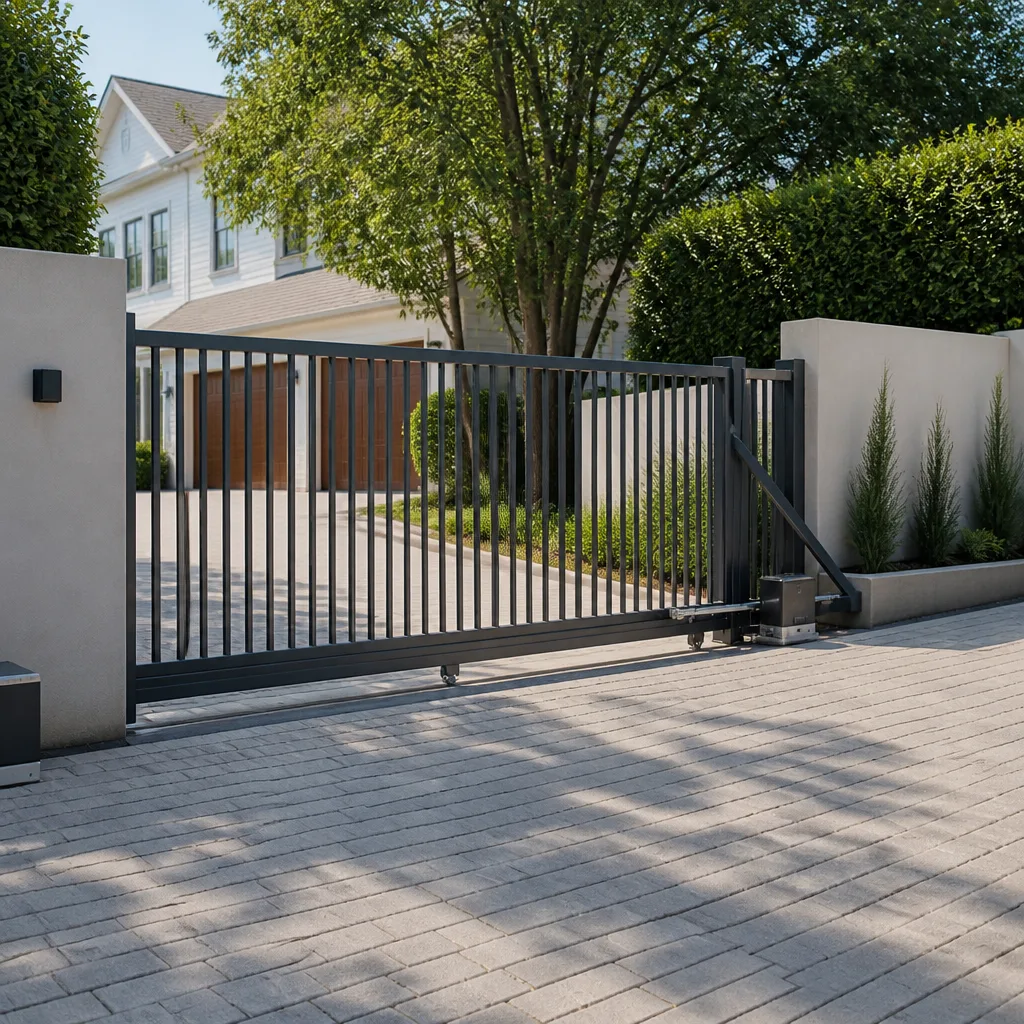 Sliding driveway gates
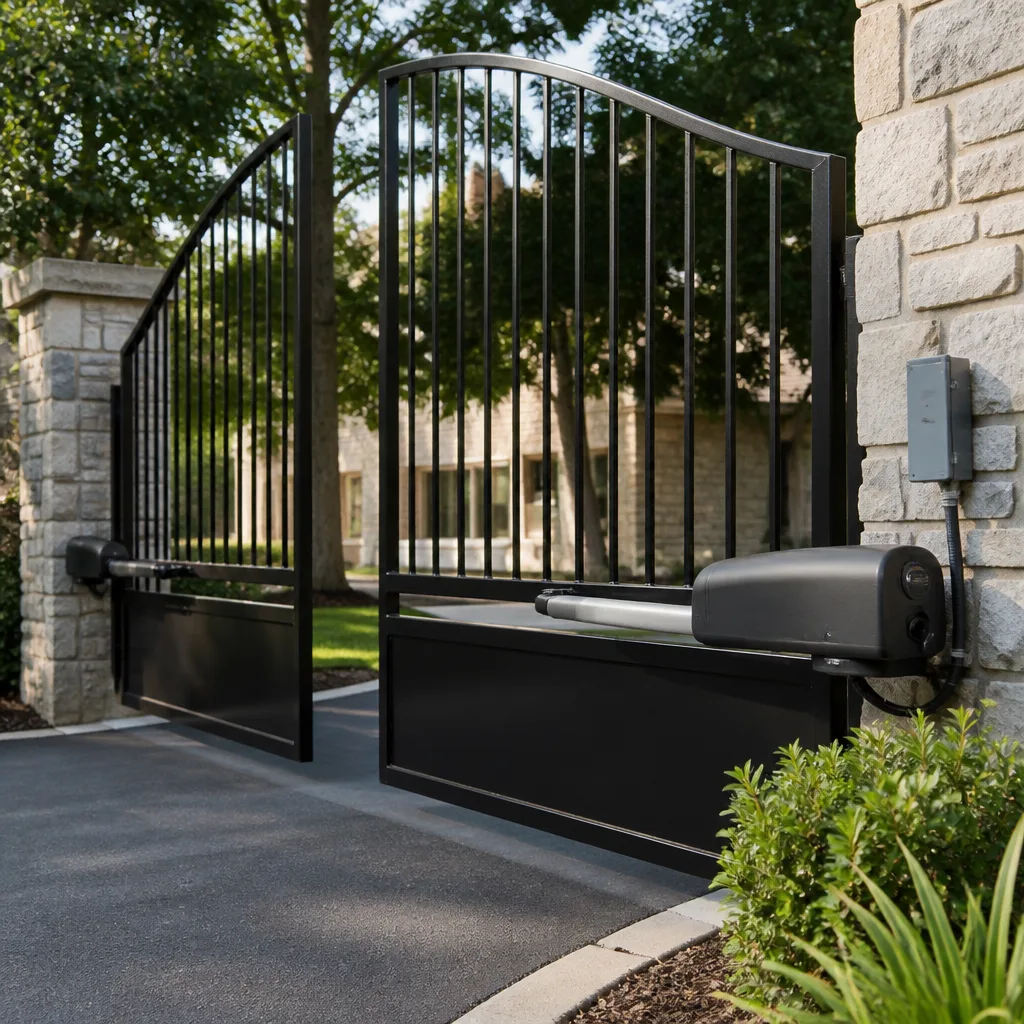 LiftMaster operators
Free on-site gate assessment - hinges, posts, and your LiftMaster or Nice gate operator checked before anything is quoted
The assessment is free and the quote is the invoice.
Get your free estimateGate Repair Permits, Codes & Inspections in CA: What You Need to Know
An automatic gate installed without a UL 325 compliant entrapment protection system is not just a code violation in California – it’s a documented liability if someone is injured, regardless of whether it was installed before the rule took effect. Most homeowners in Riverside don’t realize their gate’s safety features are governed by a national standard that California enforces through its building codes, and the enforcement gap between city and county jurisdiction catches people off guard every month. This guide cuts through the confusion. You’ll learn exactly when a gate repair triggers a permit in Riverside, what inspectors actually check, how entrapment protection standards work, and what to do when you discover your gate was never permitted in the first place. For more detail, see our Gate Repair Warning Signs: A Riverside Homeowner’s Reference Guide.
Quick Answer
Most gate repairs in California do not require a permit – replacing a motor, control board, hinges, or safety sensor is classified as routine maintenance. If you’re unsure whether your issue qualifies, our Gate Repair services include a compliance check with every call. However, new gate installations, relocating a gate, changing its swing direction, or adding an automatic operator to a previously manual gate generally require a permit from your local building department. Entrapment protection compliant with UL 325 is mandatory on every automatic gate, regardless of permit status, and non-compliant gates create real liability exposure even if the gate passed inspection years ago.
Styles & brands we work with
Table of Contents
- When a Gate Repair Triggers a Permit in California
- Maintenance vs. Repair: The Line That Matters
- UL 325 Entrapment Protection: What California Requires
- Riverside City vs. Riverside County: Two Different Rulebooks
- What a Gate Inspection Actually Covers
- Unpermitted Gate from a Previous Owner: The Compliance Path
- Insurance Claims and Real Estate Disclosures: What Non-Compliance Costs
- Common Mistakes to Avoid
- When to Call a Professional
- Frequently Asked Questions
When a Gate Repair Triggers a Permit in California
California’s building code framework treats gates like any other structure attached to or adjacent to a property, but the permit trigger points are narrower than most people assume. The California Building Code (CBC) and California Residential Code (CRC) require permits for work that affects structural elements, electrical systems, or life-safety components. For gates, that translates into a clear set of rules.
A permit is generally required when you are:
- Installing a new gate where none existed before, whether manual or automatic
- Relocating an existing gate to a new position on the property
- Changing the gate’s operation – for example, converting a swing gate to a slide gate, or changing a manual gate into an automatic one
- Modifying structural support – replacing gate posts, pouring new concrete foundations, or changing load-bearing hardware
- Running new electrical service to power an automatic gate operator where no dedicated circuit exists
A permit is typically NOT required for:
- Replacing a failed motor or operator on an existing automatic gate
- Swapping out a control board or logic board on an existing system
- Replacing safety sensors like photo eyes, edge sensors, or loop detectors
- Replacing hinges, rollers, or track hardware without altering the gate’s structure
- Adjusting limit switches, closing force, or timing settings
In Riverside specifically, we’ve seen the same scenario play out dozens of times: a homeowner buys a property with a manually operated driveway gate, then installs a Viking or Ghost Controls operator kit from a big-box store. No permit, no inspection, no problem – until the gate closes on a delivery vehicle or a child’s bike. That’s when the liability conversation starts, and it’s a conversation no one wants to have after the fact. The installation should have triggered a permit because it converted a manual gate into an automatic system, which brings it under the entrapment protection rules in UL 325.
The practical takeaway is simple: if you’re fixing what’s already there, you’re likely in maintenance territory. If you’re changing what the gate is or how it operates, you’re in permit territory. When the line is blurry, call your local building department before starting work, not after.
Maintenance vs. Repair: The Line That Matters
The distinction between maintenance and repair is where Riverside property owners most often get tripped up, and it’s a distinction with real financial consequences. The California Building Code defines maintenance as work that restores a system to its original, code-compliant condition without altering its configuration, capacity, or operation. Repair, by contrast, involves replacing components that may change how the system functions or performs.
Here’s how that plays out in the real world:
- Motor replacement on an existing automatic gate: This is maintenance. You’re restoring the gate to its original operating condition. No permit needed, even though a technician is working on the electrical system – because the circuit, the operator, and the gate’s configuration aren’t changing.
- Adding a motor to a manual gate: This is a modification, not maintenance. It requires a permit because the gate’s operation fundamentally changes, and the new configuration must meet current entrapment protection standards.
- Replacing a sliding gate’s track and rollers with identical components: Maintenance. The gate’s structural configuration isn’t changing, and you’re returning it to original condition.
- Replacing a swing gate’s hinges with heavier-duty hardware to support a new, heavier gate leaf: This drifts into repair or modification territory. If the new hardware changes the gate’s structural load path, the building department may want to review it.
- Reprogramming a BFT or Linear control board after a power surge: Maintenance. No physical configuration change, no permit.
One area where Riverside homeowners get burned: replacing an old swing gate operator with a different brand or model that has higher torque output. The building department can take the position that the new operator changes the gate’s operational characteristics enough to require a review – particularly if the original installation was permitted under an older code cycle and the new operator must comply with a newer UL 325 standard.
Our rule of thumb from working on gates across Riverside: if the repair returns the gate to how it worked before, you’re in maintenance territory. If the repair changes how the gate works, how much force it applies, or how it’s mounted, call the building department and ask. A ten-minute phone call beats a stop-work order or a failed inspection on a home sale.
UL 325 Entrapment Protection: What California Requires
UL 325 is a national safety standard published by Underwriters Laboratories that governs automatic gate operators. California enforces it through the California Building Code, which references UL 325 as the governing standard for gate operator safety. The standard’s core requirement is simple: every automatic gate must have two independent forms of entrapment protection on every edge, pinch point, and opening. That’s “independent” in the engineering sense – if one system fails, the second must still prevent injury.
For swing gates, that typically means:
- Contact sensors – edge sensors mounted on the gate leaf or the gate frame that trigger reversal when they detect physical contact with an obstruction
- Non-contact sensors – photo eyes or infrared beams that detect a person or object in the gate’s path before contact occurs
- Inherent obstruction detection – the operator’s built-in ability to sense resistance and reverse the gate, which is mandatory even when external sensors are present
For slide gates, the requirements are stricter because the entrapment risk is higher. A sliding gate moving across an opening can trap someone against a fixed wall, pillar, or vehicle. UL 325 requires slide gates to have:
- Photo eyes mounted on both sides of the gate opening, wired to detect obstructions across the full travel path
- Edge sensors on the leading and trailing edges of the gate leaf
- Contact sensors on any fixed object within the gate’s closing path that could create a pinch point
- Operator-mounted obstruction detection with sensitivity settings calibrated to the gate’s size and weight
Here’s the part most homeowners miss: UL 325 compliance is not a one-time event. Sensors drift, wiring corrodes, edge sensors degrade in Riverside’s summer heat, and control boards lose their calibration settings over time. A gate that met the standard when it was installed in 2015 may be non-compliant today because a photo eye fell out of alignment or an edge sensor’s rubber casing cracked and failed. That’s why a gate safety inspection should be part of any repair call – and why a technician who skips it isn’t doing the job right.
The entrapment protection rules apply to every automatic gate in California, not just new installations. The standard has been in effect since 2000, and gates predating it are still subject to the liability framework that UL 325 creates. In a personal injury lawsuit, a plaintiff’s attorney will ask one question: was the gate equipped with entrapment protection that met the standard at the time of the injury? If the answer is no, the property owner’s exposure is severe. This is the reason we treat UL 325 compliance as the baseline for every electric gate repair in Riverside, not an optional add-on.
Riverside City vs. Riverside County: Two Different Rulebooks
Riverside County and the City of Riverside operate as separate permitting jurisdictions, and their requirements for gate work differ in ways that matter. If your property address says “Riverside, CA” but you’re outside the city limits – think unincorporated areas like Woodcrest, Home Gardens, or parts of La Sierra – you’re under the County’s permitting authority. If you’re inside city limits, the City’s building department governs. The two bodies enforce similar state codes, but their inspection processes and fee structures vary.
City of Riverside Gate Permit Requirements
The City of Riverside Building and Safety Division requires permits for new gate installations, gate relocations, manual-to-automatic conversions, and structural modifications. The city’s inspectors typically check three things on a gate permit:
- UL 325 entrapment protection verification – the inspector will operate the gate through its full cycle and verify that both contact and non-contact sensors are present and functioning
- Electrical work compliance – the power supply to the gate operator must meet the California Electrical Code, including proper grounding, conduit where required, and a dedicated circuit for the operator
- Structural adequacy – gate posts must be set to a depth appropriate for Riverside’s soil conditions, which in many parts of the city means accounting for expansive clay that shifts with moisture levels
Riverside County Gate Permit Requirements
Riverside County’s Building and Safety Department handles unincorporated areas, and its gate permit process is similar but not identical. County inspectors place more emphasis on setback compliance and sight-distance requirements at driveway entrances, particularly on county-maintained roads. A gate set too close to the road edge can obstruct visibility for drivers and pedestrians, and the county will flag it. County permits also typically require a driveway approach plan when the gate installation affects the driveway apron or adjacent right-of-way.
The practical difference for Riverside property owners is this: if you’re in the city and your gate sits at the end of a short driveway on a residential street, the city inspector cares mostly about entrapment protection and electrical safety. If you’re in the county and your gate fronts onto a two-lane road without sidewalks, the county inspector also cares about setback distance and sight lines. The wrong assumption about which jurisdiction you’re in can mean a denied permit, a re-inspection fee, and a project delayed by two to four weeks.
Our team has handled gate projects in both jurisdictions, and the lesson is consistent: confirm your jurisdiction before you schedule anything. Your property’s parcel number tells you which authority governs your address, and both the City and County have online lookup tools. Five minutes of research beats a returned permit application.
What a Gate Inspection Actually Covers
When a building inspector comes out to sign off on a permitted gate, they’re working from a checklist that most homeowners never see. Understanding that checklist before the inspection means the difference between a one-visit pass and a re-inspection that adds fees and delays. Here’s what the inspector is actually evaluating, step by step:
- UL 325 entrapment protection verification: The inspector will place a test object (typically a 4-inch block or similar) in the gate’s path and observe whether the gate reverses before or upon contact. Both contact and non-contact systems are tested independently. If either system fails, the inspection fails.
- Force and speed testing: The gate’s closing force must not exceed the limits specified in UL 325, and the gate’s travel speed must be within the standard’s range. An overpowered operator that would push through an obstruction will be flagged.
- Electrical safety: The inspector verifies that the operator is on a GFCI-protected circuit where required, that wiring is properly enclosed, and that the operator’s disconnect switch is accessible. Any exposed low-voltage wiring run across the driveway without conduit will be flagged.
- Warning signage: Automatic gates require permanent warning signs mounted on both sides of the gate, visible from both approach directions. Missing or faded signs are a common inspection failure.
- Structural observation: The inspector will check gate post depth, weld quality where applicable, and overall gate stability. A gate that wobbles or sags under its own weight will not pass.
- Manual disconnect function: Every automatic gate must have a manual release mechanism that allows operation during a power outage. The inspector will verify that the release is accessible and functional.
Here’s what inspectors in Riverside don’t typically check, and it’s just as important: the condition of the operator’s internal components, the control board’s programming, or the long-term durability of the gate’s finish. A gate can pass inspection and still fail three months later because the operator was underpowered for the gate’s weight or the control board had a manufacturing defect. That’s why a gate specialist’s pre-inspection walkthrough is valuable – we catch the issues the inspector isn’t looking for so you’re not surprised later.
Unpermitted Gate from a Previous Owner: The Compliance Path
We see this scenario repeatedly in Riverside’s older neighborhoods and in unincorporated Riverside County: a buyer purchases a home, discovers the automatic gate was installed without a permit, and now faces a dilemma. The gate works fine – but it’s not in the building department’s records, and the seller never disclosed the unpermitted work. What now?
The first thing to understand is that unpermitted gate work is not a doomsday scenario. California building departments have established processes for retroactive permitting, and for gates specifically, the path is straightforward compared to unpermitted room additions or electrical panel replacements. The retroactive permit process for a gate typically looks like this:
- Document what exists: Photograph the gate from all angles, note the operator brand and model, and record how the gate is powered. This creates the record you’ll submit with your permit application.
- File a retroactive permit application with the correct jurisdiction – City of Riverside or Riverside County, depending on your address. You’ll pay the standard permit fee plus, in some cases, a penalty fee for the unpermitted work. Penalty fees for gates are typically modest compared to structural unpermitted work.
- Schedule the inspection: The inspector will evaluate the gate against current code, which in practice means verifying UL 325 entrapment protection, electrical safety, and basic structural integrity.
- Address any deficiencies: If the gate lacks required safety sensors or the electrical work doesn’t meet code, you’ll have a correction list. This is where most retroactive permits stall – the gate needs a safety upgrade before it can be signed off.
- Pass the final inspection and receive the permit, which then becomes part of the property’s official record. That record matters for future home sales, insurance claims, and liability protection.
What does a retroactive gate permit typically cost in Riverside? The permit fees themselves usually run in the $150 to $400 range depending on jurisdiction and gate complexity. The bigger variable is remediation: if the gate needs edge sensors, photo eyes, or a replacement operator to meet UL 325, that adds parts and labor. A basic safety sensor upgrade on a residential swing gate might cost $300 to $800. A full operator replacement on a heavy slide gate can exceed $2,000. The point is that ignoring the unpermitted gate is the expensive option – the liability exposure far outweighs the fix-it cost.
If you’ve discovered an unpermitted gate on a Riverside property you own, the smartest first move is a gate safety and compliance assessment from a specialist who understands what inspectors in your jurisdiction will flag. You’ll get a clear picture of what needs fixing before you file, so you’re not paying for multiple inspection cycles. For a deeper look at what a gate specialist does during these assessments, read through our gate repair guide for Riverside.
Insurance Claims and Real Estate Disclosures: What Non-Compliance Costs
Here’s the part of the gate code conversation that rarely comes up until it’s too late: a non-compliant gate has financial consequences that extend far beyond code enforcement. Two areas matter most – insurance and real estate disclosure.
Homeowners Insurance and Gate Entrapment Claims
When a personal injury claim arises from a gate entrapment incident, the insurance carrier investigates whether the gate met code and safety standards at the time of the incident. If the investigation reveals that the gate lacked required entrapment protection, several bad things happen in sequence:
- The insurer may deny the liability claim entirely, citing the policy’s exclusion for injuries caused by known code violations
- The property owner is left personally liable for medical costs, legal fees, and damages, which in a serious entrapment case can exceed the property’s value
- Even if the insurer settles, the carrier may decline to renew the policy, forcing the owner into a high-risk insurance market at substantially higher premiums
- In fatal entrapment cases, the property owner can face both civil liability and, in rare circumstances, criminal negligence exposure
The insurance reality is stark: a gate that worked fine for twenty years without safety sensors was operating on borrowed legal time. The moment someone is injured, the fact that the gate was always like that stops being an excuse and becomes the central liability fact.
Real Estate Disclosure Requirements in California
California’s real estate disclosure laws are unusually strict. Sellers must disclose all known material facts affecting the property, including unpermitted work and known code violations. The standard real estate disclosure forms include a specific question about unpermitted improvements, and a gate installation falls squarely within that category.
What happens when a seller fails to disclose an unpermitted gate and the buyer discovers it after closing? The buyer can pursue a non-disclosure claim, which in California carries a three-year statute of limitations from the date of discovery. Damages can include the cost of retroactive permitting, remediation costs, and in some cases rescission of the sale. For sellers, that’s a nightmare scenario. For buyers, it’s leverage – but leverage that comes with the headache of fixing the problem after you own it.
Our experience on this is consistent: the cheapest time to resolve an unpermitted or non-compliant gate is before it becomes a disclosure item, an insurance claim, or a lawsuit. A compliance assessment and the necessary repairs cost a fraction of what a single liability claim costs – and the work creates a paper trail that protects you from all three scenarios. If you’re buying a Riverside property with an automatic gate, have it checked by a gate installation specialist before you close, not after.
Common Mistakes to Avoid
- Assuming all gate repairs need permits. Replacing a motor, control board, or safety sensor is maintenance under California code and doesn’t require a permit. Filing an unnecessary permit application wastes time and money – but the opposite mistake is worse.
- Installing a DIY automatic gate operator without a permit or inspection. The conversion of a manual gate to automatic operation is the single most common unpermitted gate project in Riverside, and it’s the one that creates the most liability exposure. UL 325 applies from the moment the gate becomes automatic.
- Ignoring photo eye and edge sensor maintenance. A gate that was code-compliant at installation becomes non-compliant when its sensors drift out of alignment or fail. Sensor testing should happen at least annually, and more often in Riverside’s summer heat, which accelerates rubber and plastic degradation on edge sensors.
- Buying a Riverside property without checking the gate’s permit status. Unpermitted gate work discovered after closing becomes the buyer’s problem. A permit check before closing should be as standard as a termite inspection on any property with an automatic gate.
- Assuming the City of Riverside and Riverside County have the same gate rules. The jurisdictions enforce similar codes, but their inspection priorities and fee structures differ. County inspectors focus more on driveway approach and sight-line issues; city inspectors focus more on entrapment protection and electrical compliance. Filing with the wrong jurisdiction delays everything.
- Skimping on entrapment protection to save a few hundred dollars. The cost of adding photo eyes and edge sensors to a residential gate is minimal compared to the liability of an entrapment incident. This is the wrong place to economize.
- Replacing a gate operator with a more powerful model without considering UL 325 force limits. A higher-torque operator can put the gate out of compliance with force requirements even if the installation itself is properly done. Operator selection should be based on the gate’s weight and size, not on what’s on sale.
When to Call a Professional
Some gate work is genuinely suited to a handy homeowner. Lubricating hinges, tightening hardware, cleaning photo eye lenses – these are maintenance tasks that don’t require a specialist. But the moment the work involves a motor, a control board, sensor wiring, or the gate’s structural mounting, the risk calculation changes. Electric gate systems in Riverside operate on 120V or 240V circuits, and working on them without proper training carries both electrical shock risk and the risk of leaving the gate in a non-compliant condition without knowing it.
Call a gate specialist when: the gate’s entrapment protection sensors need testing or replacement; a motor or control board has failed; the gate is binding or struggling through its travel; you’ve discovered unpermitted work and need a compliance path; or the gate has begun reversing unexpectedly, which often indicates a sensor or force-settings problem. Riverside Gate Company offers free estimates in Riverside – call (855) 942-4867. We’ll assess the gate, identify the repair or compliance issue, and give you a written price before any work starts.
Frequently Asked Questions
No, replacing a failed gate motor or operator on an existing automatic gate does not require a permit in Riverside or anywhere in California. Motor replacement is classified as maintenance because it restores the gate to its original operating condition without changing its configuration. The one exception: if the new motor is significantly more powerful than the original and changes the gate’s operating characteristics, a permit review may apply. Call (855) 942-4867 for an exact assessment of your situation – estimates are free.
Slide gates require more entrapment protection than swing gates because a sliding gate can trap someone against a fixed object like a wall or pillar. Both gate types need two independent forms of protection, but slide gates specifically require photo eyes mounted on both sides of the opening, edge sensors on both the leading and trailing edges, and contact sensors on any fixed object in the closing path. Swing gate requirements are less demanding, though edge sensors and photo eyes are still mandatory on every automatic swing gate.
File a retroactive permit application with the correct jurisdiction – the City of Riverside if you’re inside city limits, Riverside County if you’re in an unincorporated area. The process requires documenting the existing gate, scheduling an inspection, and correcting any deficiencies the inspector identifies. Most retroactive gate permits cost between $150 and $400 in fees, plus the cost of any required safety upgrades. The alternative – leaving the gate unpermitted – creates liability exposure that far exceeds the permitting cost. Call (855) 942-4867 for a compliance assessment first.
No, manual gates are not subject to UL 325 entrapment protection requirements because they don’t move automatically. However, the moment you add an automatic operator to a manual gate, the gate becomes an automatic system subject to the full UL 325 standard, including two independent forms of entrapment protection on every edge and pinch point. The conversion also triggers a permit requirement in most California jurisdictions.
Gate permit fees in the City of Riverside typically range from $150 to $400 for a standard residential gate installation or retroactive permit, depending on the gate’s size, operation type, and whether electrical work is included. Riverside County’s fees are in a similar range for unincorporated areas. Inspection fees are sometimes separate, and penalty fees for unpermitted work may apply on retroactive permits. The exact cost depends on your specific project – call (855) 942-4867 for guidance and a free estimate on the repair or installation work itself.
No, a building department gate inspection focuses on safety compliance: entrapment protection function, electrical code adherence, structural stability, warning signage, and manual disconnect operation. The inspector does not evaluate the operator’s internal condition, control board programming, or long-term durability. A gate can pass inspection with an operator that’s near failure. That’s why a pre-inspection review from a gate specialist catches issues the inspector won’t see.
The Bottom Line
California gate code compliance comes down to three things: knowing whether your gate work needs a permit, ensuring every automatic gate in your care meets UL 325 entrapment protection requirements, and understanding which jurisdiction governs your Riverside property. Most repairs are maintenance and don’t require a permit. New installations and manual-to-automatic conversions do. Non-compliant gates create liability exposure that follows the property through insurance claims and real estate disclosures. And unpermitted work has a straightforward fix-it path – but only if you pursue it before something goes wrong. The cheapest, safest gate is the one that meets code, and the time to verify that is before the gate hurts someone, not after. For more guides & resources on gate compliance in California, visit our blog. For a free compliance assessment and estimate on any gate repair or installation in Riverside, call Riverside Gate Company at (855) 942-4867.
Written by the team at Riverside Gate Company home, serving Riverside since 2011.
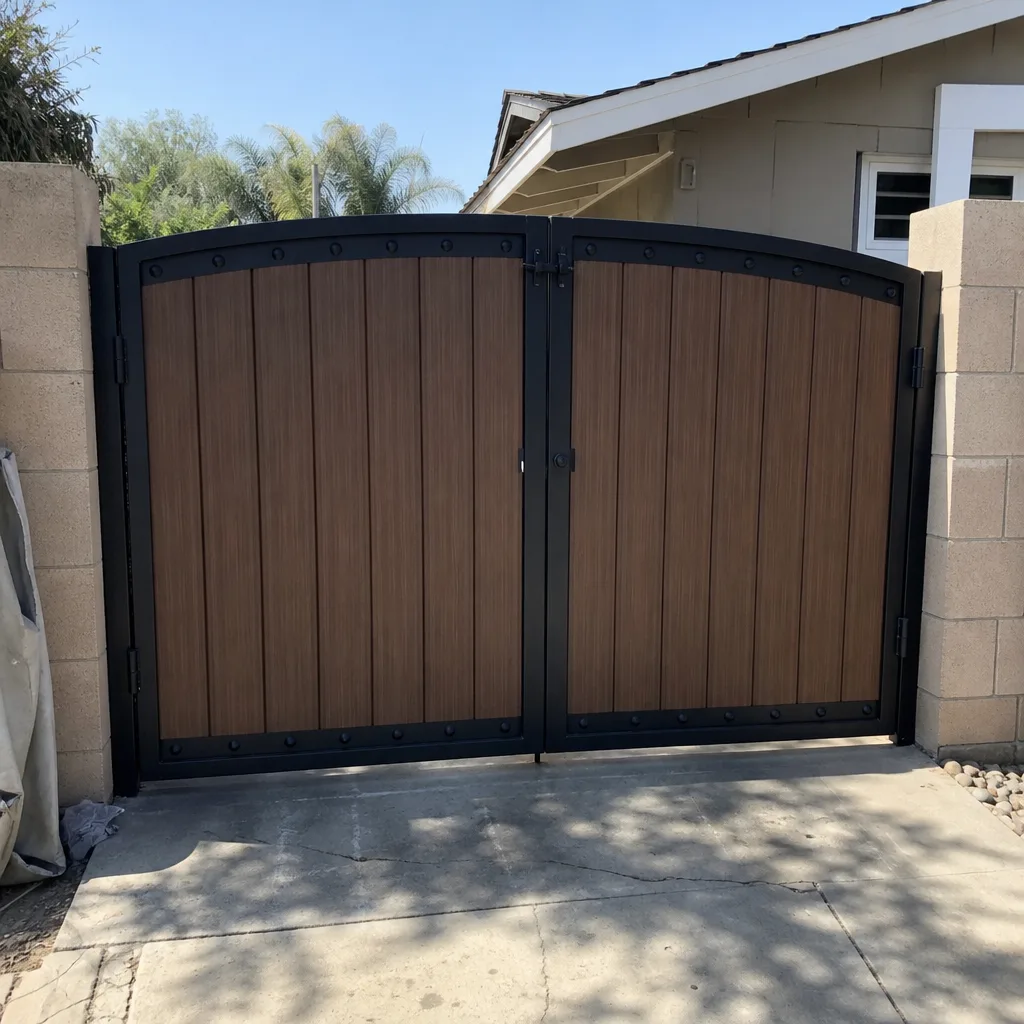
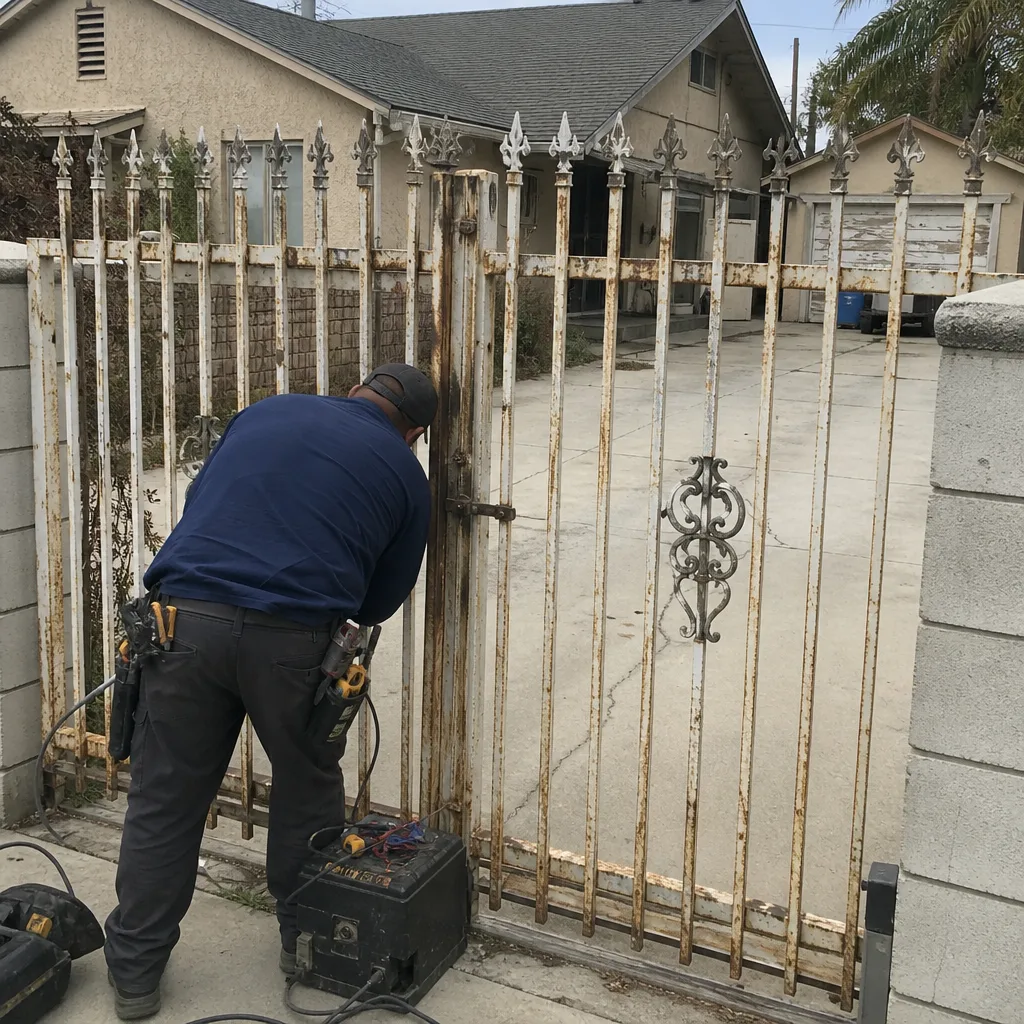
See the difference
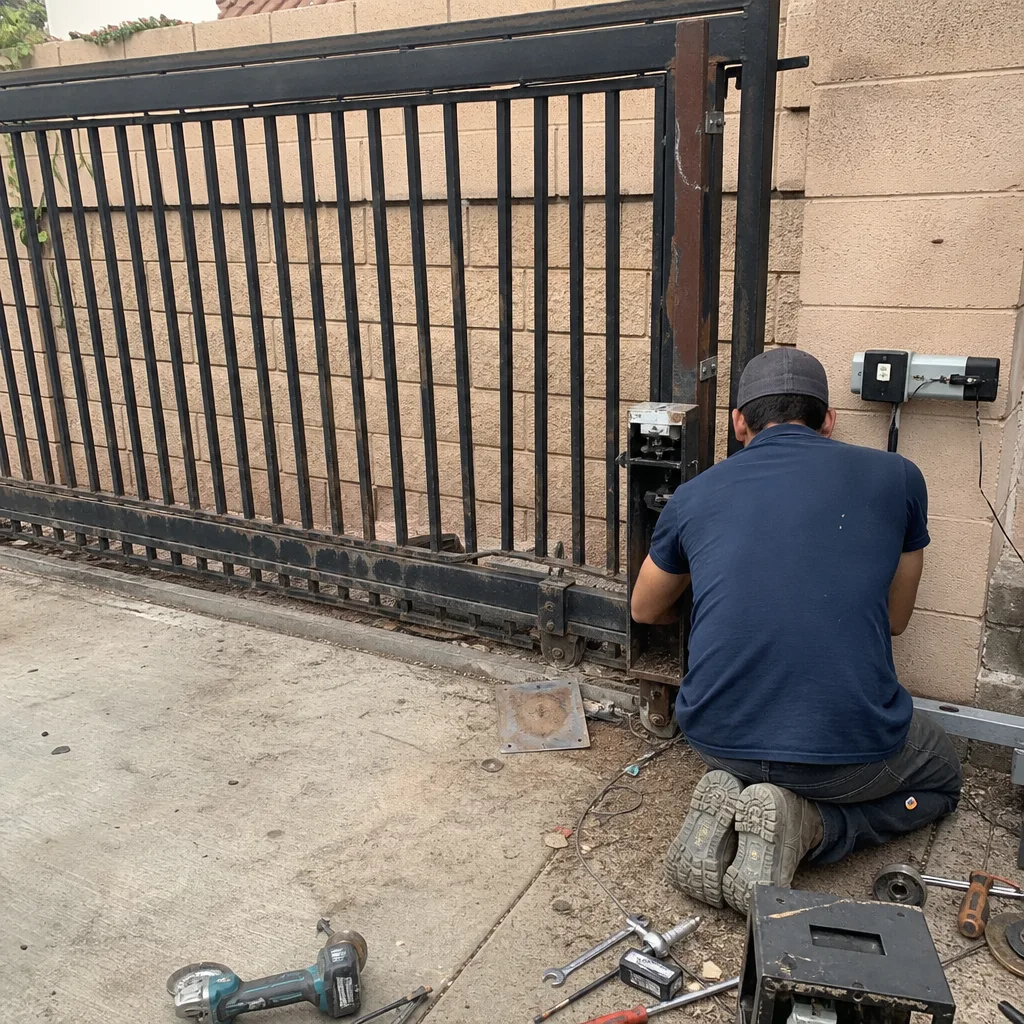 Before
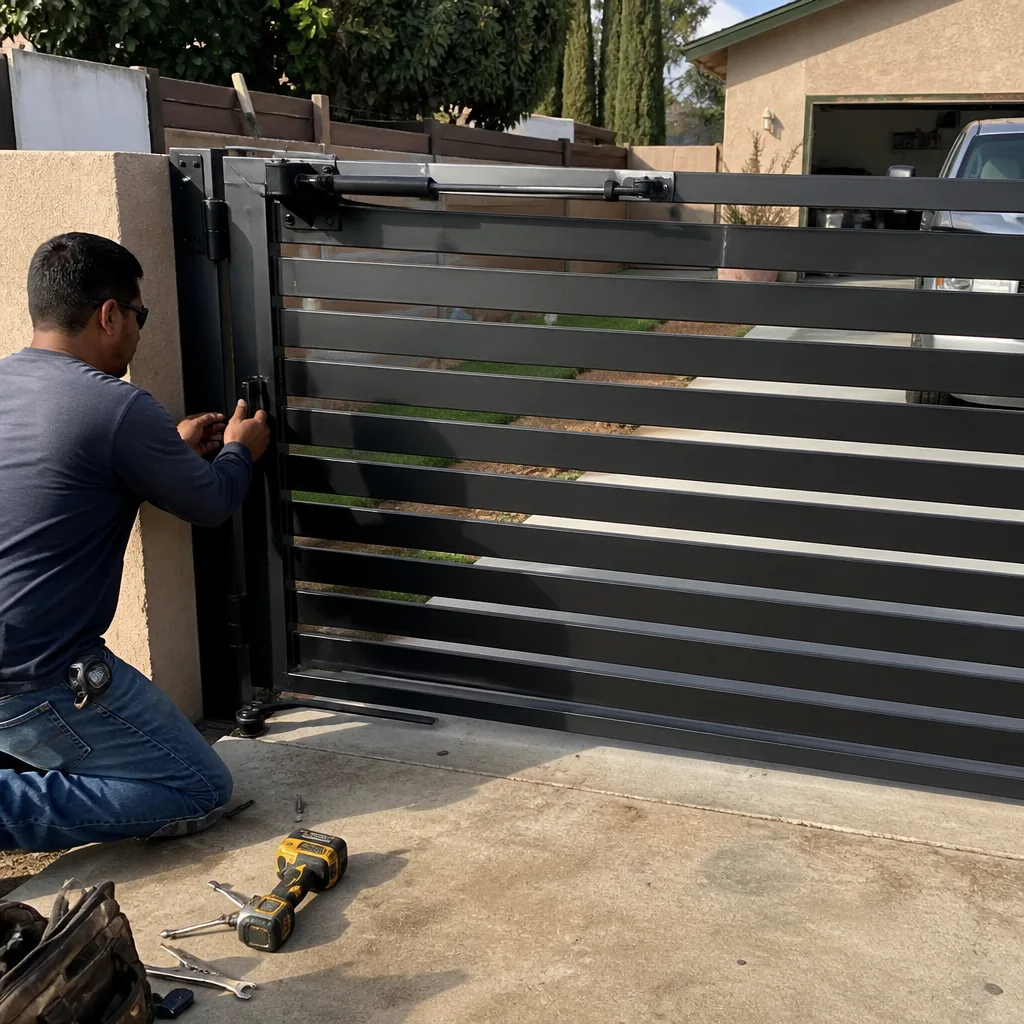 After
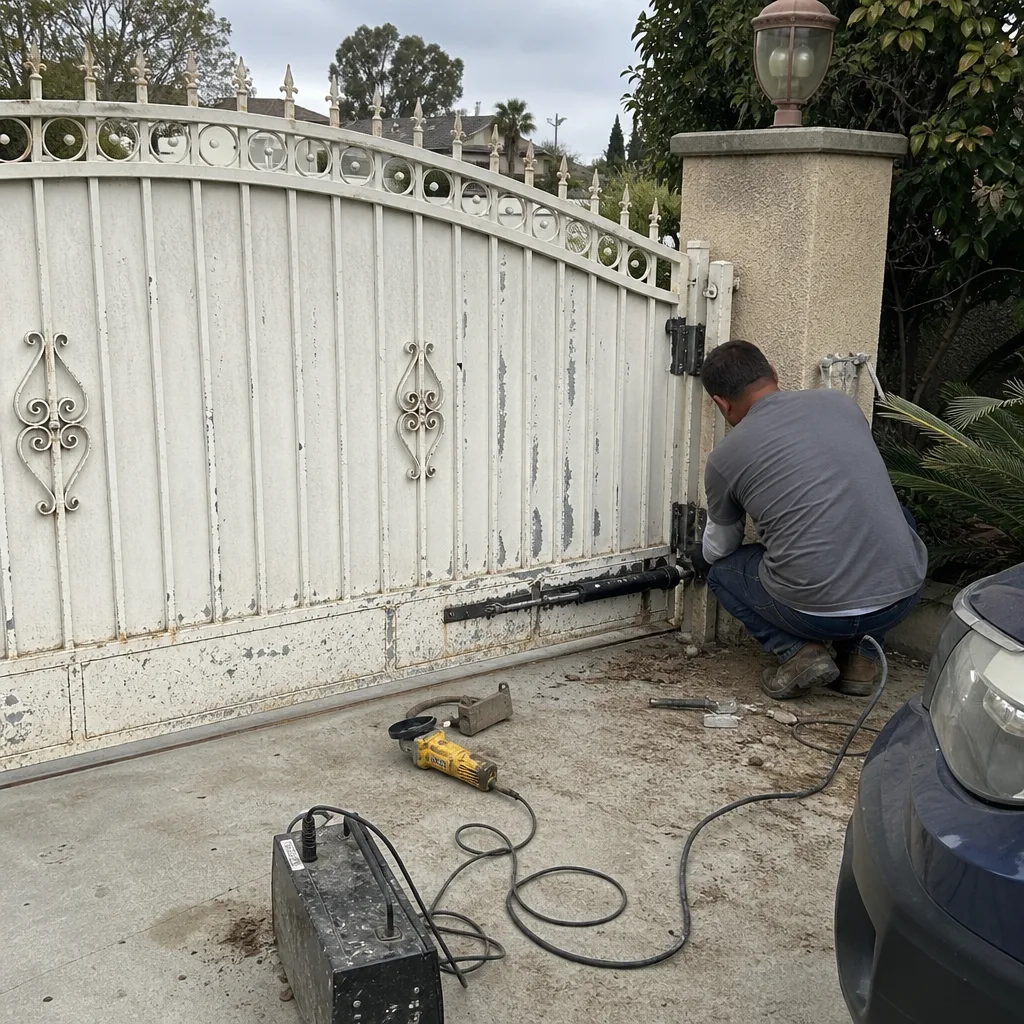 Before
 After
 Before
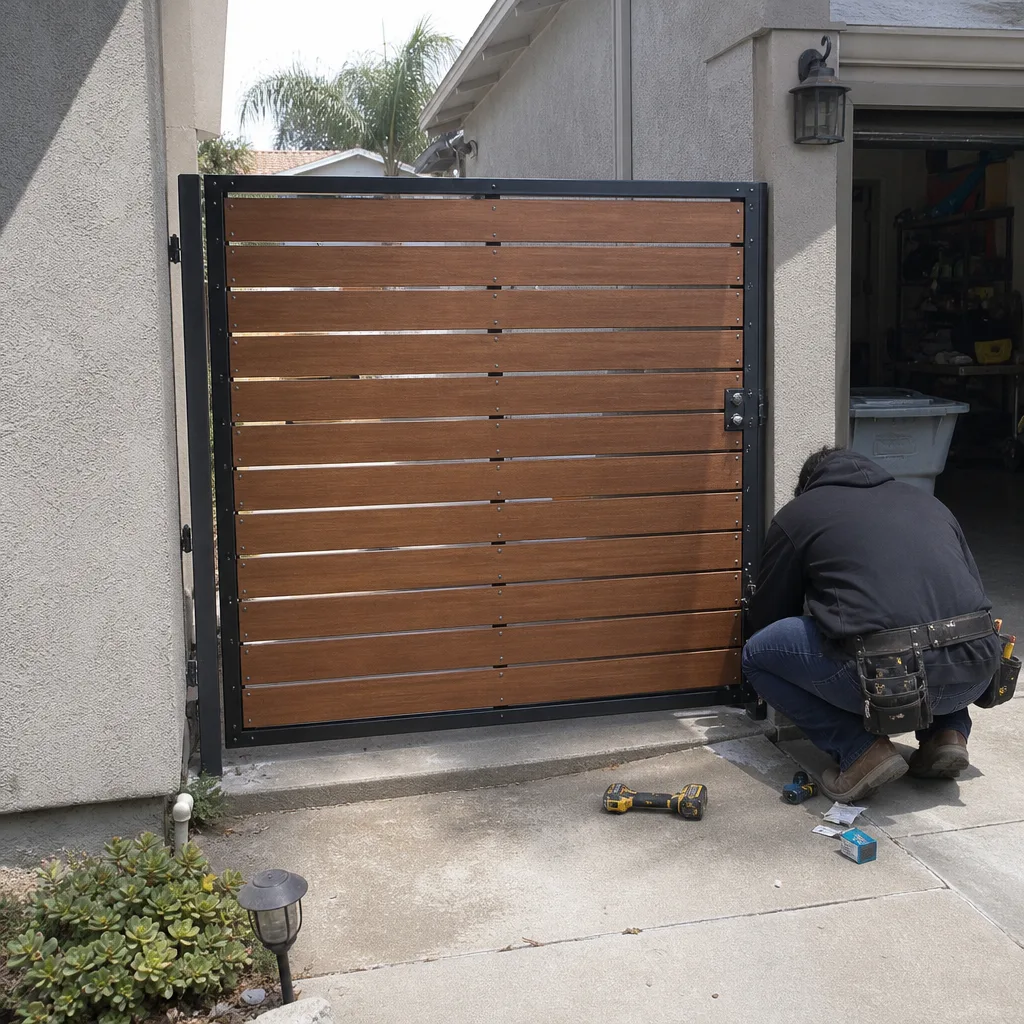 After