
Last updated October 30, 2026
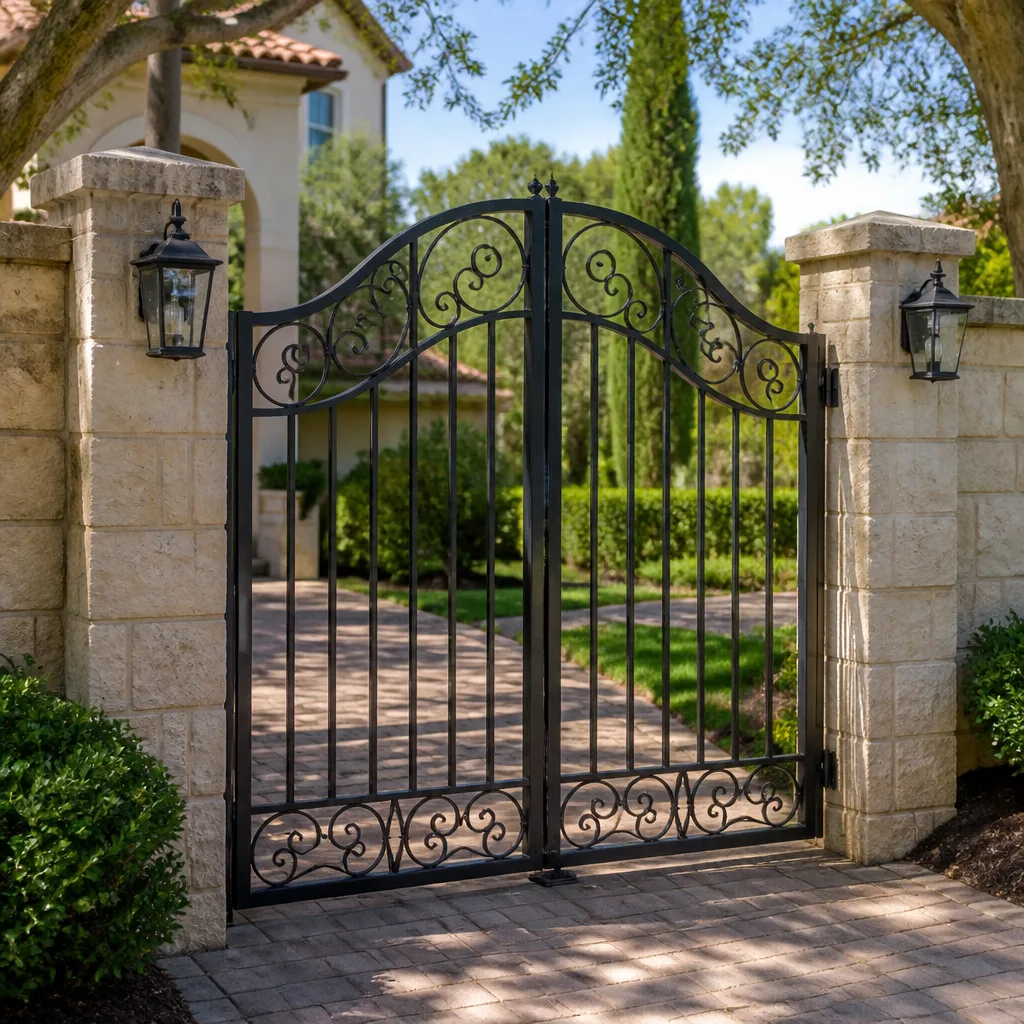 Wrought iron
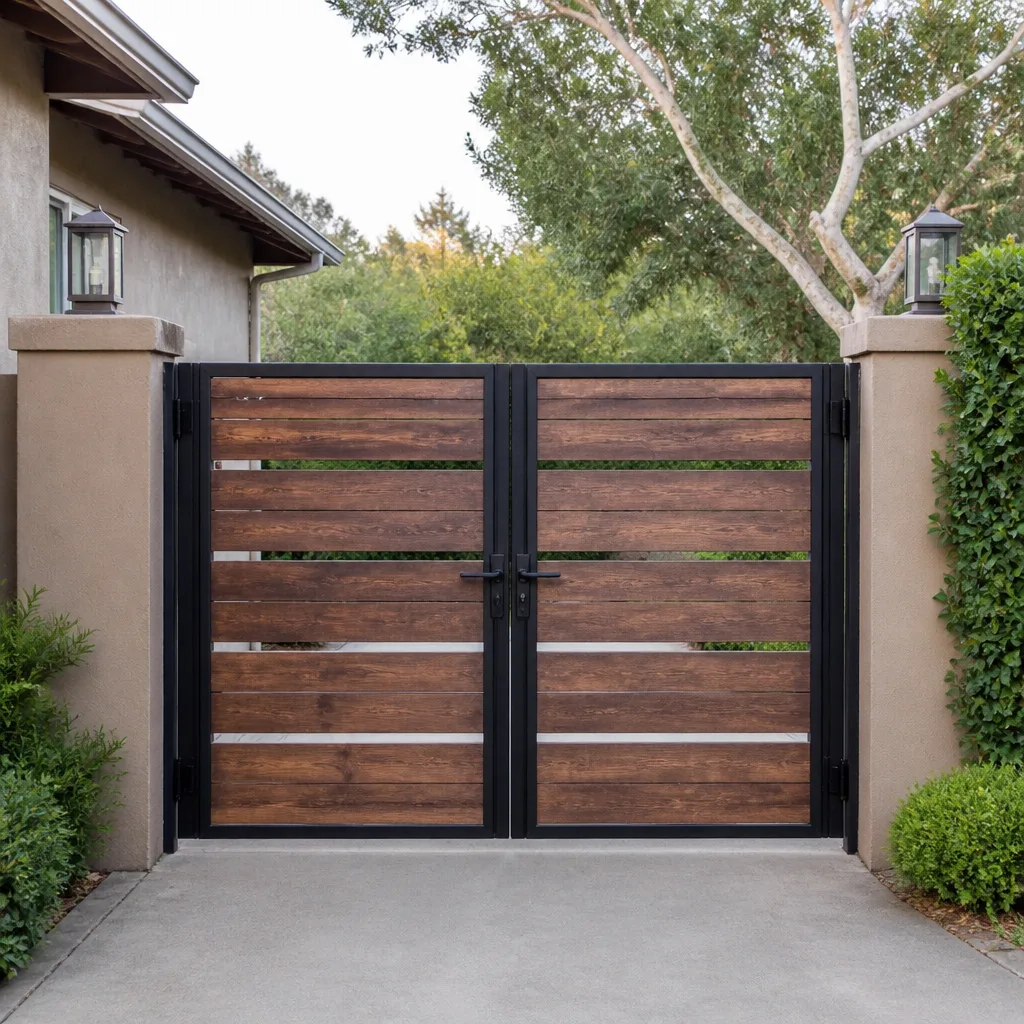 Wood & steel frame
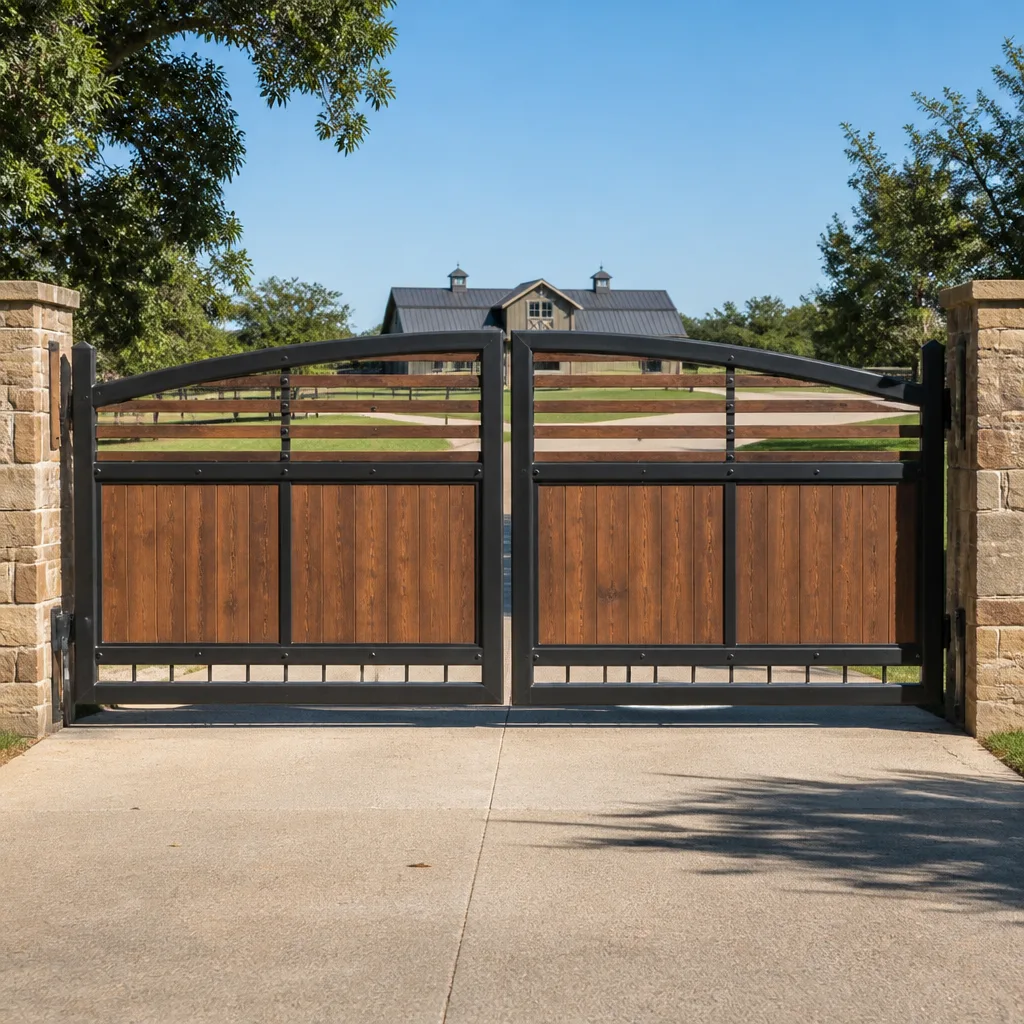 Farm & ranch
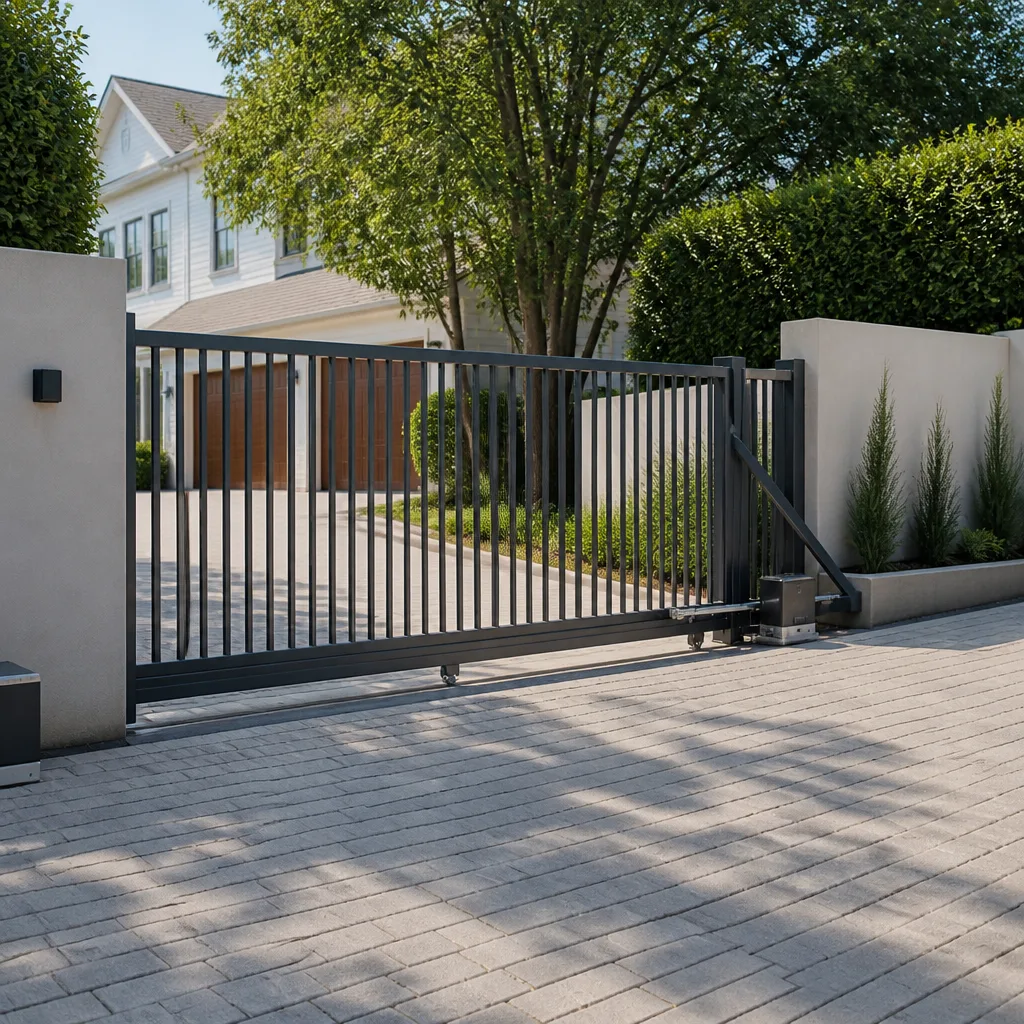 Sliding driveway gates
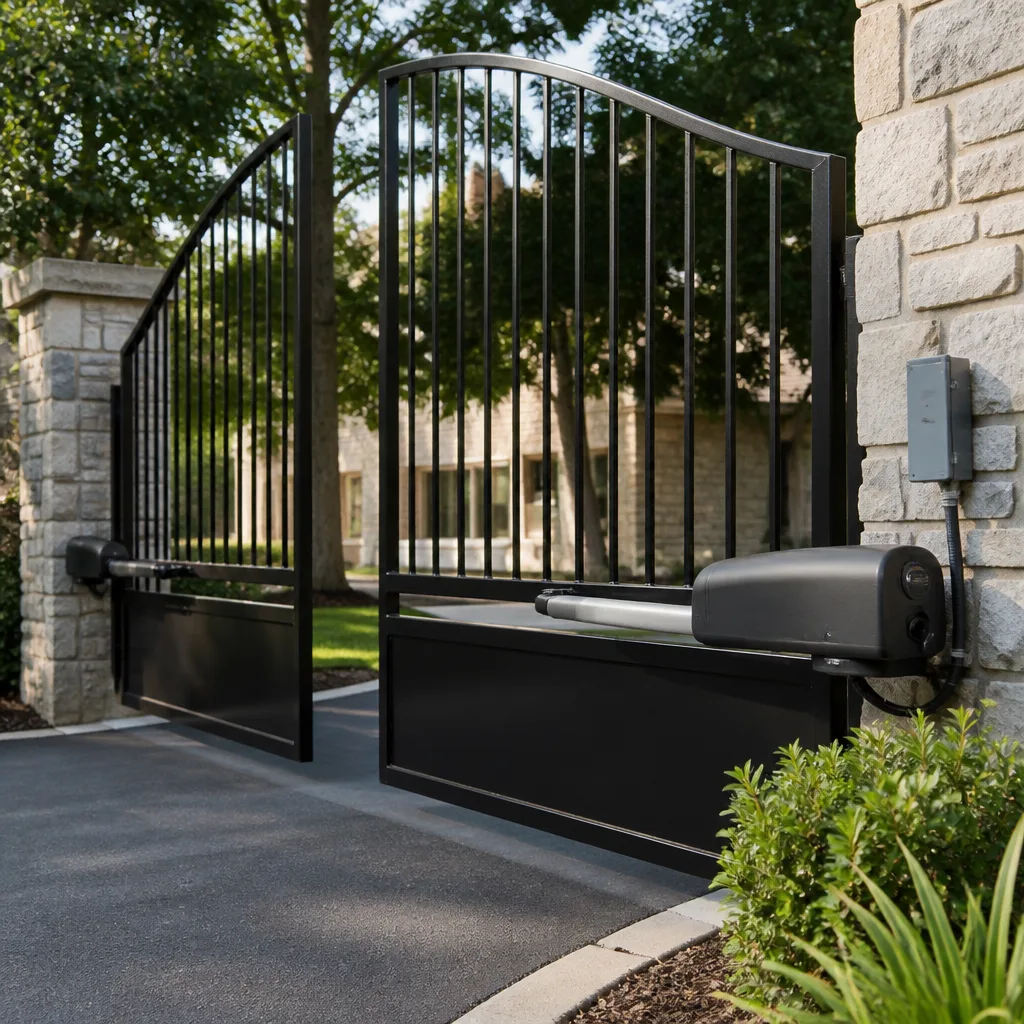 LiftMaster operators
Free on-site gate assessment - hinges, posts, and your LiftMaster or Nice gate operator checked before anything is quoted
The assessment is free and the quote is the invoice.
Get your free estimateGate Repair Warning Signs: A Riverside Homeowner’s Reference Guide
Most Riverside homeowners don’t get a gate repair warning. They get a gate that worked yesterday and doesn’t work today. But that’s not actually what happened. What happened is a sequence of small failures that were visible for weeks or months, a hesitation here, a grinding noise there, a gate that reversed for no obvious reason. Each one is the gate telling you something specific about what’s wearing out. This guide explains what those warnings mean, how to read them, and which ones require immediate attention in Riverside’s particular climate. By the time you finish, you’ll know the difference between a nuisance and a genuine safety hazard, and you’ll know what to say when you call a gate specialist so you get a real answer instead of a runaround.
Styles & brands we work with
Quick Answer
Gate failure rarely happens without warning. Hesitation before movement, grinding or scraping sounds, reversal during operation, visible sagging, and rust at the hinge points are the five most common warning signs Riverside homeowners report before a complete breakdown. Most of these can be fixed affordably if caught early, but some, especially gate reversal and electrical burning smells, are immediate safety risks that require professional attention the same day.
Table of Contents
- Operator Warning Signs vs. Mechanical Warning Signs: Why the Distinction Matters
- Hesitation Before the Gate Moves: The Most Misread Warning Sign
- Reversal During Operation: A Safety System Trying to Tell You Something
- Grinding, Scraping, and Squealing: Reading the Sound of Wear
- Rust and Corrosion Patterns in Riverside: What the Stains Are Saying
- A Gate That Moves Slower Than It Used To
- The 5 Warning Signs That Demand Immediate Attention
- How to Document and Describe Warning Signs for an Accurate Phone Estimate
- Common Mistakes to Avoid
- When to Call a Professional
- Frequently Asked Questions
- The Bottom Line
Operator Warning Signs vs. Mechanical Warning Signs: Why the Distinction Matters
Every automatic gate has two distinct systems that can fail independently: the operator (the motor, control board, and electrical components that move the gate) and the mechanical assembly (the hinges, rollers, track, and posts that carry the gate’s weight). In our experience repairing gates across Riverside, we see homeowners compress these into one vague “the gate is broken” category, which leads to the wrong call and the wrong fix.
Operator warning signs are electrical and electronic. They include the motor humming but not moving the gate, the gate opening on its own, the remote working intermittently, the keypad not responding, or a burning smell near the motor housing. These point to problems with the control board, capacitor, limit switches, or the motor itself. Brands like LiftMaster and FAAC have diagnostic LED codes on their control boards that can pinpoint the fault precisely, but reading them requires familiarity with that specific brand’s logic. This is why we work on nine specific gate automation brands rather than treating every operator as generic. A Mighty Mule control board does not behave like a BFT control board, and a technician who treats them as interchangeable will misdiagnose.
Mechanical warning signs are physical and structural. They include visible sag at the free end of the gate, scraping against the ground, resistance when opening or closing manually, hinge pins that have play, or wheels that have worn flat spots. These indicate a structural problem: failing hinges, a shifting post, or rollers that can no longer carry the gate’s weight. Mechanical failures force the operator to work harder to move the same load, which shortens the motor’s life. Left alone, a mechanical issue becomes an electrical one.
Why this distinction matters: the fixes are completely different. Replacing a control board when the real problem is a seized hinge wastes money. Lubricating hinges when the capacitor is failing does nothing. An electric gate repair in Riverside requires tracing the fault to the correct system, not guessing.
Hesitation Before the Gate Moves: The Most Misread Warning Sign
A gate that hesitates for two seconds before moving isn’t being slow. It’s drawing more current than it should, which means a worn drive component is probably weeks away from full failure. We’ve lost count of how many Riverside homeowners have told us “it’s always done that” about a hesitation that ultimately preceded a dead motor.
Here’s what happens inside an automatic gate operator when it hesitates:
- The control board sends power to the motor.
- The motor begins to turn, but the drive mechanism (chain, belt, or screw) resists because of wear, inadequate lubrication, or increased load from a mechanical issue.
- The motor draws higher current to overcome that resistance.
- The capacitor, which stores the starting surge, takes a moment to deliver enough power.
- The gate finally moves, but every start-up cycle is stressing components beyond their design limits.
Each hesitation cycle adds tiny amounts of heat and wear. Over weeks in Riverside’s summer temperatures, which regularly push past 100°F in July and August, that heat compounds inside an enclosed motor housing. The capacitor fails first in most cases. It’s a relatively affordable repair. The motor itself fails second, and that’s a gate repair in Riverside with a significantly higher price tag.
What to check before calling:
- Does the hesitation happen only in hot weather, or consistently? Heat-related hesitation points to a capacitor nearing end of life.
- Does the gate hesitate more after sitting unused for several hours, then move normally on subsequent cycles? That suggests increased mechanical resistance in the drive train, often from dry bearings or a tightening chain.
- Can you hear the motor start immediately when you push the button, but the gate doesn’t move for a second or two? That’s a mechanical binding issue, not an electrical one.
In Riverside’s older neighborhoods like the Wood Streets or Victoria, many gates are original to homes built in the 1950s and 1960s. Those mechanical components have decades of wear behind them. A new operator installed on a thirty-year-old iron gate without addressing the underlying mechanics is a future service call waiting to happen.
Reversal During Operation: A Safety System Trying to Tell You Something
An automatic gate that stops and reverses direction mid-cycle is one of the most important warning signs a Riverside homeowner can observe. It’s not a glitch. It’s the gate’s safety system detecting resistance and responding exactly as it was designed to.
Modern gate operators sold in the U.S., including LiftMaster and FAAC models, are required by federal safety standards to reverse when they encounter obstruction. The system uses a force sensor that monitors current draw. When current exceeds a threshold, the logic assumes something is blocking the gate’s path and reverses to prevent injury or property damage.
When a gate starts reversing without a visible obstruction, one of these is usually happening:
- Increasing mechanical friction: Rust on the track, a failing hinge, or debris in the gate’s path is increasing the force required to move the gate. The safety system interprets that force as an obstruction.
- Sensor misalignment: Photo-eye sensors mounted on either side of the gate opening are out of alignment. Riverside’s clay-heavy soil shifts with rain and drought cycles, and posts holding sensors can move fractionally. That fractional movement is enough to break the beam and trigger a reversal.
- Sun distortion on the sensor housing: Riverside’s UV intensity warps plastic sensor housings over time. We’ve seen photo-eyes on south-facing gates in Mission Grove and Orangecrest that are visibly deformed by years of direct sun, and that distortion misaligns the internal optics.
- Control board sensitivity drift: Older boards can drift out of calibration, interpreting normal operating force as obstruction. This is more common on generic or low-cost operators than on established brands.
- Wire insulation breakdown: UV-cracked insulation on low-voltage wires running from the sensor to the control board creates intermittent shorts. The board sees a phantom obstruction signal and reverses. This is particularly common in Riverside where exposed wiring bakes in direct sun for years.
The critical distinction: if your gate has never reversed before and suddenly starts reversing consistently, treat it as an urgency. A gate that reverses is preventing an accident. A gate that stops reversing because someone “adjusted the sensitivity” is disabling the safety system. Adjusting operator force settings to override reversal is a dangerous short-term fix that violates the operator’s safety design. We refuse those adjustments when we see them because the liability and the risk both sit in the wrong place.
Grinding, Scraping, and Squealing: Reading the Sound of Wear
Sound is the most direct information a gate gives you about its internal condition. Every noise has a source. Learning to read those sources tells you whether you’re dealing with a fifty-dollar fix or a fifteen-hundred-dollar replacement.
Grinding usually means metal-on-metal contact without lubrication. It comes from dry bearings in the drive mechanism, from a chain that’s loosened and is rubbing against a housing, or from hinge pins that have worn through their bushings. Grinding that’s consistent in rhythm with the gate’s movement, rather than constant, points to a specific rotating component. Grinding that’s constant while the motor runs suggests the drive belt or chain is dragging against something stationary. A BFT hydraulic operator that grinds during operation is a different diagnosis than a Mighty Mule screw-drive that grinds. The brand and drive type determine where the sound originates.
Scraping almost always comes from the gate itself contacting something it shouldn’t: the ground, a post, or a fence section. Riverside homes built on expansive clay soil see their gate posts shift with moisture cycles. A gate that scrapes in winter after rain and doesn’t scrape in summer is a post movement problem, not a gate problem. A gate that scrapes consistently is either sagging because of hinge wear or because the post has permanently shifted. Both are structural.
Squealing is the sound of a belt slipping or a bearing running dry and hot. It’s common on belt-drive operators in Riverside’s dry, dusty conditions. Fine dust works its way into belt tensioners and bearing races, creating a high-pitched sound that changes pitch as the gate moves faster and slower. A squeal that stops after the gate has operated a few times means the heat is redistributing whatever lubricant remains. A squeal that stays constant means the component is running dry and failing.
What to do with this information: record the sound with your phone before calling a gate specialist. A ten-second recording tells us more than a paragraph of description ever could. We can often identify the failing component from the sound alone, which means we arrive with the right part in the truck instead of spending the first hour diagnosing on site.
Rust and Corrosion Patterns in Riverside: What the Stains Are Saying
Riverside’s climate is not what most people think when they imagine rust. We’re not coastal. We don’t get salt fog. But the Inland Empire has its own corrosion signature: long, dry heat punctuated by occasional drenching winter rains, often with dry Santa Ana winds in between. The cycle of soak, dry, soak, dry accelerates oxidation differently than constant humidity does.
Rust patterns on a gate are diagnostic. They tell you where water is accumulating and where it isn’t draining. Those two pieces of information tell you exactly what to fix.
Rust at the hinge points, concentrated at the bottom hinge: Water is flowing down the gate face and pooling at the lowest mechanical point. This is the most common pattern we see in Riverside. It means the hinge pin and bushing are rusting from the inside, and the gate is becoming progressively harder to swing. The operator compensates until it can’t. Fix the drainage path, not just the hinge.
Rust streaks running down from a weld or bracket: Water is entering a small gap in the fabrication, sitting inside, and weeping out through the weld. The streaking is cosmetic; the internal corrosion is structural. By the time you see the streak, the inside of that joint may already be significantly weakened. This is common on decorative iron gates in older Riverside neighborhoods like Arlington and Magnolia Center, where original fabrication quality varies widely.
Rust at ground contact points: The gate bottom rail or the bottom of the posts is rusting where it contacts or sits close to the soil. Riverside’s alkaline soil holds moisture against metal. The fix involves raising the gate clearance, improving drainage, or both. Simply wire-brushing and repainting delays the problem by a year or two but doesn’t solve it.
Rust on the operator housing or mounting bracket: This is less about the gate and more about where the operator was installed. Mounting brackets that collect water cause the housing to rust from the attachment points inward. We’ve replaced operators that were functionally fine internally but had mounting ears so corroded they couldn’t be safely reattached.
For a gate repair in Riverside, rust is rarely the primary fault. It’s the precursor. It creates the friction, wear, and binding that eventually trips the safety system or kills the motor. Treating rust early is the cheapest maintenance a gate owner can buy.
A Gate That Moves Slower Than It Used To
Gate speed loss is gradual, which is why most Riverside homeowners don’t notice it until a visitor asks “is your gate broken?” The answer is usually “not yet.” But speed loss is reliable evidence of increasing load or decreasing power, and both trend toward failure.
An automatic gate operator is designed to move its specific gate weight and length at a specific speed, usually between 9 and 13 seconds for a full open cycle on a typical residential driveway gate. When the gate starts taking 15 or 18 seconds, something has changed. Here’s the diagnostic path:
- Mechanical resistance first: Check the gate in manual mode (most operators have a disconnect lever). Push the gate open by hand. If it requires noticeable effort, the problem is mechanical: hinges, rollers, or track alignment. The motor is working harder because the gate is fighting it.
- Motor wear second: If the gate moves freely by hand but slowly under power, the motor is losing torque. This is often a capacitor wasting out, but can also be motor windings degrading from heat exposure. Riverside summers shorten motor life in operators installed without adequate ventilation or shade.
- Power supply third: A gate that moves slowly and the lights in the nearby house flicker when it operates may have a voltage drop in the supply circuit. Long wire runs from the house panel to a gate operator at the property line are common on Riverside lots, and undersized wire creates voltage drop under load. The operator runs slow because it’s starving for power.
The same logic applies to hydraulic operators like those made by FAAC and BFT, which use fluid pressure rather than direct motor drive. Slow movement in a hydraulic system usually means low fluid level, degraded fluid viscosity from heat cycling, or internal leakage in the piston seals. These are professional diagnoses, not DIY checks, but the observation that matters, “it’s slower than it used to be” is something any homeowner can make.
The 5 Warning Signs That Demand Immediate Attention
Not every warning sign requires a same-day response. A gate that scrapes slightly, hesitates occasionally, or shows early rust can wait for a scheduled service call. But these five signs indicate a condition that is either dangerous right now or about to become expensive very quickly. If you see any of these in Riverside, act the same day:
- Gate reversal with no visible obstruction: The safety system is detecting resistance it can’t see. That resistance is increasing. Next week it might not reverse, and the gate will push through whatever is in its path. A gate leaf moving under operator power has enough force to seriously injure a child or a pet.
- Burning smell from the operator housing: Electrical components are overheating. The smell means insulation is breaking down, which precedes smoke and fire. Cut power to the operator at the breaker and leave it off until a technician arrives. This is not a “watch and wait” situation.
- Gate falls out of alignment when opening, grinding hard against the track: This indicates a structural failure: a post has shifted, a wheel assembly has broken, or a hinge has partially failed. The gate’s weight is no longer fully supported, which means the remaining support points are overloaded. Runaway gate leaves are rare but they happen, and they can injure whoever is nearby when it goes.
- Operator runs but chain or belt is visibly loose, jumping, or slapping: The drive mechanism is failing or misadjusted. A chain that jumps a sprocket under load can whip violently. This is a mechanical hazard independent of the electrical system.
- Sparks or visible arcing at the keypad, control board, or any junction box: Electrical arcing will not fix itself. It will get worse, and every cycle creates more carbon tracking and more heat. Cut power and call. This is one of the few situations where we’ll tell a Riverside homeowner not to operate the gate at all until we arrive.
Any of these five is a reason to call a gate specialist immediately. In Riverside, our gate repair service typically responds the same day for safety-critical issues, and we’ll tell you honestly over the phone whether what you’re seeing is urgent or schedulable.
How to Document and Describe Warning Signs for an Accurate Phone Estimate
The hardest part of phone diagnosis is translating what you’re seeing and hearing into language that lets a technician identify the fault. Most gate companies, including ours, can often give you a meaningful price range over the phone if you can describe the symptom precisely. “The gate doesn’t work” leads to a service call fee and an on-site discovery process. “The gate hesitates for about two seconds before opening, and the hesitation is worse after it’s been sitting” gets us very close to the diagnosis before we leave the shop.
Here’s exactly what to document before you call:
- Write down the make and model of your operator. The model number is on a label on the side or inside of the operator housing. Knowing it’s a LiftMaster LA400 versus a Mighty Mule MM560 changes the diagnosis and the expected repair cost significantly.
- Describe the sound, not your interpretation of the sound. “It makes a grinding noise” is less useful than “it makes a grating metal sound that pulses in rhythm with the gate’s movement, and it’s louder at the start of the cycle.” Record a short video or audio file.
- Note when the symptom appears. Does it happen every cycle? Only in the heat of the day? Only after rain? Only the first time each day, then goes away? Timing is diagnostic data.
- Test the manual disconnect. Most operators have a release lever or key that lets you push the gate by hand. Report whether the gate moves freely or with resistance in manual mode. This single observation separates mechanical from operator faults about half the time.
- Count the seconds. Time a full open and full close cycle. Ten seconds in one direction, ten in the other. Slow speed, uneven speed between directions, or a gate that starts slow and then speeds up are all different diagnoses.
- Check what’s around the gate. Are there new plants, landscape rocks, or irrigation heads near the gate path? Riverside landscaping changes constantly, and a new sprinkler spraying the photo-eye sensor every cycle creates an intermittent reversal that will stump any homeowner.
When you call a gate specialist with this information, you’ve done the work that lets them give you a real number, not a vague promise. We appreciate customers who arrive at the phone call prepared. It means we can have the right parts in the truck, which means the repair happens in one visit instead of two.
Common Mistakes to Avoid
- Lubricating electronics when the problem is mechanical: Spraying WD-40 on a control board or into the motor housing does not improve an electrical fault. It can damage sensitive components and void warranties. Lubricant belongs on hinges, bearings, and chains, nowhere else.
- Ignoring a reversing gate because “it still opens eventually”: Reversal is the gate’s way of saying something is wrong. The cost of ignoring it is typically a failed motor or a damaged drive system that would have been a small repair weeks earlier.
- Adjusting force or sensitivity settings to stop reversal: This disables the safety system. In Riverside, where gates serve as security barriers for vehicles and pedestrians, a gate that pushes through an obstruction is a genuine liability. The correct response to repeated reversal is diagnosis, not adjustment.
- Replacing the operator when the underlying mechanical issue remains: A new LiftMaster installed on a gate with failing hinges will wear prematurely. Fix the structure first, then power it properly. For gates that are mechanically sound, gate installation in Riverside with a new operator makes sense. For gates that are failing, it’s wasted money.
- Waiting until the gate stops completely to call: The most expensive repairs we perform in Riverside are the ones that follow months of ignored warnings. A homeowner who calls at the first hesitation spends a hundred dollars. A homeowner who calls when the gate dies spends a thousand or more. The warnings are the discount.
- Using a general handyman or garage door company for automatic gate work: Gates, especially automated ones with access controls and safety systems, are not garage doors with bigger tires. Riverside Gate Company works on nine gate automation brands, from Mighty Mule residential systems to FAAC and BFT commercial operators, and that depth matters when the problem is a misbehaving control board rather than a broken chain.
When to Call a Professional
Call a gate specialist when the warning sign involves the operator (electrical or electronic symptoms), when the gate is reversing unexpectedly, when there’s a burning smell or visible arcing, or when you’ve checked the mechanical basics and the problem persists. Gates under tension, particularly heavy iron gates on sloping Riverside driveways, carry enough weight and stored energy to injure someone who’s in the wrong place when a component fails. We never recommend a homeowner attempt spring or counterbalance adjustment on a heavy automatic gate. Those systems store energy, and releasing it incorrectly is dangerous.
For anything that’s unclear, Riverside Gate Company offers free estimates in Riverside. Call (855) 942-4867 and describe what you’re seeing. We’ll tell you over the phone whether it sounds urgent, what it’s likely to be, and what it’s likely to cost.
Frequently Asked Questions
The most common gate issues we see in Riverside are photo-eye sensor failures from sun damage or misalignment, seized hinge pins on older iron gates, capacitor failure from heat stress, and rust-related friction at ground contact points. Riverside’s summer heat stresses electrical components, and the clay soil movement from wet winters to dry summers creates structural shifting that causes alignment problems.
Most Riverside gate repairs we perform fall between $150 and $650 depending on the fault. Photo-eye replacement typically runs $150 to $300, capacitor replacement $120 to $250, hinge repair or replacement $200 to $500, and control board replacement $350 to $800 depending on brand. Motor replacement can exceed $1000 on commercial operators. The exact price is quoted and agreed before any work starts.
Yes. Unwanted reversal is almost always caused by one of three things: increased friction from mechanical wear, photo-eye alignment problems, or control board sensitivity calibration. We diagnose the specific cause and fix it properly, rather than adjusting the safety system to ignore the fault. Call (855) 942-4867 to describe what’s happening and we’ll tell you what it’s likely to be.
Heat is the primary killer of gate operators in Riverside. A well-installed operator from a quality brand like LiftMaster or FAAC, properly maintained and shaded, can last 10 to 15 years. A poorly installed operator in direct afternoon sun with no maintenance may fail in 4 to 6 years. Capacitors, which are the most heat-sensitive component, often fail first and are relatively cheap to replace.
The decision depends on the operator’s age, condition, and brand. If the operator is under 8 years old and the failure is a capacitor, sensor, or limit switch, repair is almost always the right call. If the operator is over 12 years old, parts are discontinued for that model, or the motor itself has failed, replacement is usually more economical long-term. We’ll give you the numbers for both options and let you decide. As a Riverside Gate Company home customer, you get a straight answer on repair versus replace economics.
Yes. We work on commercial-grade operators from FAAC, BFT, DoorKing, and Viking, which covers most of the automated access systems installed at Riverside commercial properties, apartment complexes, and gated communities. The diagnostics and repair logic are the same, but the duty cycles and safety requirements are different, and we carry parts for those systems specifically.
The Bottom Line
Gate failure is a process, not an event. The hesitation that seems like a quirk, the scraping noise you’ve tuned out, the gate that reverses sometimes, the rust stain you stopped noticing, all of these are the gate asking for attention before the bill gets bigger. Pay attention to what your gate is telling you. Note the sounds, the timing, the conditions. That information, plus a phone call to a gate specialist who knows the difference between electrical and mechanical failure, is the cheapest maintenance you’ll ever do. Riverside gates live hard lives between the summer heat and the winter clay shifts. The homeowners who listen to the warnings are the ones who get fifteen years out of their operators while their neighbors replace theirs at seven.
Written by the team at Riverside Gate Company, serving Riverside since 2011.
See the difference
 Before
 After
 Before
 After
 Before
 After