
Last updated October 30, 2026
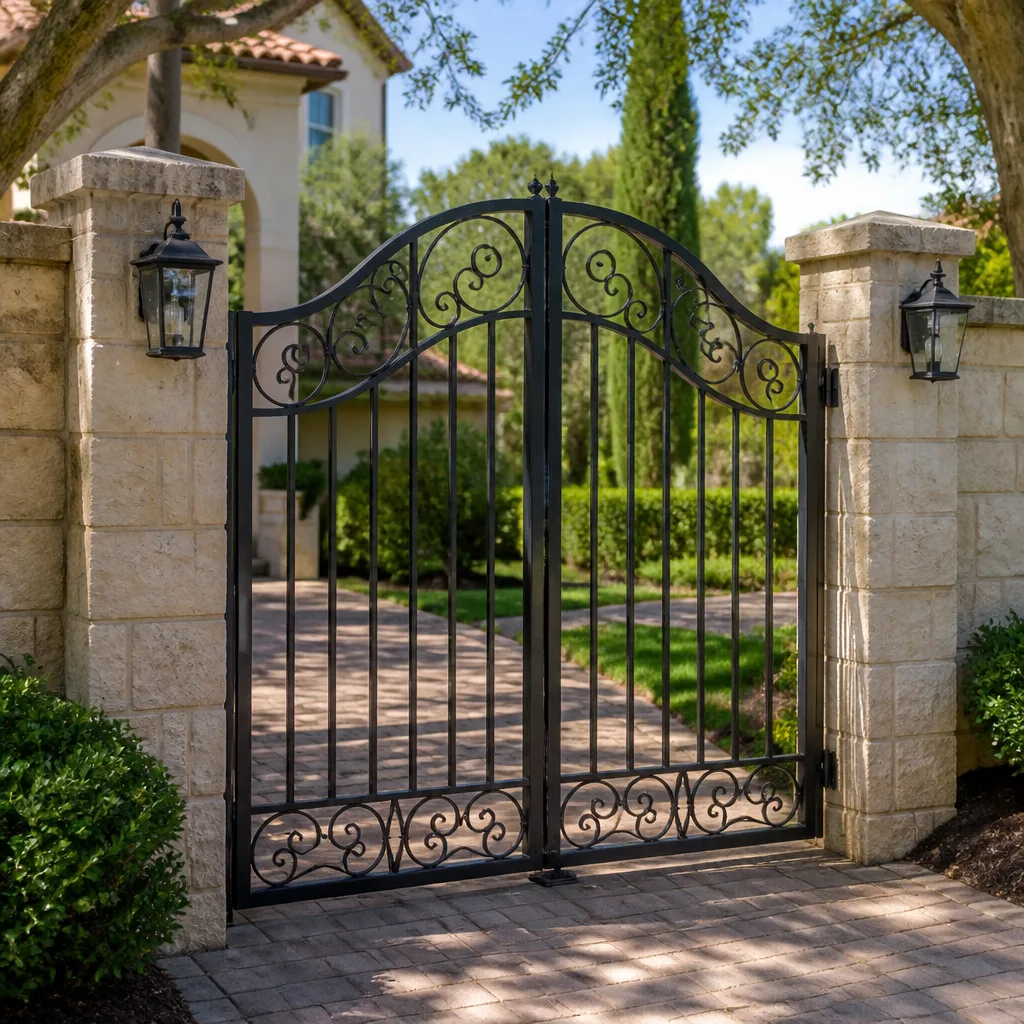 Wrought iron
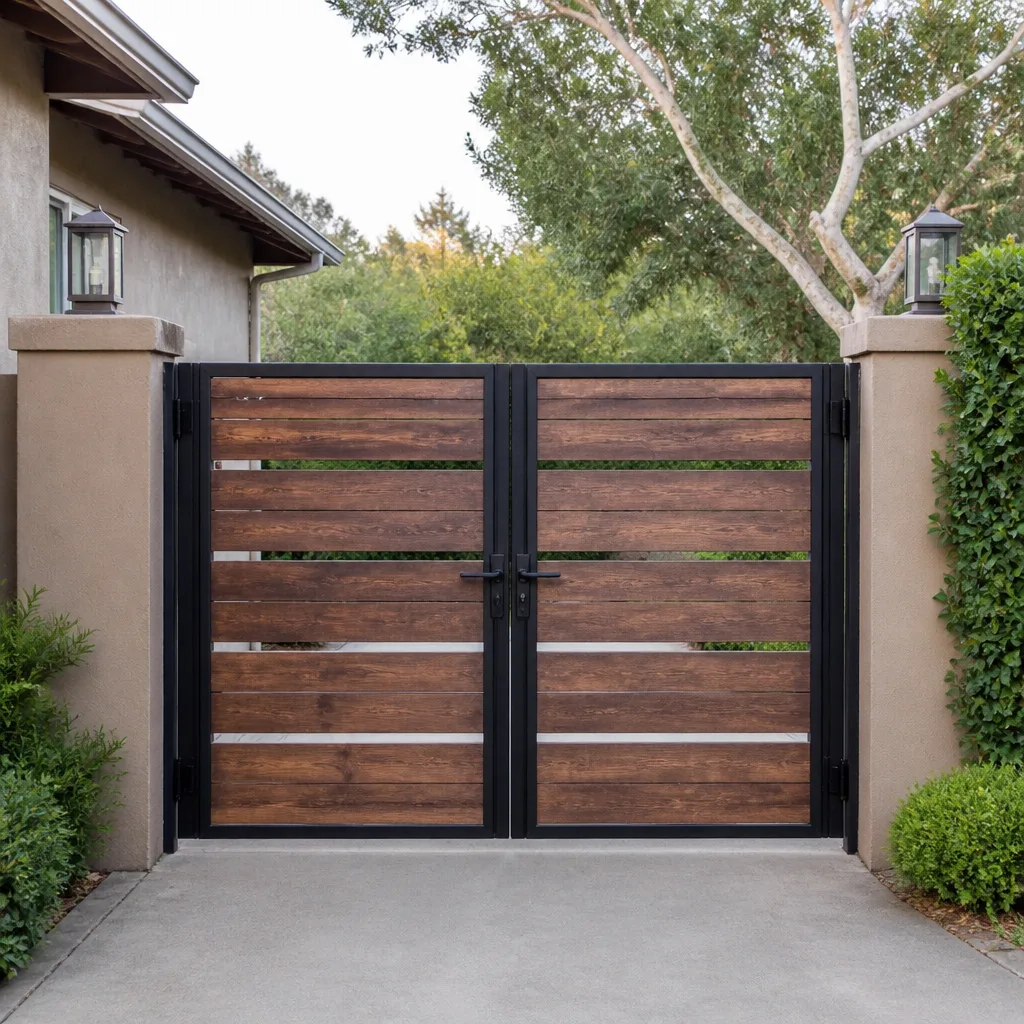 Wood & steel frame
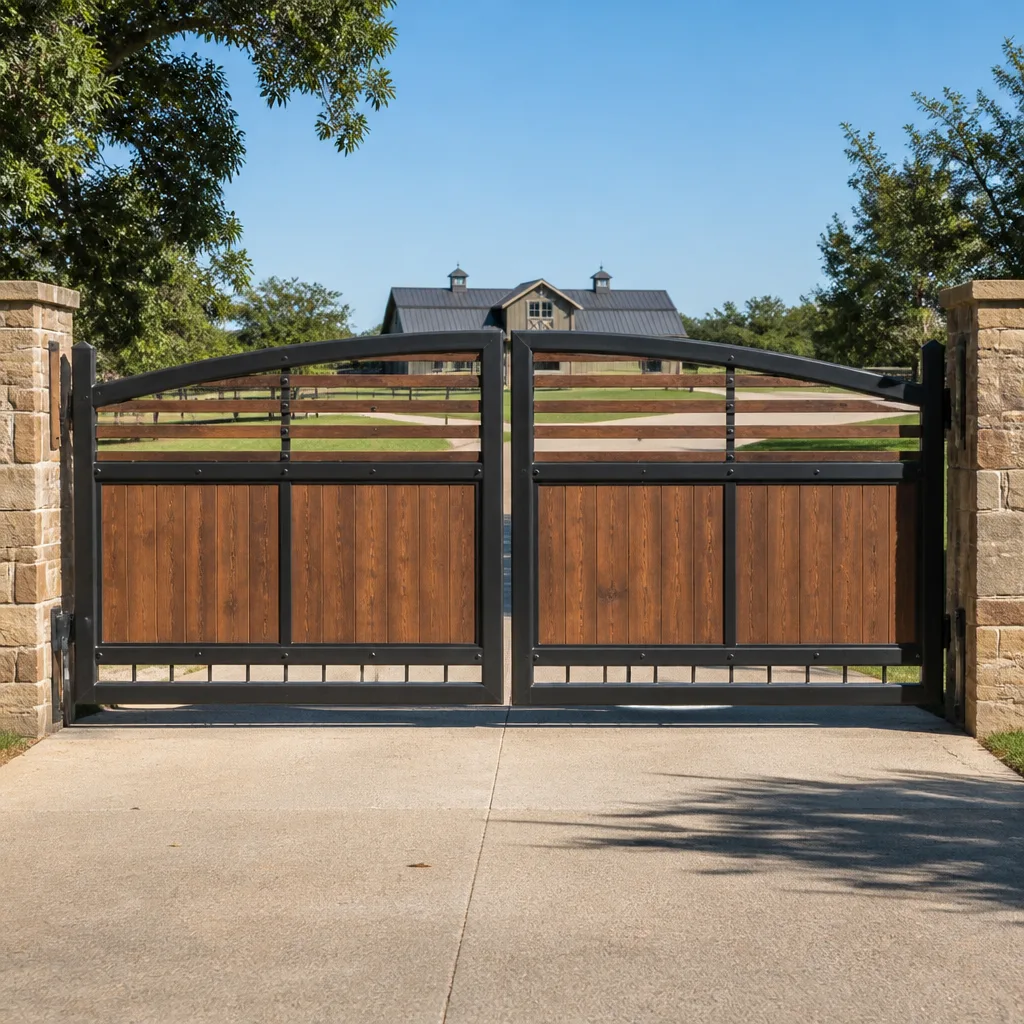 Farm & ranch
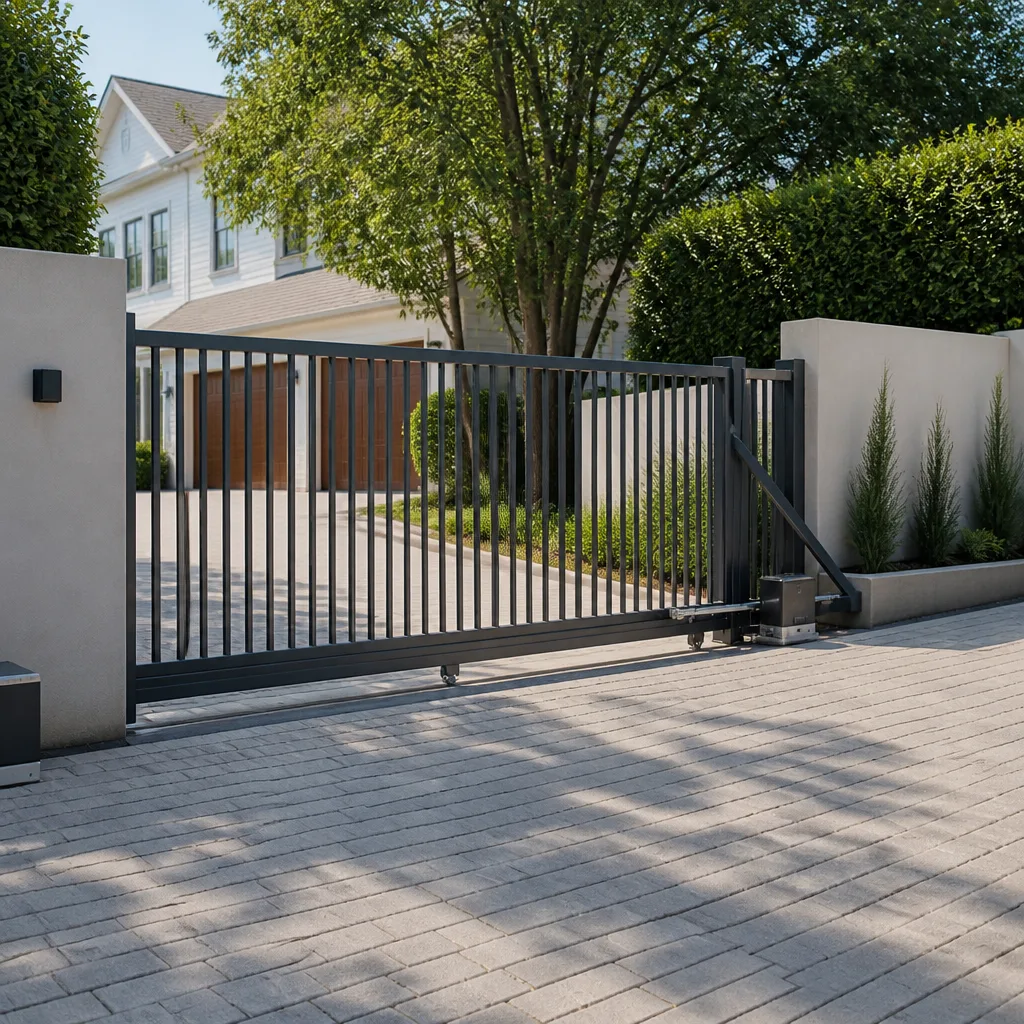 Sliding driveway gates
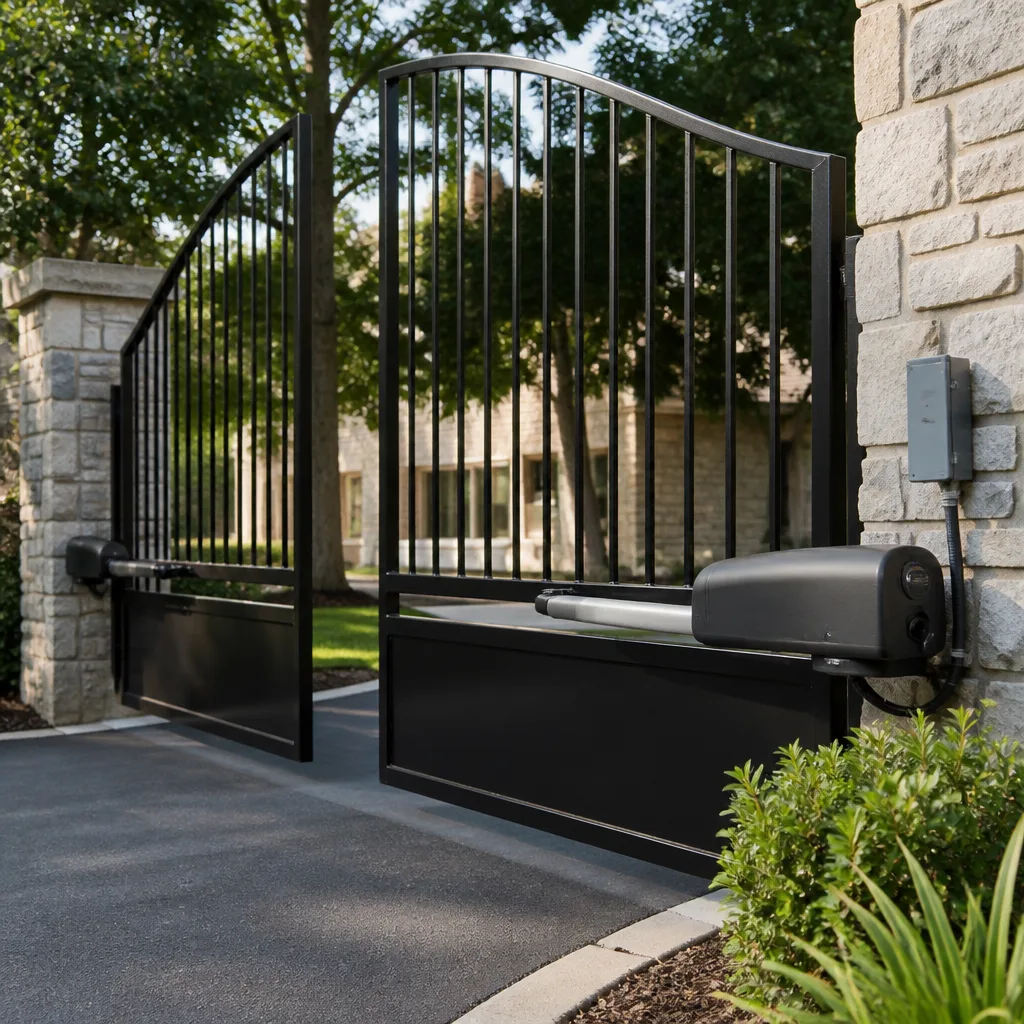 LiftMaster operators
Free on-site gate assessment - hinges, posts, and your LiftMaster or Nice gate operator checked before anything is quoted
The assessment is free and the quote is the invoice.
Get your free estimateSeasonal Gate Repair Care for Riverside: Year-Round Homeowner’s Guide
Riverside’s real gate-killing season isn’t winter. It’s the stretch from July through September, when ground temperatures near asphalt driveways can exceed 150°F and motor housings absorb heat that slowly destroys capacitors and control boards. We’ve pulled apart enough fried Viking and DoorKing operators in August to know the pattern: the failure didn’t start that week. It started months earlier, when small heat-related issues went unnoticed. This guide explains what Riverside’s climate actually does to automatic gate systems across each part of the year, what to inspect, what to adjust, and which problems you can catch before they become a 2 a.m. gate-stuck-open emergency.
Quick Answer
Riverside gate maintenance follows three seasons, not four: the heat cycle (May to October), the Santa Ana wind season (September to January), and the wet period (December to March). The highest-value routine is a post-summer inspection every October, when heat damage is visible but before wind and rain turn small problems into full failures. For most Riverside homeowners with automatic gates, two checks per year and one professional inspection are enough to prevent the majority of breakdowns we see.
Styles & brands we work with
Table of Contents
- The Summer Heat Protocol: Protecting Motors, Boards, and Wiring
- Santa Ana Wind Season Prep: Hardware, Limit Switches, and Stop Bolts
- Winter Wet-Season Checks: Corrosion Points on Heat-Stressed Hardware
- How Solar Gate Operators Behave Across Riverside’s Seasons
- The October Post-Summer Inspection: What to Check Before Wind and Rain
- A Simple Seasonal Maintenance Calendar for Riverside Gate Owners
- Common Mistakes to Avoid
- When to Call a Professional
- Frequently Asked Questions
The Summer Heat Protocol: Protecting Motors, Boards, and Wiring
In Riverside, summer is not a gentle season for electronics. Air temperatures in the 100s are common from June through September, but what matters for your gate operator is the surface temperature of the equipment itself. A metal control box mounted on a south-facing pillar in the La Sierra area or a motor housing sitting in direct sun near an asphalt driveway in Orangecrest can reach internal temperatures 30 to 50 degrees above ambient. Capacitors are the first component to fail in sustained heat. Control boards follow, especially boards that have already been running for five or more years.
We’ve replaced enough heat-damaged boards to know the failure signature: the gate works fine in the morning, acts erratically in the late afternoon, then works again after sunset. That’s a board or capacitor on the edge of thermal failure. If you catch it early, you replace a $40 capacitor. If you wait, you replace a control board and possibly the transformer behind it.
What to inspect during Riverside’s peak heat months:
- Operator housing temperature. After a hot afternoon, place a hand near (not on) the motor housing. If it’s too hot to hold for more than a couple of seconds, the unit is absorbing excessive heat. Add a shade cover or reposition if possible.
- Wiring insulation. Heat makes PVC insulation brittle. Inspect any exposed wiring between the operator and the control box for cracking or discoloration.
- Ventilation openings. Spider webs, dust, and debris clog the cooling vents on operators from Elite, Viking, and DoorKing. Clear them with compressed air when the power is off.
- Battery backup condition. Batteries degrade faster in heat. If your gate has a backup battery, test it in June and again in September. A swollen battery case is a sign it needs replacement now.
- Gate movement resistance. Heat makes metal expand. A gate that moves freely at 70 degrees may bind slightly at 105. Misalignment from heat expansion forces the motor to work harder, which shortens its life.
If your gate operator is over seven years old and has never had a capacitor replaced, Riverside’s heat has almost certainly been working on it. A specialist in electric gate repair in Riverside can test capacitor health and board voltage in under an hour, usually during a routine service call.
Santa Ana Wind Season Prep: Hardware, Limit Switches, and Stop Bolts
Every Riverside homeowner knows the Santa Ana winds. They arrive in the fall, sometimes gusting to 50 or 60 mph through the canyons and across the foothill neighborhoods, and they push against your gate with steady, repeated force for hours at a time. Most gate hardware is designed for normal operation, not for acting as a sail in sustained wind. The components that fail during Santa Ana season are almost always the same: limit switches, stop bolts, hinge brackets, and the physical stops that prevent the gate from over-traveling.
What happens in high wind is simple. The gate gets pushed beyond its normal travel. The limit switch, which tells the motor where to stop, gets struck or jammed. The stop bolts on the ground or the pillar take the impact. Over time, the gate’s swing or slide arc drifts slightly, and the operator starts slamming or stopping short. If you hear a metal-on-metal clank when the gate reaches full open or full close, that’s the stop bolt crying for attention.
Wind season preparation steps:
- Run the gate manually once. Disengage the operator and push the gate through its full arc by hand. Does it move freely? Does it wobble at any point? Wobble in the hinge area means a bracket is loosening.
- Inspect the limit switch mounting. Look for cracks, bent brackets, or a misaligned switch arm. This is the most common wind-season repair we make on Ghost Controls and Viking operators in Riverside.
- Check stop bolts and end stops. Tighten any that are loose. Replace any that show visible deformation. A bent stop bolt transfers impact force to the operator and will eventually crack the housing.
- Test the gate in wind, not in calm. If a Santa Ana event is forecast, run the gate through a full cycle during a gust. If it stutters, reverses, or slams, that’s your warning to address the issue before the wind gets worse.
- Clear debris from the gate track. Wind drives leaves, palm fronds, and trash into slide gate tracks. A blocked track in windy conditions can cause the gate to bind mid-travel and stall the motor.
For most homes in Riverside, wind damage is avoidable if the mechanical stops and limit switches are inspected before October. That’s a 30-minute task for someone who knows what they’re looking at, and it’s part of what our Gate Repair in Riverside service covers during routine maintenance calls.
Winter Wet-Season Checks: Corrosion Points on Heat-Stressed Hardware
Riverside gets most of its rain between December and March, and while the totals are modest compared to coastal California, the timing creates a specific problem. Your gate hardware spent six months baking in triple-digit heat. Paint and protective coatings micro-cracked. Zinc plating on bolts and brackets oxidized. Then the rain arrives, and every one of those cracks becomes a moisture entry point. The result is corrosion that accelerates faster than most homeowners expect.
The classic pattern we see in Riverside after the first real rain of winter: a gate that worked fine in November suddenly trips the circuit breaker or stalls halfway. The cause is usually moisture in a connection that was never sealed properly, or a ground wire that corroded over the summer and finally lost continuity.
Corrosion points to inspect after rain:
- Ground wire connections. The gate operator’s ground wire is the single most common corrosion failure point. Look for green or white powder around the connection point.
- Battery tray and terminals. If your operator has a backup battery, moisture in the tray creates acid residue that eats through terminals quickly.
- Photo eye and safety sensor housings. Condensation inside the sensor housing causes false triggers and gate reversals. Dry and reseal any housing that shows internal moisture.
- Hinge pins and bearing points. Light surface rust is manageable. Deep pitting is not. Clean and lubricate hinge pins with a dry lubricant after each significant rain event.
- The control board enclosure. Look for condensation or moisture trails inside the box. If the enclosure gasket is cracked or compressed, water finds its way in during driving rain.
- Post-to-gate mounting brackets. These take the brunt of the gate’s weight and are often the first hardware to show rust on older installations in Riverside neighborhoods like Wood Streets or Victoria.
If you catch corrosion early, you clean it, treat it, and move on. If you don’t, you’re replacing a control board or an entire operator. A new gate installation in Riverside is a bigger job than a seasonal corrosion check, and we’d rather see you avoid it through prevention.
How Solar Gate Operators Behave Across Riverside’s Seasons
Riverside is one of the best places in the country for solar-powered gate operators, and plenty of homes in the city use them, especially on larger lots where running line voltage to the gate is expensive. But solar operators have a different seasonal profile than plug-in or hardwired units, and many Riverside homeowners don’t realize how much the angle of the sun and the length of the day affect performance.
In summer, the problem is usually overcharging, not undercharging. Riverside’s long, intense sunlight hours can push a solar panel well past its rated output, especially if the panel is mounted flat. A charge controller that isn’t set correctly will overcharge the battery, which shortens battery life and can even cause swelling. We’ve seen summer battery failures on solar operators in Riverside that were entirely preventable with a simple controller adjustment.
In winter, the problem flips. Shorter days, lower sun angle, and occasional overcast during the wet season mean the panel produces less energy. A battery that was marginal in September will fail to hold a charge by January. The gate opens slowly, moves sluggishly, or fails to complete a cycle on cold mornings.
Seasonal solar gate adjustments for Riverside:
- Adjust the charge controller in May and October. Set a lower float voltage for summer and a higher float voltage for winter. This single adjustment can double the life of a solar gate battery.
- Clean the panel monthly during the dry season. Dust and pollen from Riverside’s dry summer settle on the panel and can reduce output by 10 to 20 percent.
- Check the panel angle twice a year. For Riverside’s latitude, a panel angle of roughly 34 degrees from horizontal works well year-round, but a slight summer flattening and winter steepening improves output modestly.
- Test the battery in October. Before the short days arrive, verify the battery holds a full charge and the panel is producing at least 80 percent of its rated voltage in direct sun.
- Inspect the panel mounting hardware after Santa Ana events. Wind can shift the panel angle or loosen the mounting bolts. A shifted panel in winter means a dead gate.
Solar operators from Ghost Controls and Mighty Mule are common on Riverside properties, and we service both regularly. The settings that keep a solar gate running through January are set in October, not December.
The October Post-Summer Inspection: What to Check Before Wind and Rain
If you do one thorough gate inspection per year in Riverside, do it in October. The reasoning is simple: all of the summer’s heat damage is visible, and all of the winter’s wind and rain stress is still ahead. You’re catching problems at the exact point where repair is cheapest and easiest.
We’ve been doing October inspections in Riverside long enough to know that a homeowner who schedules one every year will typically get two to four more years out of an operator than one who waits for a failure. The math is straightforward: a capacitor replacement costs a fraction of a control board, and a board replacement costs a fraction of a full operator replacement.
The complete October post-summer inspection checklist:
- Run the gate through three full open-close cycles. Listen for grinding, clicking, or hesitation. Any change in sound from what the gate normally does is meaningful.
- Check all hinge brackets, bolts, and stop bolts. Tighten anything loose. Replace anything bent, cracked, or heavily rusted.
- Inspect the limit switch and its mounting. Clean it, verify it’s properly positioned, and test that the gate stops at the same point every cycle.
- Test the safety sensors. Block the sensor path while the gate is closing. The gate should reverse immediately. If it doesn’t, that’s a fail-safe and a serious safety issue.
- Examine the operator housing, control box, and all visible wiring. Look for heat damage, cracked insulation, moisture, or pest intrusion. Clear ventilation openings.
- Check battery health if your gate has a battery backup. Test it under load, not just with a voltmeter. A battery that shows 12 volts resting can drop to nothing under load.
- Lubricate all moving points with a dry or silicone-based lubricant. Hinge pins, roller wheels, and the chain or belt drive if your operator has one. Avoid oil-based lubricants that attract dust and grit.
- Verify the gate’s manual release works. In an emergency, you need to be able to disengage the operator and move the gate by hand. Test this in October, not during a January power outage.
This inspection takes about 45 minutes for most single and double swing gates. If you’re not comfortable doing it yourself, or if anything on the list reveals a problem, an electric gate repair specialist in Riverside can complete the same inspection and address any issues in one visit.
A Simple Seasonal Maintenance Calendar for Riverside Gate Owners
Riverside’s climate doesn’t match the standard maintenance schedules published by gate manufacturers, most of which are written for the national market. Gate repair care in Riverside follows the city’s actual weather patterns, which means the calendar looks different here. Here’s what we recommend based on the seasonal conditions we actually see in Riverside.
January to March (Wet Season):
- After each significant rain, wipe down exposed metal surfaces and check for new rust.
- Inspect the control box interior for condensation after storms.
- Monitor solar battery performance through the short-day months.
- If the gate misbehaves during or immediately after rain, address it now. The moisture is finding a path, and it will find it again.
April to June (Warming Period):
- Verify the spring and summer charge controller settings on solar gates.
- Clean solar panels and clear dust from operator ventilation openings.
- Test the gate’s full travel and listen for changes that appeared over winter.
- Schedule any repairs identified during the wet season before the heat arrives.
July to September (Peak Heat):
- Check operator housing temperature on hot afternoons and add shade if needed.
- Inspect wiring insulation for heat-related cracking or brittleness.
- Watch for the late-afternoon erratic operation pattern that signals a failing capacitor or board.
- Keep the gate track clear even during dry months, because debris accumulates and binds movement.
October (The Critical Month):
- Complete the full post-summer inspection checklist above.
- Prepare for Santa Ana winds by checking limit switches, stop bolts, and mounting hardware.
- Adjust solar charge controller settings for winter.
- Make any repairs before wind and rain stress the system further.
November to December (Santa Ana Wind Season):
- After each wind event, run the gate and listen for new rattles or misalignment.
- Re-tighten stop bolts and bracket hardware that may have loosened.
- Clear wind-blown debris from slide gates and hinge points.
- Test the manual release before any forecast power outage.
This calendar is intentionally simple. Two focused maintenance days per year, one in spring and one in October, handle most of what Riverside’s climate throws at a gate system. The details matter more than the volume of work.
Common Mistakes to Avoid
- Treating winter as the primary threat. Riverside homeowners who follow generic maintenance guides focus on winter, but the real damage is already done by October. Summer heat is what weakens the system; winter wind and rain are just what finish it off.
- Ignoring the late-afternoon gate problem. A gate that works all day and fails at 4 p.m. in August is not a random glitch. It’s a heat-stressed component. Waiting to fix it means replacing a board or operator instead of a capacitor.
- Spraying lubricant everywhere without cleaning first. Riverside’s dry, dusty air means oil-based lubricants turn into abrasive paste quickly. Clean the part first, then use a dry lubricant. More owners damage hinges with bad lubrication than with no lubrication at all.
- Skipping the manual release test. You don’t want the first time you try to disengage the operator to be during a power outage or an emergency. Test it twice a year, including at least once during Santa Ana season.
- Overlooking the gate track. Slide gate owners in Riverside frequently forget that wind-blown debris and summer dust both accumulate in the track. A blocked or dirty track forces the motor to work harder, and in heat that’s a shortened motor life.
- Neglecting solar battery health before winter. A solar gate that limps through winter usually had a marginal battery in October. The battery didn’t fail in January; it was already close to failure, and the shorter days exposed it.
- Assuming a newer gate doesn’t need maintenance. New gate installations in Riverside are not immune to heat and wind. The first year of operation is when loose hardware and improper adjustments from installation get exposed. A one-year checkup catches these before they become warranties and callbacks.
When to Call a Professional
Some gate maintenance is homeowner-level work: cleaning, visual inspection, tightening accessible bolts, lubricating hinge pins. Other tasks should be left to someone who works on automatic gate systems daily. Call a professional if your gate trips a circuit breaker repeatedly, if you see smoke or smell burning from the operator housing, if the gate slams or reverses at unexpected points, if any safety sensor fails a test, or if the control board shows visible heat damage or burned components. These are not adjustments; they are failures in progress.
If you’re in Riverside and you’re not sure whether a problem is minor or serious, Riverside Gate Company offers free estimates in Riverside. Call (855) 942-4867 and we’ll tell you honestly whether it’s a maintenance item or a repair. Our technicians work on gates exclusively, which means the person who looks at your system has seen the exact problem you’re describing before.
Frequently Asked Questions
Twice a year is enough for most Riverside residential gates: once in spring to prepare for the heat cycle, and once in October to complete the post-summer inspection before wind and rain. Solar gate owners should add a battery test in October and a charge controller adjustment in May and October. If your gate is over ten years old or runs more than 20 cycles per day, quarterly service is worth considering. Call (855) 942-4867 if you’d like help setting up a schedule.
Capacitor failure from sustained summer heat is the single most common problem we repair on automatic gates in Riverside. The pattern is predictable: normal operation in the morning, erratic behavior in the late afternoon, and normal operation after dark. Replacement is quick and inexpensive compared to waiting until the control board fails, which is usually what happens when the capacitor issue is ignored.
Yes. Check your limit switches, stop bolts, and hinge brackets before the first significant wind event of the season, which for Riverside is usually in October or November. High sustained wind pushes gates beyond their normal travel and turns minor looseness into broken components. It takes about 30 minutes to inspect and tighten the critical points, and it’s the difference between a normal wind season and a gate that quits working mid-storm.
Yes, and it’s more common than most homeowners realize. Internal temperatures inside a metal operator box or control enclosure can exceed 150°F during Riverside’s peak summer afternoons, especially when the unit is mounted in direct sun or near hot pavement. Capacitors and electrolytic components on control boards fail at these temperatures over time, and the damage compounds with each hot season.
Watch how the gate behaves at dawn and dusk. If it opens sluggishly in the early morning during late fall and winter, the battery is not getting enough charge. If the battery case is warm or swollen during summer, it’s being overcharged. Both conditions are corrected by adjusting the charge controller settings, which should be done when the seasons change in May and October in Riverside.
Use the manual release to disengage the operator and move the gate by hand. If you haven’t tested the manual release before the outage, the mechanism may be stiff or seized, which turns a simple outage into an emergency. Test it twice a year. If you can’t disengage the gate or you’re not sure how, call a gate specialist.Riverside Gate Company handles gate repair in Riverside and can walk you through the release mechanism over the phone.
The Bottom Line
Riverside’s seasons attack gate systems in a specific order: heat first, wind second, rain third. The owner who understands this sequence prevents most failures before they happen. Two maintenance sessions per year, one in spring and one focused October inspection, cover the majority of what Riverside’s climate demands. The components that fail are predictable: capacitors and boards in summer, limit switches and stop bolts in wind season, and connections and grounds in the wet months. Catching each one early means a cheap fix instead of a full operator replacement. If you’re not sure what your gate needs, call (855) 942-4867. Estimates are free, and we’d rather help you prevent a failure than rush out to fix one at 2 a.m.
Written by the team at Riverside Gate Company, serving Riverside since 2011. Riverside Gate Company home
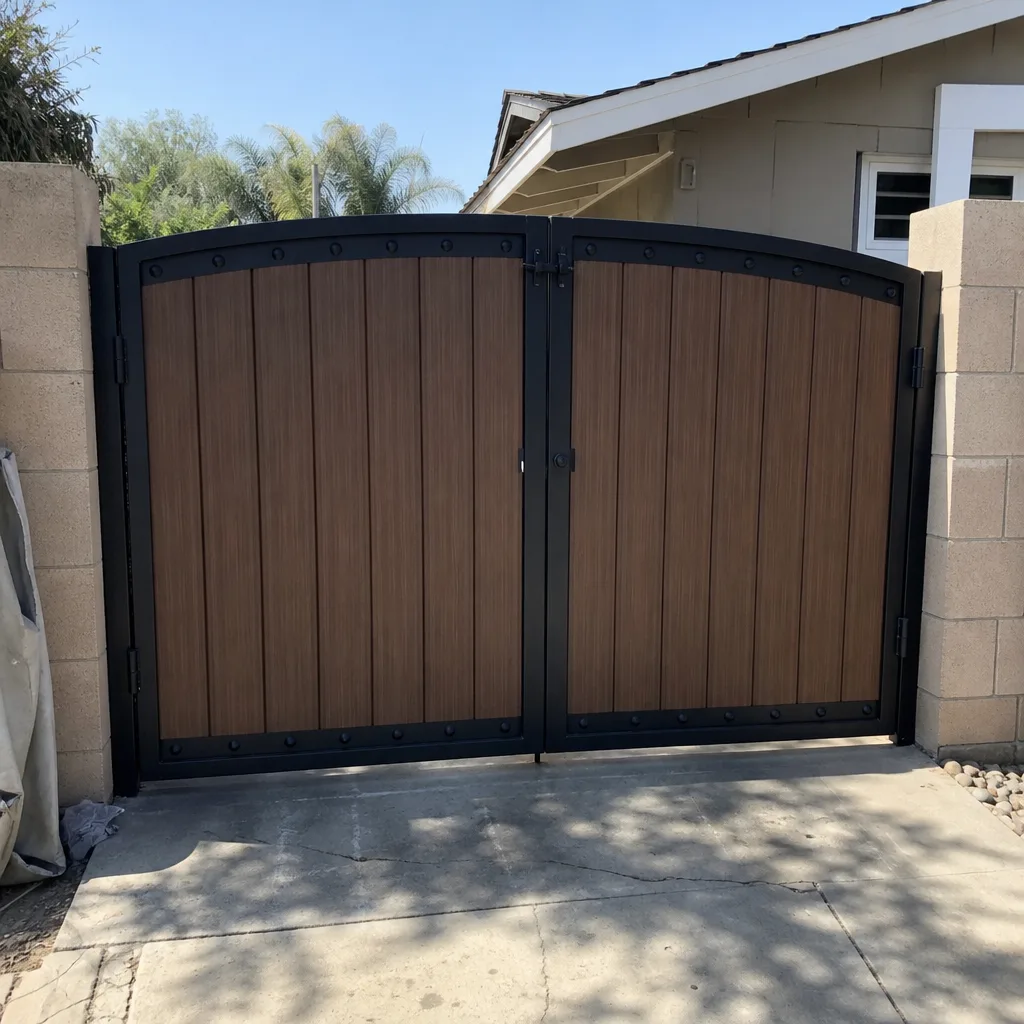
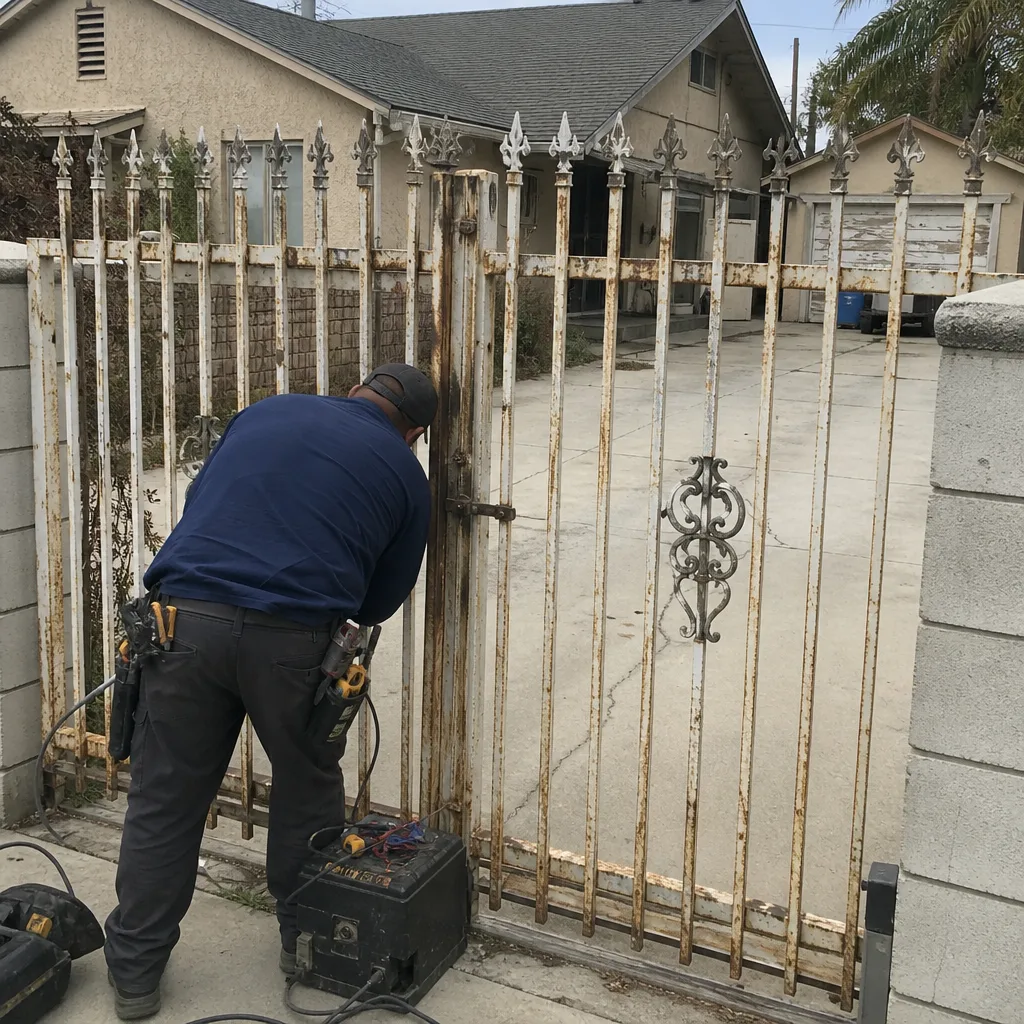
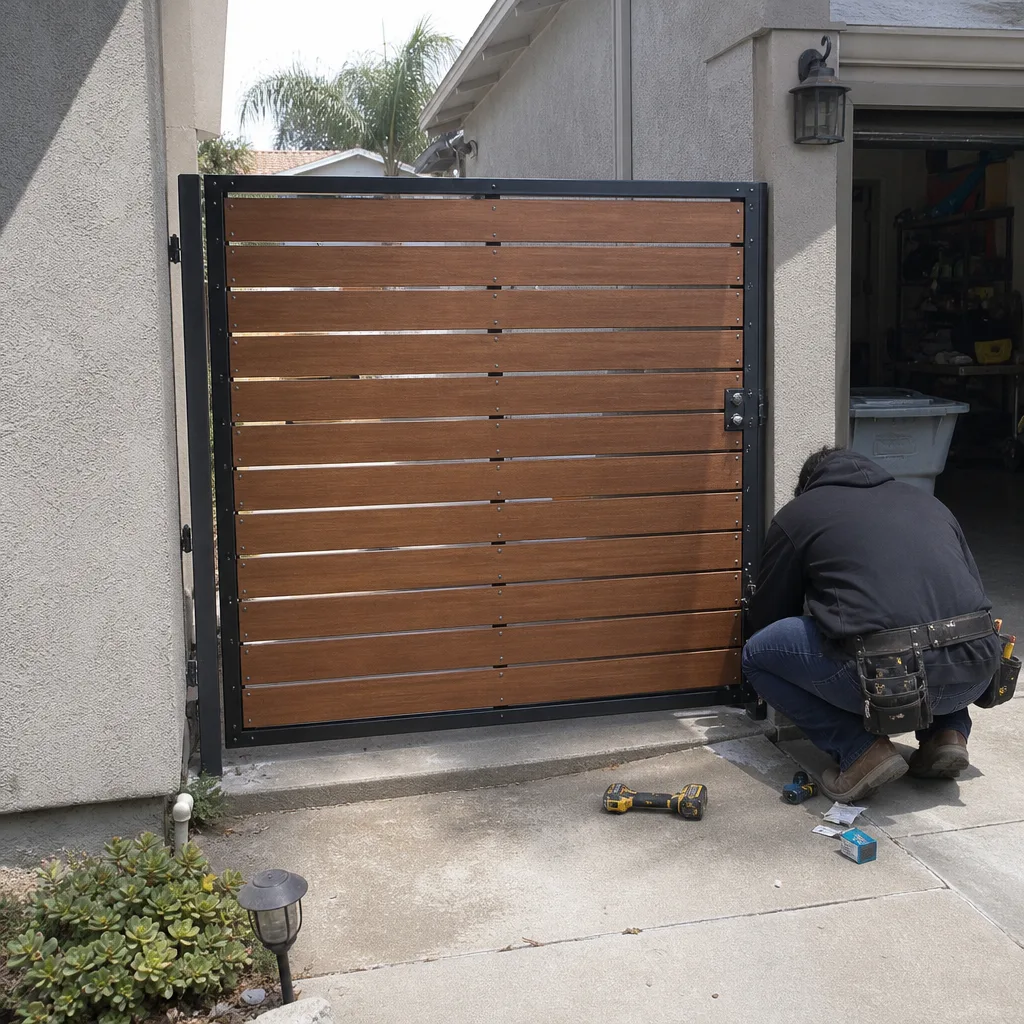
See the difference
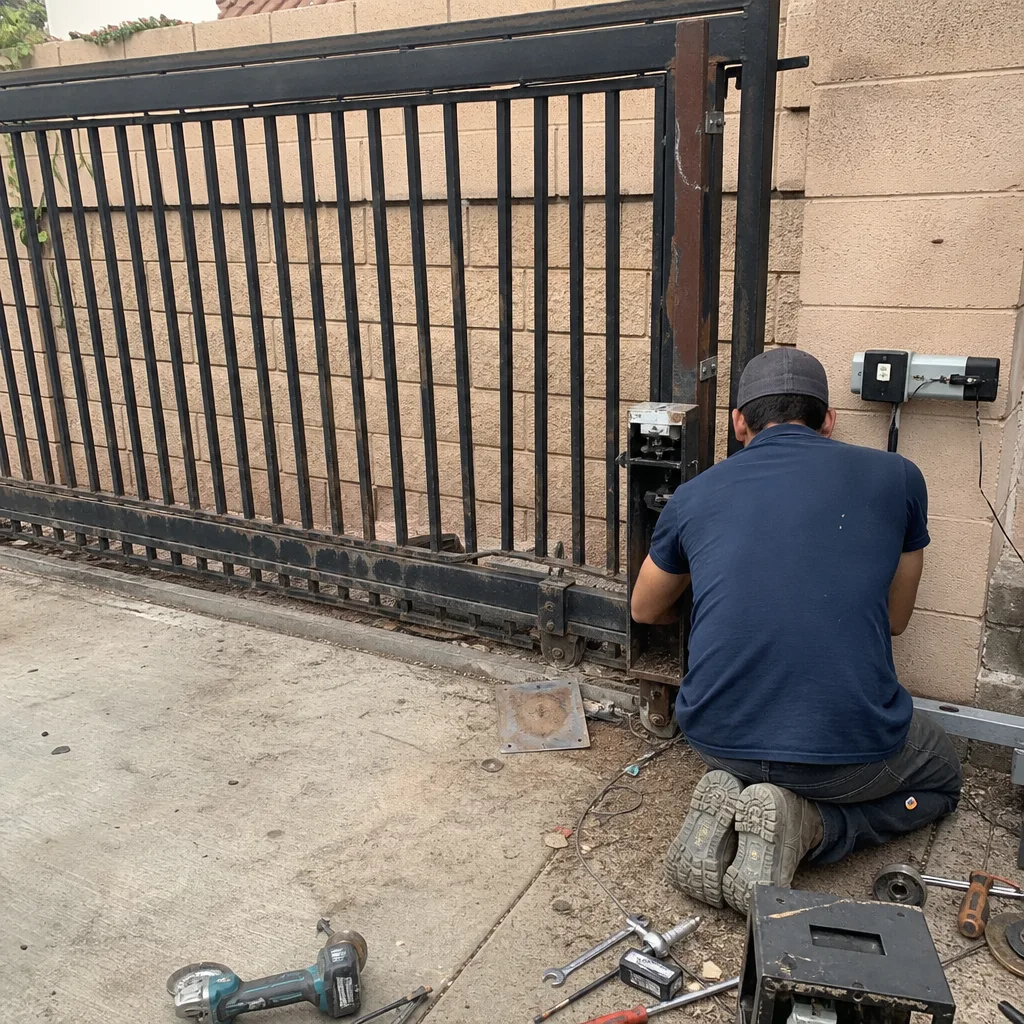 Before
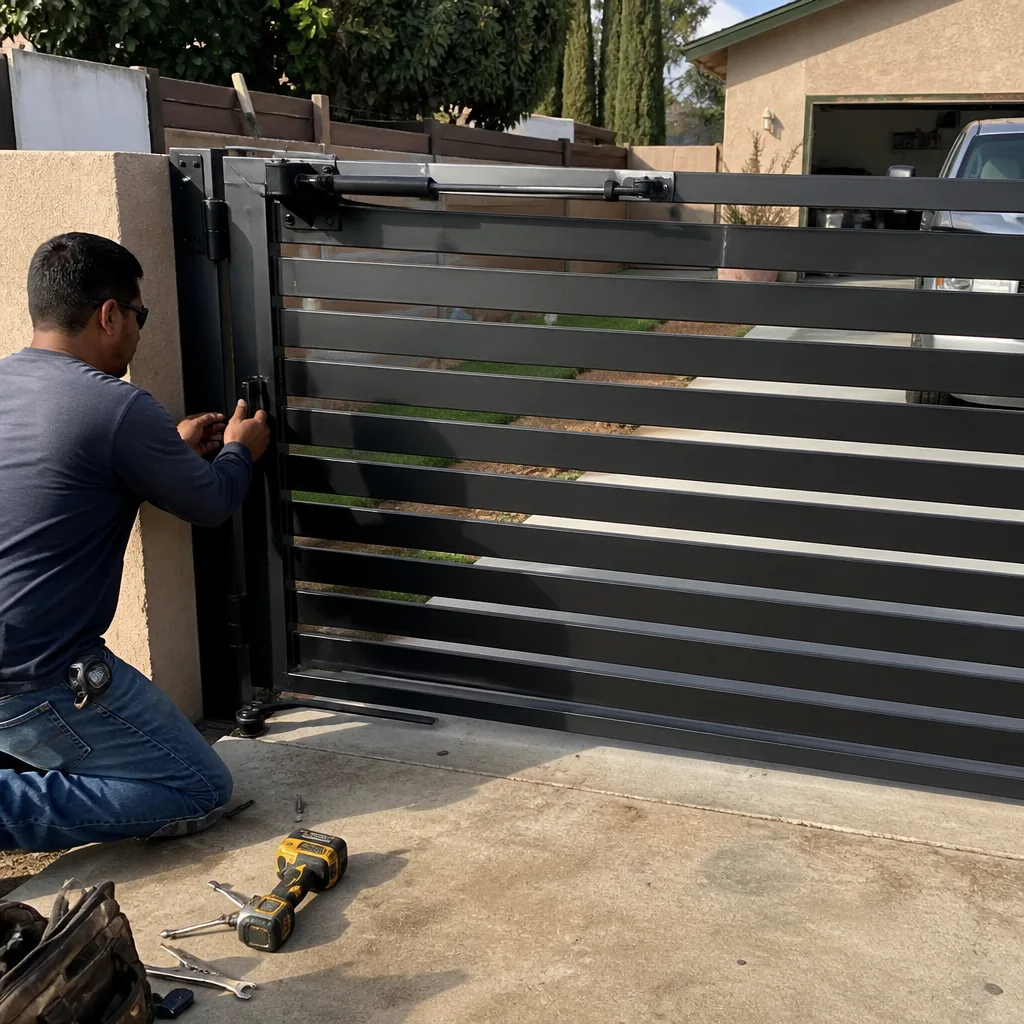 After
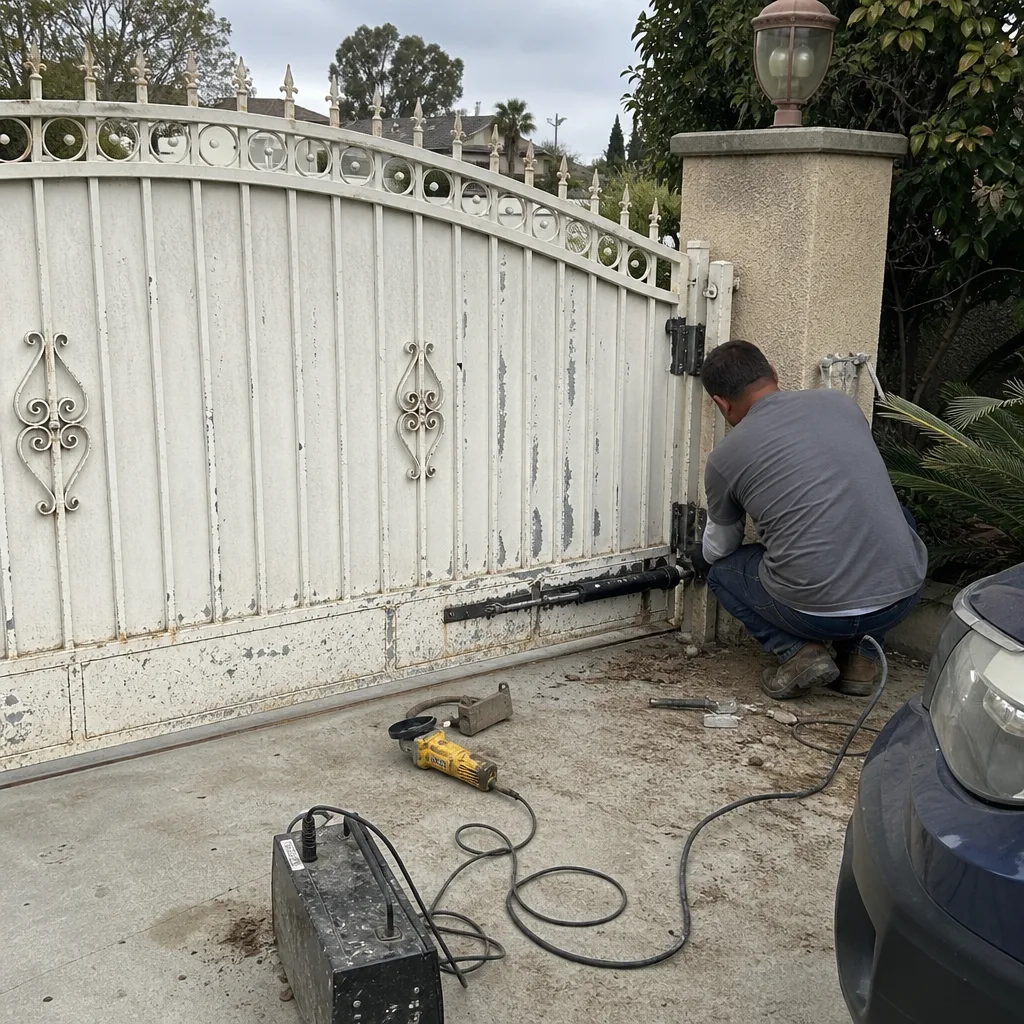 Before
 After
 Before
 After