
Last updated October 30, 2026
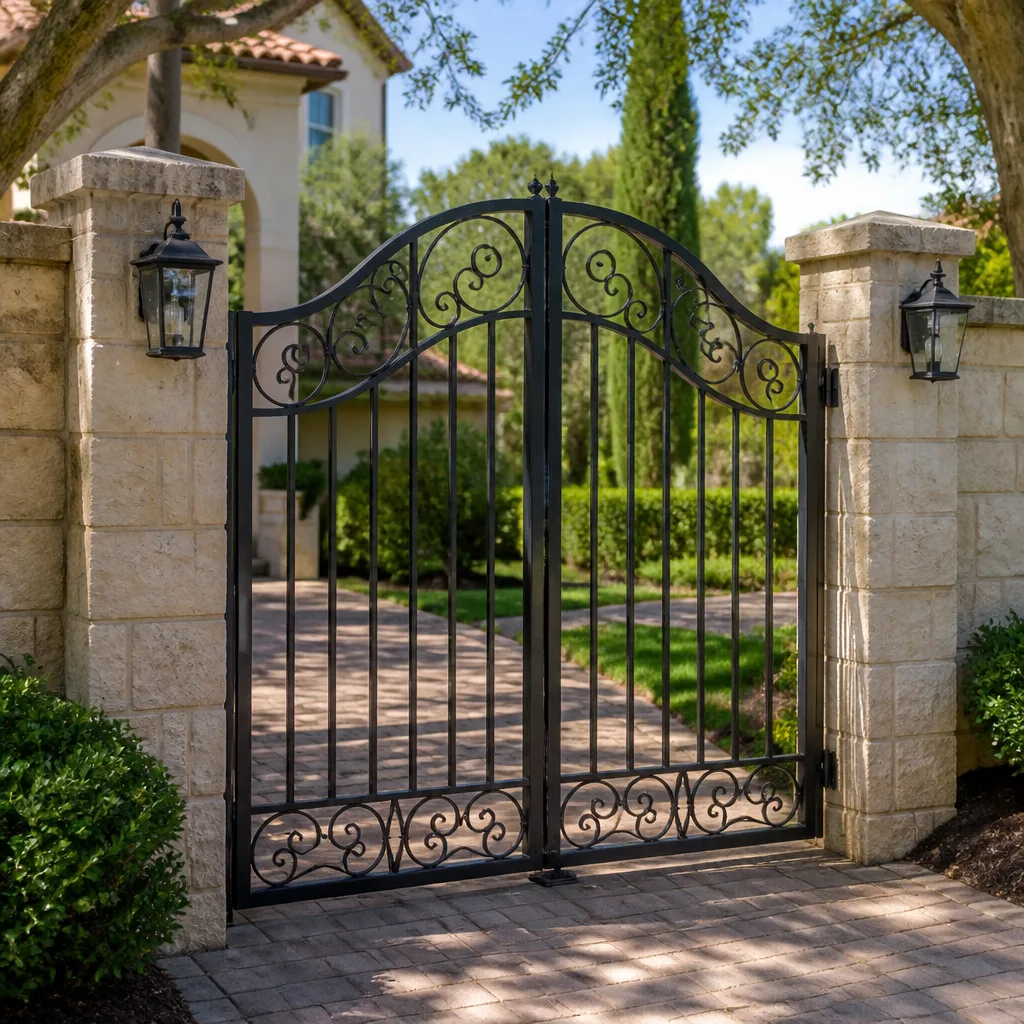 Wrought iron
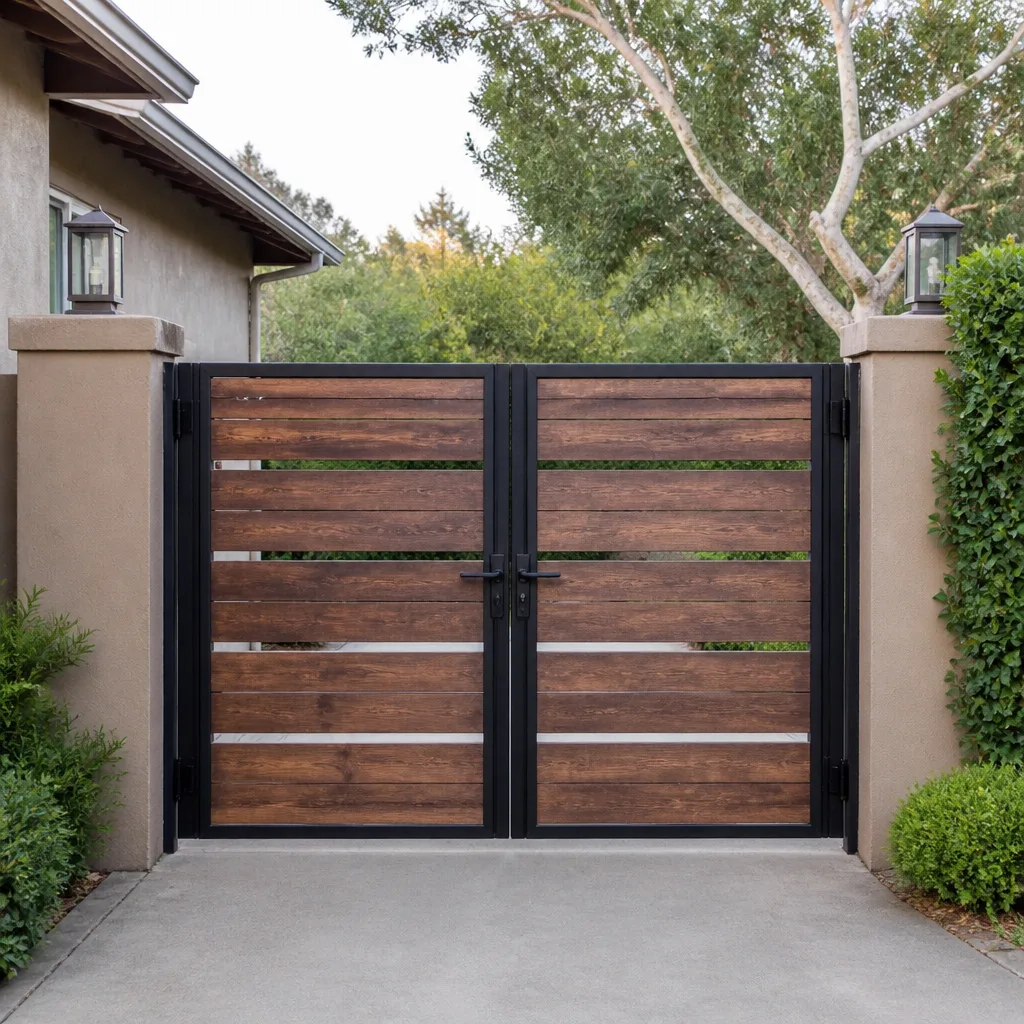 Wood & steel frame
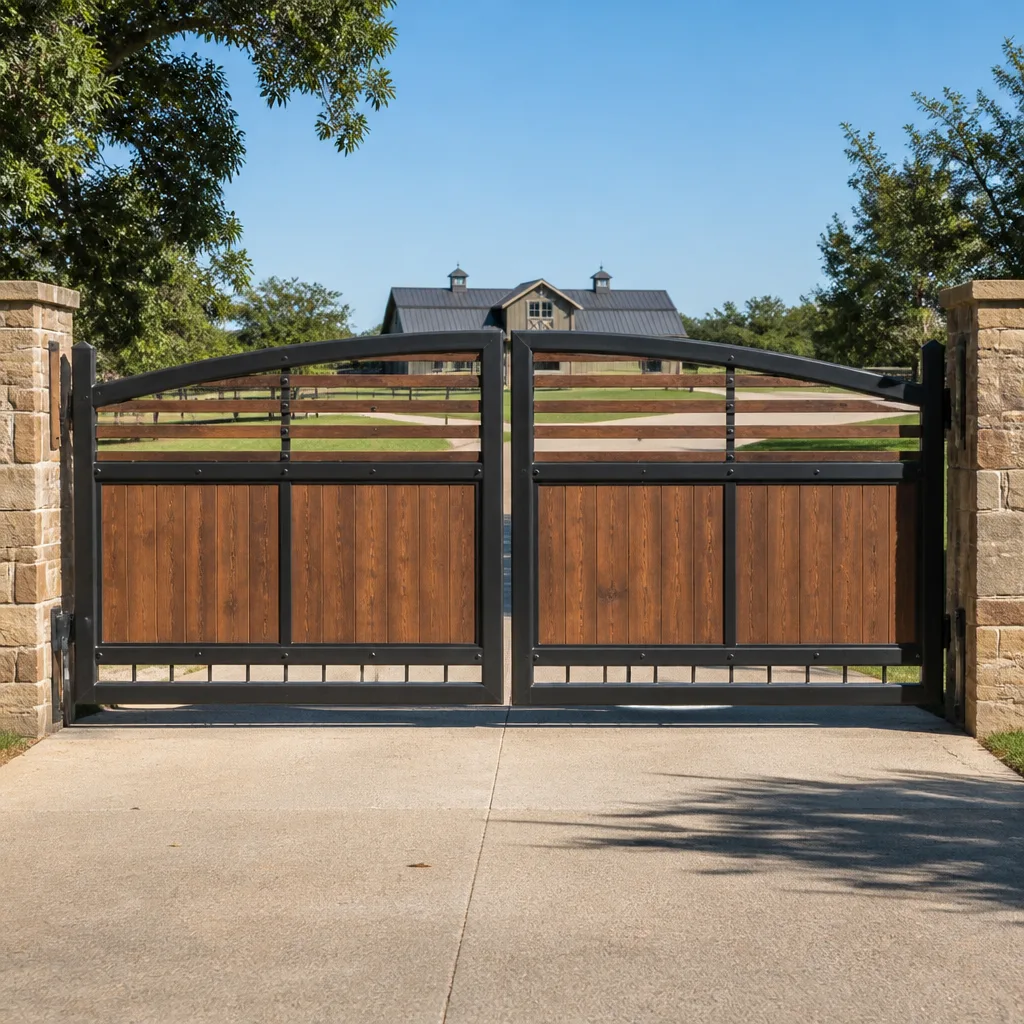 Farm & ranch
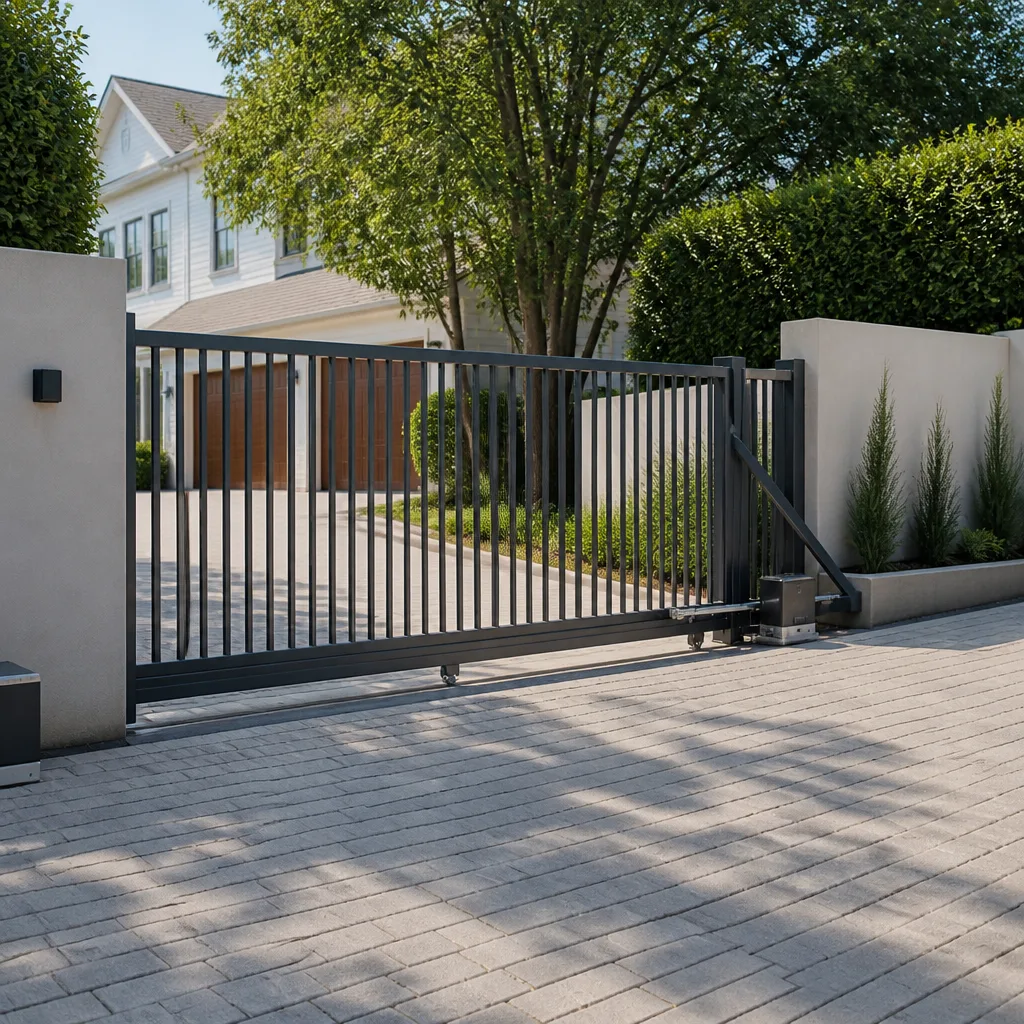 Sliding driveway gates
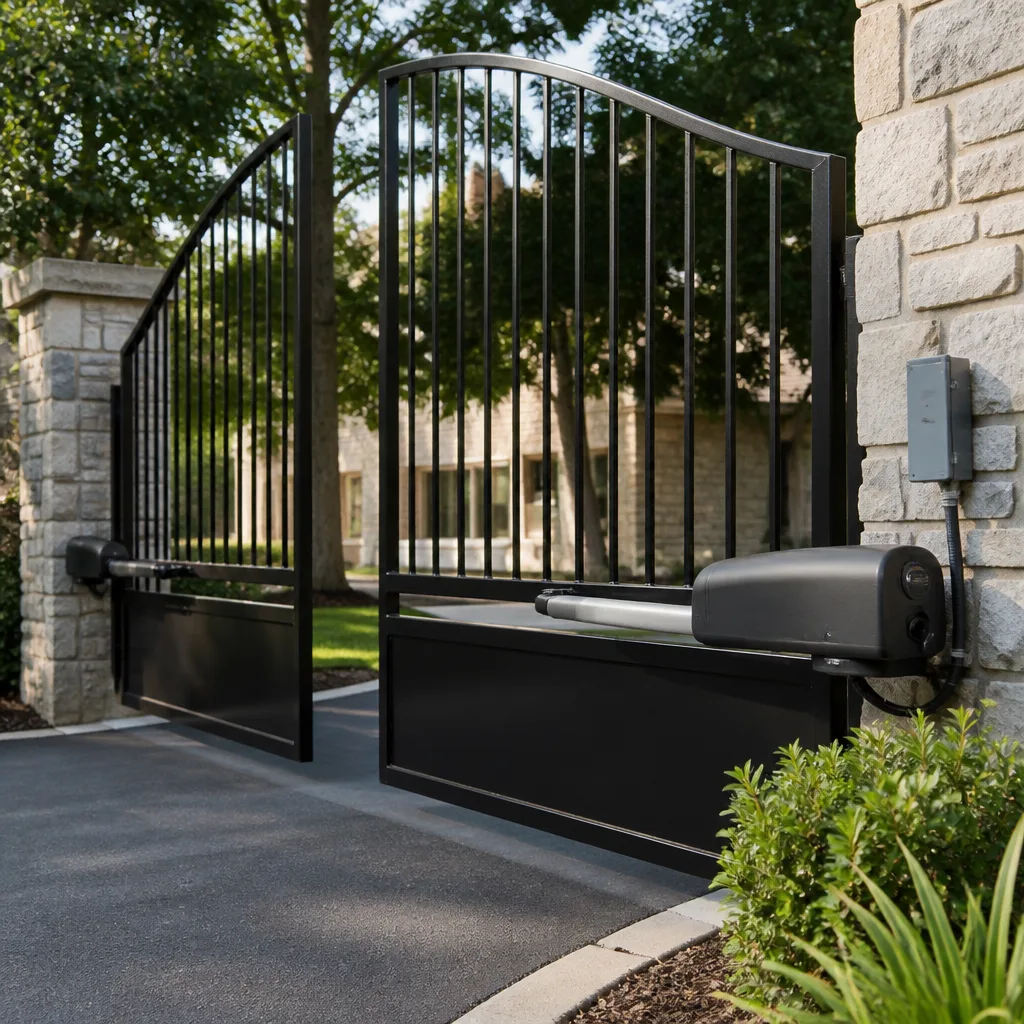 LiftMaster operators
Free on-site gate assessment - hinges, posts, and your LiftMaster or Nice gate operator checked before anything is quoted
The assessment is free and the quote is the invoice.
Get your free estimateThe Complete Guide to Gate Repair in Riverside
Most repeat gate repair calls in Riverside happen within 90 days of the original fix. That’s not because automatic gates are unreliable machines. It’s because the first technician treated a symptom, replaced the part that looked broken, and never found the underlying system failure that made it break in the first place. This guide walks through every major gate type installed across Riverside, maps the common failure modes to their actual root causes, and explains which repairs you can safely handle yourself and which ones need a gate specialist. By the end, you’ll know exactly what you’re looking at when your gate acts up, and you won’t pay for the wrong fix twice.
Styles & brands we work with
Quick Answer
Gate repair in Riverside typically costs between $175 and $600 for mechanical fixes and $250 to $1,200 for electrical or control board work (see our full 2026 cost breakdown),, depending on the gate type and the component that failed. A proper diagnosis traces the symptom back to the system, not just the part. Most repairs are completed same-day or next-day by a gate specialist who carries brand-specific parts.
Table of Contents
- The Most Common Gate Failures in Riverside
- Why Riverside’s Climate Changes the Repair Equation
- Slide, Swing, and Vertical Pivot: Three Different Systems, Three Different Repairs
- Symptom-to-Cause: The System-Level Diagnosis Framework
- How to Read Gate Error Codes on LiftMaster, DoorKing, and Mighty Mule
- DIY-Safe Repairs vs. Repairs That Can Hurt You
- What Gate Repair Costs in Riverside
- Common Mistakes to Avoid
- When to Call a Professional
- Frequently Asked Questions
- The Bottom Line
The Most Common Gate Failures in Riverside
After years of working on gates across Riverside’s neighborhoods, from Alessandro Heights to Mission Grove, we can group nearly every service call into a handful of distinct failure patterns. The gate won’t open at all. The gate opens but won’t close. The gate reverses mid-cycle. The gate makes a grinding sound. The gate moves slower than it used to. The access keypad stopped working. Each of these symptoms maps to a specific set of root causes, and understanding that mapping is the difference between a $200 fix and a $1,200 replacement.
Mechanical failures dominate wear-and-tear repairs on slide gates and swing gates in Riverside. A worn gear in the operator, a bent track, a sagging hinge, a failing wheel bearing. Electrical failures account for the rest, and they’re the ones generalists misdiagnose most often. A control board that won’t power up might be a failed transformer, a shorted accessory wire, a blown fuse, or a board that actually took a surge from a Riverside summer storm. Replacing the board without checking the power path is the classic 90-day repeat call.
Here’s what we see most often, by gate type:
- Slide gates: Worn drive gears, failing wheels, bent or obstructed track, sensor misalignment
- Swing gates: Loose or sagging hinges, failed linear actuators or arm operators, misaligned close-limit switches
- Vertical pivot gates: Worn pivot bearings, broken lift springs, actuator seal failure from dust and heat exposure
- All gate types: Dead remote batteries, faulty photo-eye sensors, control board capacitor failure, and power supply issues
The part that failed is rarely the whole story. A slide gate that chews through drive gears every two years probably has a track misalignment placing load on the gear that the gear was never designed to carry. Fix the gear without fixing the track, and you’ll be calling us again by next spring. That’s what separates a gate specialist from a repair technician who fixes what’s visibly broken and moves on.
Why Riverside’s Climate Changes the Repair Equation
Riverside’s climate is uniquely hard on automatic gate systems. We get 270-plus days of sunshine a year, summer temperatures that regularly cross 100 degrees, and stretches of dry heat with almost no humidity. That combination affects gate components in ways that coastal-climate repair guides simply don’t account for.
UV radiation is the silent killer of gate electronics. Control board housings fade and become brittle after years of direct sun exposure. Rubber seals on actuator arms dry out and crack, letting dust into the gear train. Wire insulation on exposed runs degrades faster in Riverside than it does in cooler, moister climates. We’ve opened control boxes on ten-year-old Riverside gates and found wire insulation that crumbles at a touch.
The dry heat accelerates a specific failure mode: capacitor degradation. Electrolytic capacitors on control boards, particularly on older LiftMaster and DoorKing operators, have shorter lifespans in sustained high heat. A board that works fine in mild weather may simply refuse to boot when the ambient temperature climbs past 105. That’s not a board that needs programming; it’s a board with a degraded power stage that needs component-level repair or replacement.
Dust matters too. Riverside sits in an inland valley where wind-driven dust coats everything. That dust accumulates inside operator enclosures, works its way into limit switch contacts, and abrades moving mechanical parts. Gates in Riverside need limit switch contact cleaning and operator enclosure sealing on a schedule that coastal homeowners never think about. If your gate’s limit settings keep drifting, dust-contaminated limit switches are the first thing we check.
Slide, Swing, and Vertical Pivot: Three Different Systems, Three Different Repairs
Treating all automatic gates as the same machine is the single biggest mistake in the repair industry. Slide gates, swing gates, and vertical pivot gates have fundamentally different mechanical architectures, and a repair approach that works on one can damage another.
Slide Gates
Slide gates roll horizontally along a track or on a cantilever design. Common operators include LiftMaster, FAAC, and BFT. Repairs center on the drive mechanism: gear teeth, drive chains, wheels, and track alignment. When a slide gate labors or stalls, the first diagnostic question is whether the motor is under excess load from a mechanical blockage or wheel failure. The second question is whether the operator’s internal gear is stripped. Fix the mechanical drag first, then address any operator damage it caused.
Swing Gates
Swing gates pivot on hinges at the post. They’re driven by either linear actuators (common on Viking and Elite residential systems), arm operators (DoorKing, LiftMaster), or underground operators on high-end properties. Repairs focus on hinge load, actuator health, and limit switch calibration. A swing gate that slows down or stops mid-travel usually signals a dying actuator or a hinge that’s binding as the gate shifts over time. Forcing the gate manually to “fix” the alignment bends the actuator rod and makes the repair more expensive.
Vertical Pivot Gates
Vertical pivot gates, also called barrier gates or lift gates, rotate vertically on a pivot assembly rather than rolling or swinging. They’re common on commercial properties in Riverside’s warehouse districts and on some larger residential estates. The failure profile is different: pivot bearings wear out, counterbalance springs fatigue, and actuator seals fail from dust intrusion. A vertical pivot gate that won’t stay closed usually has a spring or bearing problem, not a motor problem. Replacing the motor without addressing the bearing load fails the same way the original did.
Each gate type demands different diagnostic tools and different replacement parts. A technician who repairs all three from the same mental model is guessing. We stock parts and test equipment for all three architectures, so the diagnosis happens on site, not after a wrong part gets ordered.
Symptom-to-Cause: The System-Level Diagnosis Framework
Diagnosing an automatic gate properly means tracing the symptom back through the system until you find the component that actually failed. Here’s the framework we use, step by step:
- Identify the exact symptom. Does the gate not move at all? Move partway? Reverse? Make noise but not move? Open but not close? The exact symptom tells you which subsystem is involved.
- Check power and operator response. Is there AC power at the operator? Does the control board light up? Does the operator click when you trigger a remote? If nothing responds, start with power supply, transformer, and fuses.
- Isolate mechanical load. Disconnect the operator from the gate (in manual release mode) and push the gate by hand. If the gate is hard to move, the failure is mechanical: wheels, hinges, track, or bearings. If the gate moves freely, the failure is electrical or in the operator.
- Test accessories separately. Photo-eye sensors, keypads, loop detectors, and remotes each connect to the control board. A shorted accessory can pull down the entire system. Test each accessory circuit individually.
- Read the error code. Modern operators from LiftMaster, DoorKing, and others store diagnostic codes that pinpoint the failure subsystem. A blinking LED pattern is a repair map if you know how to read it.
- Confirm the root cause before replacing parts. Only replace a component once you’ve identified why it failed and verified the rest of the system is sound.
This process is the difference between fixing a gate today and fixing the same gate again in three months. When we repair a gate in Riverside, we run this full sequence, not just the part that gets the operator working again.
How to Read Gate Error Codes on LiftMaster, DoorKing, and Mighty Mule
Most modern gate operators communicate their failures through diagnostic codes, either on a small display or through LED blink patterns. Learning to read these codes will help you decide whether a repair is simple or requires a specialist. Here’s the quick reference for the three most common operator brands we service in Riverside.
LiftMaster Error Codes
- One blink on the diagnostic LED: Photo-eye sensor misaligned or obstructed. Clean the lenses and check alignment.
- Two blinks: Safety loop issue or reversed edge sensor triggered. Check the reversing edge and reset the loop detector.
- Three blinks: Limit switch fault. The travel limits need recalibration or the limit assembly needs cleaning (dust is a frequent cause in Riverside).
- Four blinks: Motor overload or RPM sensor failure. This often follows a mechanical drag issue that’s been ignored too long.
DoorKing Error Codes
- Display shows “ERR” with a flashing relay LED: Accessory short circuit on the keypad, loop detector, or photo-eye input. Isolate accessories one at a time.
- Gate reverses after closing: Entrapment sensor triggered. Check the safety edge and the close-force setting.
- No display, no relay click: Main control board power failure. Check transformer output before replacing the board.
Mighty Mule Error Codes
- Audible beep on remote press but no movement: Low battery (solar systems) or the operator is in manual release mode.
- Rapid red LED flashing: Stall detection triggered. The gate is binding mechanically or the operator’s limit isn’t set correctly.
- No response from any input: Control board power supply failure or a dead accessory input shorting the board.
Error codes point to a subsystem, not always the exact component. But they narrow the diagnosis dramatically, and knowing them before you call a service provider helps you ask better questions. We decode error patterns on all nine brands we service, including Elk and Elite commercial systems, as part of our standard diagnostic process.
DIY-Safe Repairs vs. Repairs That Can Hurt You
Some gate repairs are genuinely safe for a careful homeowner. Others can electrocute you, crush a limb, or leave you legally liable for an entrapment injury. Knowing the difference matters.
DIY-Safe Repairs
- Cleaning photo-eye sensor lenses and realigning them
- Replacing remote control batteries and reprogramming remotes (for most brands)
- Tightening loose hinge bolts on swing gates
- Lubricating gate wheels and track rollers (slide gates only)
- Removing obstructions from the gate path
- Cleaning dust from the operator enclosure (with power disconnected)
Repairs That Require a Trained Professional
- Anything inside the operator enclosure. Gate operators run on 120V or 240V AC power. The transformer, capacitor, and control board carry lethal voltage even when the gate isn’t moving. Not a DIY job.
- Gate spring and counterbalance work. Swing gate springs and vertical pivot counterbalance springs are under extreme tension. Releasing one incorrectly can send metal parts flying. Professionals use specific tools and procedures for this work.
- Entrapment sensor calibration. Gates are legally required to reverse when they encounter resistance. Calibrating this wrong leaves you liable if someone gets hurt. Professional calibration ensures the gate meets current safety standards.
- Control board replacement. This involves matching the board to the exact operator model, transferring settings, and verifying every accessory works. A mismatch can fry the new board.
- Any repair where the gate is large, heavy, or on an incline. A sliding gate can crush a foot. A swing gate can knock a person down. The forces involved are not something to experiment with.
If you’re not certain which category your repair falls into, err on the side of caution. A gate that’s too dangerous to leave broken is usually too dangerous to repair without proper training and tools.
What Gate Repair Costs in Riverside
Gate repair pricing in Riverside varies by gate type, the failed component, and whether we’re addressing a mechanical issue or an electrical one. Here’s what you can expect based on current market rates in this area:
| Repair Type | Typical Cost Range | What Affects the Price |
|---|---|---|
| Photo-eye sensor replacement | $150 – $350 | Brand, whether wiring is included |
| Limit switch cleaning or replacement | $125 – $300 | Operator brand, whether calibration is required |
| Drive gear replacement (slide gates) | $250 – $500 | Gear quality, track condition |
| Hinge replacement (swing gates) | $200 – $600 | Gate weight, number of hinges |
| Actuator or arm operator replacement | $400 – $1,200 | Brand, travel length, complexity |
| Control board repair or replacement | $300 – $900 | Board model, programming requirements |
| Full system diagnostic | $75 – $150 | Credited toward the repair in most cases |
These numbers represent typical ranges for Riverside gate repair work completed by a licensed and insured gate specialist. Every job gets a written, itemized quote before any work begins. No work starts until you approve the price, and no hidden fees appear on the final invoice. That’s the standard we hold ourselves to on every repair call, whether it’s a $150 sensor fix or a $1,200 control board replacement.
For more detail on what drives gate repair pricing in this market, see our Gate Repair in Riverside service page.
Common Mistakes to Avoid
- Replacing the part that looks broken without finding why it broke. A blown fuse or stripped gear is a symptom. The root cause is the overload or short that caused it. Replacing the part alone guarantees a repeat failure.
- Using a general handyman for electric gate repair. Gate automation requires brand-specific knowledge and diagnostic equipment. A generalist who “figures it out” on your gate is how boards get miswired and safety sensors get bypassed.
- Ignoring a gate that’s getting slower or noisier. Gates don’t degrade gracefully. The grinding sound you’ve been hearing for six weeks is a worn component that’s now causing collateral damage. Early repair is always cheaper than late repair.
- Bypassing or disconnecting safety sensors. We see this in Riverside all the time: someone disables a photo-eye or reversing edge to make the gate “work.” That’s not a fix. It’s creating an entrapment hazard that carries real legal liability.
- Forcing a stuck gate manually. Pushing or pulling a gate that’s mechanically bound bends actuator rods, strips gears, and damages operator internals. The repair bill doubles.
- Choosing a repair shop that doesn’t stock parts for your gate’s brand. A technician who has to “order the part and come back” hasn’t diagnosed correctly or doesn’t specialize in gates. Specialists carry common parts for the brands they service.
When to Call a Professional
Call a professional gate specialist when the gate has stopped moving entirely, when you hear grinding or unusual noises, when the gate reverses unexpectedly, when you see scorch marks or smell burning plastic near the operator, or when the access control system stops responding. All of these scenarios either involve dangerous voltage or mechanical forces that can cause real injury. If the gate controlled by the operator is larger than a standard walk-through gate and it doesn’t move freely by hand, don’t attempt the repair yourself. Riverside Gate Company offers free estimates in Riverside. Call (855) 942-4867 for a diagnostic visit, and we’ll tell you exactly what’s wrong before any work gets authorized.
Frequently Asked Questions
Gate repair in Riverside typically costs between $175 and $600 for mechanical work and $250 to $1,200 for electrical or control board repairs, depending on the component that failed and the gate type. A full diagnostic usually costs $75 to $150, which is credited toward the repair in most cases. Call (855) 942-4867 for an exact quote; estimates are free.
Yes, most mechanical gate repairs and common electrical fixes can be completed same-day or next-day when the correct parts are in stock. Riverside Gate Company carries parts for nine major gate automation brands, which means fewer return trips for parts. Call to confirm current availability.
We service LiftMaster, FAAC, BFT, Linear, Viking, Ghost Controls, DoorKing, Elite, and Mighty Mule systems. That range covers entry-level residential operators up to commercial-grade access systems. See our Riverside Gate Company home page for the full service overview.
A gate that opens but won’t close is usually a photo-eye sensor misalignment, an entrapment sensor trigger, or a close-limit switch failure. On modern LiftMaster and DoorKing operators, the error code will point to the exact subsystem. Clean and realign the sensors first, then check the reversing edge if the problem persists.
Cleaning sensors, replacing remote batteries, and lubricating slide gate wheels are safe DIY tasks. Anything involving the operator internals, control board, springs, or safety sensor calibration should be handled by a professional. Gate operators carry lethal AC voltage, and gate springs carry high tension forces.
Yes. We handle the full gate lifecycle: repair, electric gate troubleshooting, and new gate installation. That means you never need a second contractor when a repair reveals that replacement is the smarter long-term choice. See our Gate Installation in Riverside service page for details on new systems.
First, check whether the gate responds to its manual controls or backup release. If the operator clicks but doesn’t move, the problem is mechanical or in the operator’s drive train. If there’s no response at all, it’s a power issue or a control board failure. Either way, the fastest path is a diagnostic that isolates the failing subsystem. Our Electric Gate Repair in Riverside service covers remote and keypad diagnostics.
The Bottom Line
Gate repair done right starts with a real diagnosis. The part that failed is rarely the whole story, and Riverside’s heat, dust, and UV exposure means gates here fail differently than gates in cooler climates. If you own a slide gate, swing gate, or vertical pivot gate, understand the failure profile of your system, read the error codes, and know which repairs are safe to attempt and which ones require a professional. When you need Gate Repair services in Riverside, we’re one call away.
Written by the team at Riverside Gate Company, serving Riverside since 2011.
See the difference
 Before
 After
 Before
 After
 Before
 After