
Last updated October 30, 2026
 Wrought iron
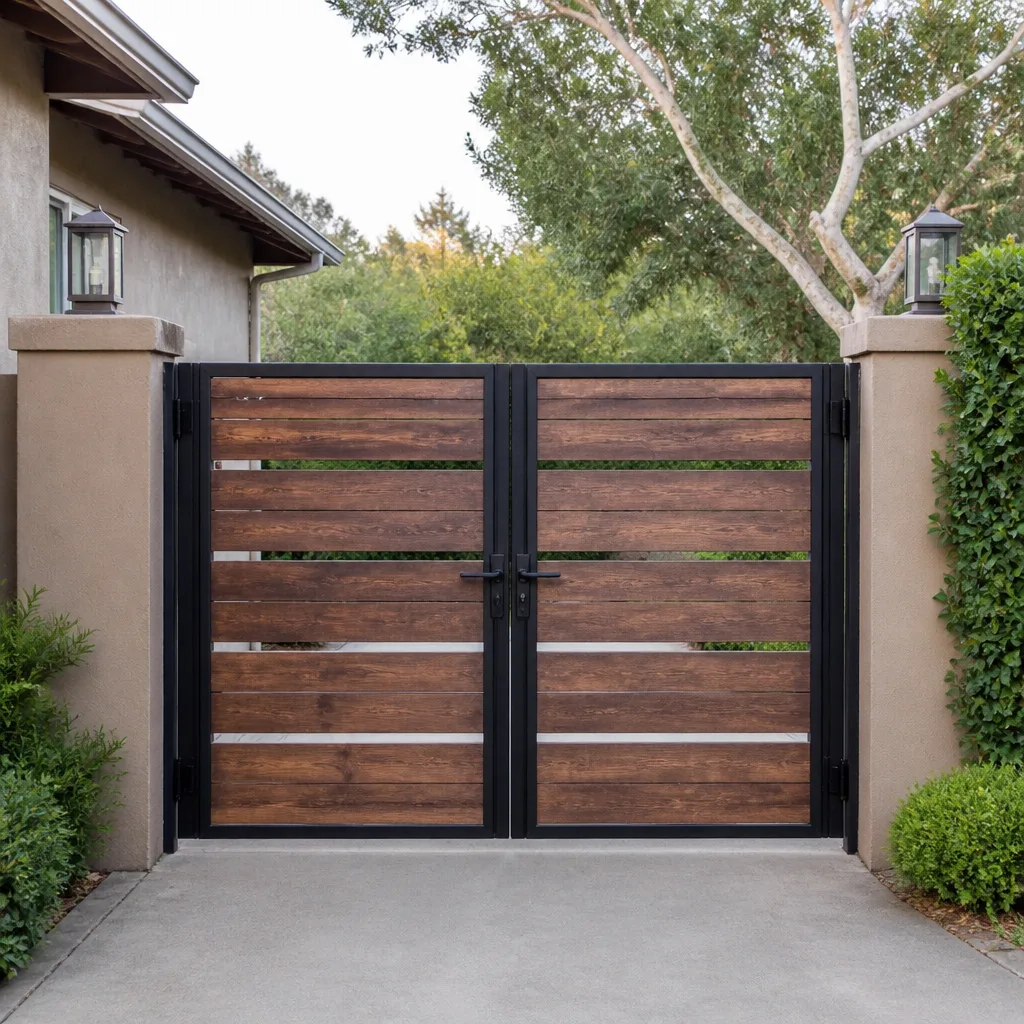 Wood & steel frame
 Farm & ranch
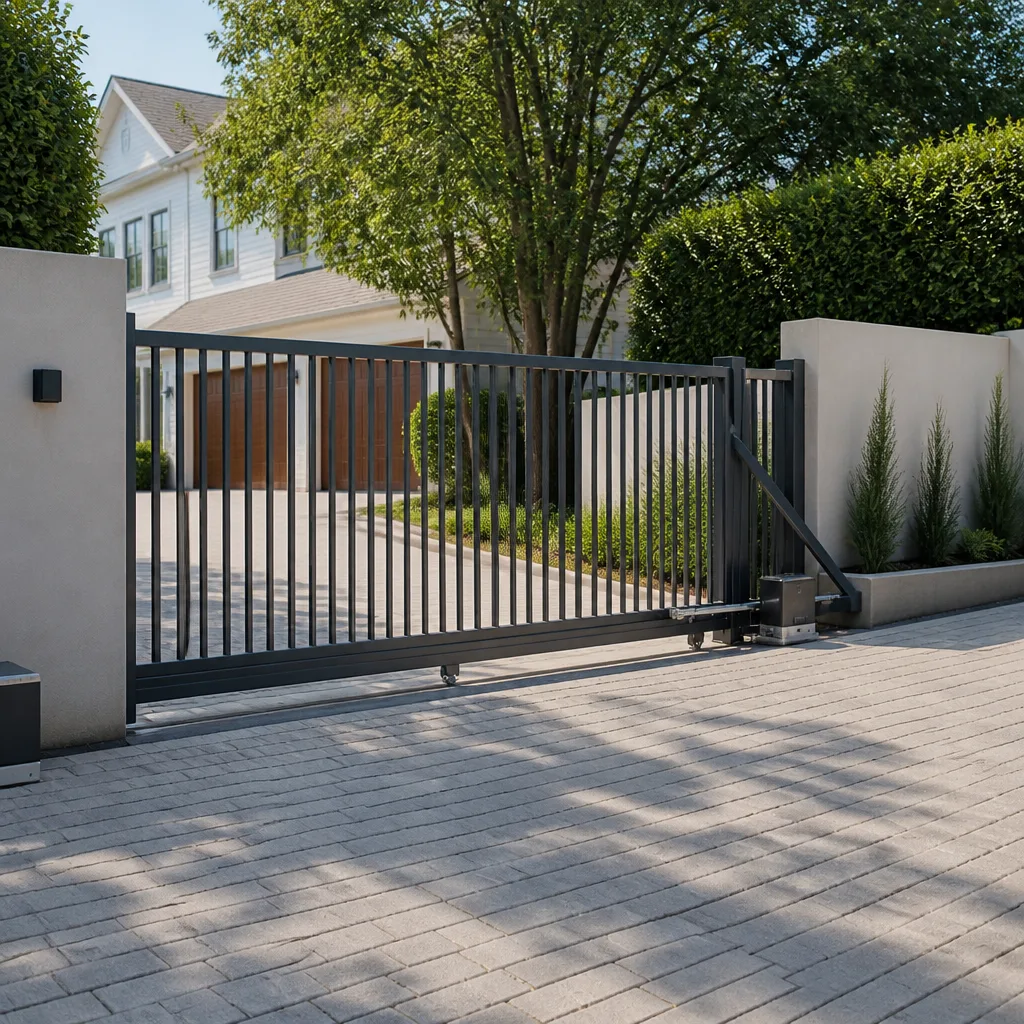 Sliding driveway gates
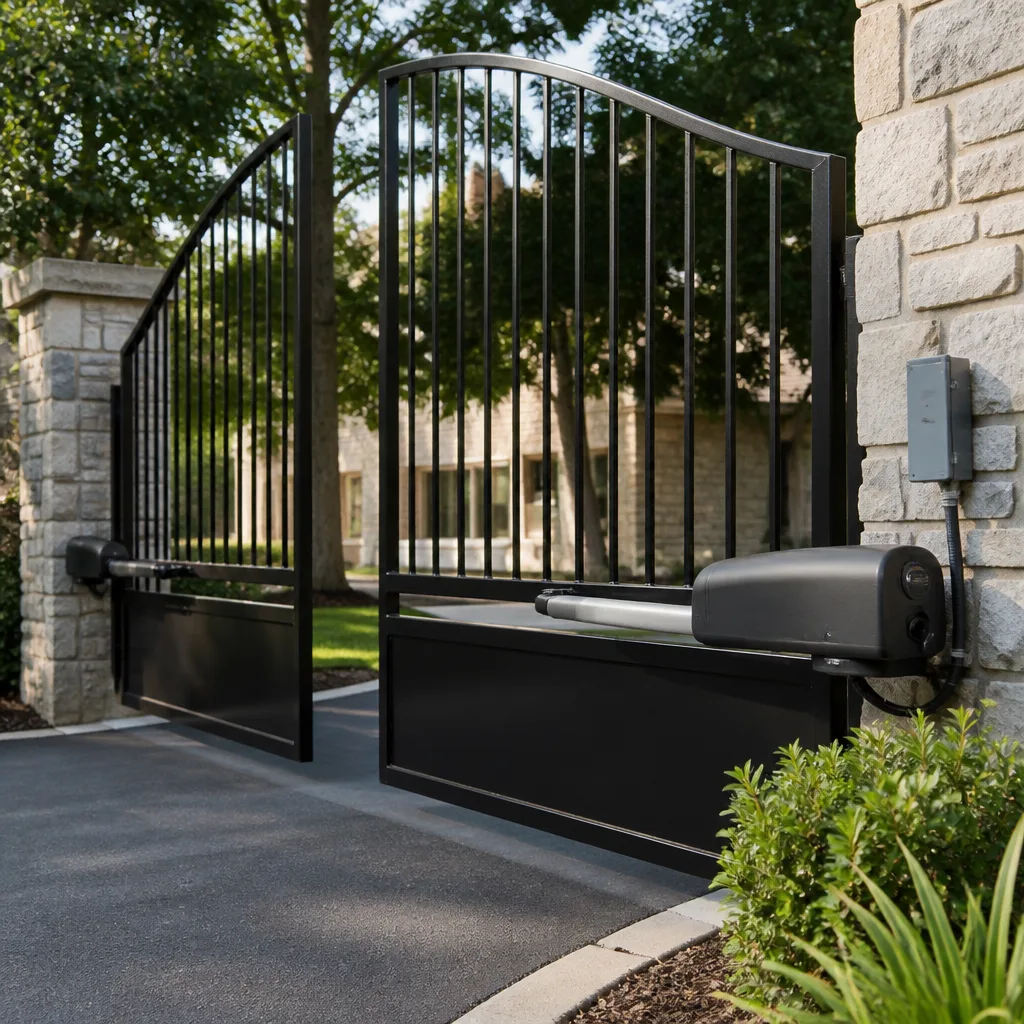 LiftMaster operators
Free on-site gate assessment - hinges, posts, and your LiftMaster or Nice gate operator checked before anything is quoted
The assessment is free and the quote is the invoice.
Get your free estimateGate Repair Emergency Preparedness Guide for Riverside Homes
A gate that fails at 10 PM with a car trapped inside or a property left unsecured isn’t just an inconvenience – it’s a security and safety emergency that most Riverside homeowners have no plan for. The worst time to learn how to manually release your automatic gate is at midnight with a dead motor and a technician who can’t arrive for two hours. The release mechanism on most operators takes 30 seconds to learn and could have been learned the day the gate was installed. This guide walks through everything a Riverside homeowner needs to know before the gate stops working, not after.
Quick Answer
Emergency gate preparedness in Riverside comes down to four things: knowing where your manual release is and how to use it, knowing whether your system has battery backup, having a way to physically secure an open gate, and having a gate specialist’s number saved before you need it. Spend 30 minutes completing the checklist in this guide and you’ll skip the panic that comes with a dead motor and an unsecured driveway.
Styles & brands we work with
Table of Contents
- Finding and Operating Your Manual Release
- Securing an Open Gate Without Damaging the Operator
- Power Outages and Battery Backup: What Actually Happens
- What to Tell the Gate Technician When You Call
- The One-Time Emergency Prep Checklist
- Temporary Fixes That Buy You Time (And Ones That Backfire)
- Riverside-Specific Risks: Heat, Wind, and Geography
- Common Mistakes to Avoid
- When to Call a Professional
- Frequently Asked Questions
Finding and Operating Your Manual Release
Every automatic gate operator has a manual release mechanism, but where it lives and how it works depends on the brand and model installed at your Riverside property. The release disengages the motor from the gate leaf so you can push or pull the gate by hand. On most slide gate operators from Linear and Viking, the release is a lever or T-handle mounted directly on the operator housing, usually behind a small access door or on the side facing the gate. On swing gate operators from FAAC and BFT, the release is typically a keyed cylinder or a small lever near the piston arm or articulating arm attachment point.
Here’s how to locate yours in under five minutes:
- Find the operator housing. For slide gates, it’s the metal box mounted near the gate’s path. For swing gates, it’s the box or arm assembly mounted on the gate post or column.
- Look for an access panel, keyhole, or exposed lever. Most residential operators have a small hinged door secured with a screw or quarter-turn latch. Commercial operators often use a keyed release to prevent tampering.
- Check for a pull chain or knob. Viking and Linear slide operators sometimes use a pull-style release that disengages the drive chain or gear from the track.
- Consult the manual. If the paperwork is long gone, search the model number printed on the operator’s data plate. Every manufacturer posts manuals online.
In our experience working on automatic gate systems across Riverside, roughly half of the emergency calls we take involve a homeowner who never learned where the release was or discovered it was locked and they didn’t have the key. If your release is keyed, get a duplicate key cut now and store it somewhere accessible but not obvious. If there’s no visible release at all, the operator may be an older or commercial model with a solenoid-driven brake that requires power to release – that’s a situation where you’ll want a technician’s number saved, because a dead motor on that type of system means the gate stays put until power is restored or a professional disengages it manually.
What to do if your gate has no visible release or a locked disconnect:
- Do not force the gate. Applying enough pressure to bend a track or damage the operator makes a 45-minute repair into a full replacement.
- Do not cut chains or cables. Some homeowners in Riverside have done this in a pinch and ended up needing a new operator, not just a repair.
- Call a gate repair specialist in Riverside who carries the right tools and knows how to disengage your specific operator without damage.
Securing an Open Gate Without Damaging the Operator
When the motor fails and you manage to get the gate open, you now have a different problem: a driveway that’s wide open to the street. In Riverside neighborhoods where lots back up to hillside terrain and sight lines are long, an unsecured gate is an obvious invitation. The goal is to hold the gate in place physically without stressing the operator, the track, or the hinges.
What works depends on the gate type:
- Slide gates: Use a heavy-duty ratchet strap or chain wrapped around the gate frame and a fixed post, column, or tree. Keep the strap low, near the track line, so the gate can’t be lifted off the rail. Do not wedge anything into the track itself – debris in the V-track or the rack will damage the gate when power is restored.
- Swing gates: Use a ground spike or a heavy object placed against the closed position of each leaf, or chain the two leaves together at the center. If the leaves are heavy steel or iron, two straps per leaf – one low near the wheel or hinge, one at mid-height – prevent wind from twisting the leaf.
- Barrier arm gates: Leave the arm in the raised position if it’s a simple break in a perimeter. If security matters, lower the arm manually and padlock it to the fixed post. Never hang weight from the arm – barrier arms bend under surprisingly little load.
One thing we’ve seen repeatedly in Riverside: homeowners unplugging the operator after a failure to prevent it from “trying to run.” That’s actually the right instinct, and it should be part of your routine. Unplug or trip the circuit breaker for the operator before you strap the gate. When power returns or the technician fixes the board, the last thing you want is the motor attempting to move a gate that’s chained in place.
Power Outages and Battery Backup: What Actually Happens
Riverside gets its share of power interruptions – summer heat waves stress the grid, seasonal Santa Ana winds knock down lines in the hills, and rolling blackouts have hit the Inland Empire more than once. When power drops, every automatic gate behaves differently depending on how it was configured.
Systems without battery backup: Most residential gate operators installed before roughly 2015 have no battery at all. When power fails, the motor simply won’t run. On slide gates with a magnetic lock or solenoid brake, the gate may stay locked until power returns – or it may release and allow manual movement depending on the design. On swing gates without a lock, the gate usually stays wherever it was but can be pushed open once the manual release is pulled.
Systems with battery backup: Many newer LiftMaster, FAAC, and BFT residential operators have an optional or built-in battery backup that keeps the gate functioning for a limited number of cycles. Here’s the honest truth about how these work, because the marketing overpromises:
- Most battery backups are designed for 10 to 30 cycles, not continuous operation.
- The battery degrades over 3-5 years in Riverside’s heat. A 5-year-old battery in a metal operator housing that bakes in 100-degree summers may only hold enough charge for 3-5 cycles.
- Battery backup does not mean unlimited operation. Once the battery is depleted, the gate stops until power is restored or the battery is replaced.
- If your battery is old and a power outage hits, get the gate to whatever position you need it in early, then disconnect power to preserve what’s left for an actual emergency exit or entry.
What to do when backup is depleted: Use the manual release. Move the gate by hand and secure it with the strapping methods above. Then call a Riverside electric gate repair specialist to check the battery health. A weak battery often gives no warning before it leaves you stuck.
What to Tell the Gate Technician When You Call
The phone call you make during a gate emergency sets the tone for how quickly the problem gets solved. The more specific information you can give the technician, the more likely the right parts end up in the truck and the first visit becomes the only visit. Here’s the exact information that helps us, and any competent gate repair company in Riverside, respond accurately:
- The brand and model of your operator. Not “it’s an automatic gate” – say “it’s a Viking F-1 slide operator” or “it’s a BFT swing arm, and I think the model is Bft Deimos.” If you don’t know the model, open the access panel and read the data plate. This tells the technician exactly what parts and diagnostic tools to bring.
- What the gate is doing right now. Is it dead silent? Does the motor hum but nothing moves? Does the gate start and stop? Does the keypad beep but nothing happens? Each of these symptoms points to a different failure: a dead capacitor, a stripped gear, a limit switch problem, a control board fault.
- What happened before it failed. Was there a recent power outage, a lightning strike, a car bumping the gate, or did it fail slowly over days? A gate that got slower and noisier over a week is a mechanical failure. A gate that worked fine and suddenly went dead after a storm is more likely an electrical issue. The distinction matters for parts.
- The gate’s weight and material. A 16-foot steel slide gate is a different animal than an 8-foot aluminum swing gate. Knowing this helps the technician anticipate what it will take to move it manually and what replacement components are appropriate.
- Your access situation. Is there a pedestrian gate or a second entry? Is the driveway accessible from a street gate without pulling into the property? If the gate is stuck closed and your car is inside, the technician needs to know how to reach the operator.
At Riverside Gate Company, we take that information and give you a straight answer about when we can get there and what the repair will likely involve. If a gate can’t be fixed on the first visit, we’ll leave it secured and give you a written plan – you won’t be left with a gate swinging in the wind.
The One-Time Emergency Prep Checklist
Everything in this guide so far gives you the knowledge. This checklist turns it into action. Block out 30 minutes on a weekend, walk through each item, and write the answers down. Tape the completed sheet inside your electrical panel door, inside a kitchen cabinet, or anywhere you’ll actually find it during a crisis.
- Locate the manual release. Find it, operate it once, and confirm you can move the gate by hand. If it’s keyed, make a duplicate key and label it.
- Record the operator brand and model. Take a photo of the data plate with your phone and email it to yourself with the subject line “GATE OPERATOR.” This single step saves more time on emergency calls than anything else.
- Check battery backup status. Open the operator housing and look for a battery. If you have one, note its age. If you don’t, decide now whether you want one. Riverside’s heat shortens battery life, so if yours is more than three years old, have it load-tested.
- Save a gate specialist’s number. Save (855) 942-4867 in your phone as “Riverside Gate Company – Emergency.” The worst moment to search for “gate repair Riverside CA” is when your gate is stuck.
- Document the gate disable procedure. Note which circuit breaker controls the gate and how to kill power. Write down the steps for your specific operator’s manual release so any family member can follow them.
- Take photos of the closed gate and the operator housing. In an emergency, sending a photo to the technician tells them more in ten seconds than a five-minute description on the phone.
Thirty minutes invested now beats a three-hour wait outside your own driveway later. This is the single highest-value preparedness action you can take as a Riverside gate owner, and it costs nothing. For more guides & resources, visit our blog.
Temporary Fixes That Buy You Time (And Ones That Backfire)
Between the moment the gate fails and the moment a technician arrives, there are things you can safely do to keep your property functional. There are also things that will turn a $200 repair into a $1,500 operator replacement. Here’s the difference.
Safe temporary actions:
- Manual release and push. If the motor is dead, the release is accessible, and the gate moves freely, you can operate it by hand. Close and secure it at night with straps, and open it in the morning when you need to leave. This is the most common workaround we recommend to Riverside homeowners waiting for a repair appointment.
- Kill power to the operator. If the gate is behaving erratically – opening on its own, stopping mid-travel, or the motor is making a grinding sound – kill the breaker. An erratic operator can cause serious damage to the gate, the track, or a vehicle in its path.
- Switch off the access system. If your keypad or intercom is malfunctioning but the gate works fine, disable the access component and operate the gate manually or with a different method until the specialist arrives.
Actions that backfire:
- Forcing the gate with a vehicle. Bumping the gate with your car to “help” it open bends the gate, the wheels, and the rack. Once the rack is bent, the gate will never run smoothly again without replacing it.
- Lubricating everything. Spraying WD-40 or white lithium grease into the operator housing or onto the control board destroys electronics. Only lubricate the mechanical components your manual specifically instructs you to lubricate, and use the specified lubricant.
- Tampering with limit switches. Homeowners sometimes try to adjust the open and close limits to fix a stopping problem. In most cases, the limit switch isn’t the issue – the problem is an obstruction, a failing sensor, or a board fault. Misadjusted limits can send a gate crashing through a fence or into a car.
- Bypassing safety edges or photocells. Never disable the safety devices. A gate hitting a child, a pet, or a car at full force is a risk no one in Riverside should take. This isn’t an opinion, it’s a UL 325 safety standard issue, and it’s illegal for any professional to leave a gate without functioning safety devices.
Riverside-Specific Risks: Heat, Wind, and Geography
Riverside’s climate and geography create gate problems that homeowners in coastal neighborhoods don’t face. Understanding these patterns helps you anticipate failures before they happen and describe them accurately when they do.
Heat. Summer temperatures in Riverside regularly exceed 100 degrees, and metal operator housings bake in direct sun. Inside those housings, temperatures can climb 30-40 degrees above ambient. That heat kills three things on a predictable schedule: capacitors (which fail suddenly and leave the motor dead), control board solder joints (which crack and cause intermittent failures), and lead-acid backup batteries (which lose capacity faster in heat than anywhere else in Southern California). If your operator is more than seven years old and has lived its whole life in a Riverside summer, you’re on borrowed time. A proactive inspection before the hottest months can catch a swollen capacitor or a failing board before it strands you.
Santa Ana winds. The seasonal winds that sweep through the Inland Empire carry fine dust and grit. That dust works its way into operator housings, onto limit switches, and into gear trains. Over time, it creates exactly the kind of intermittent failures that are hardest to diagnose over the phone. If your gate has been getting glitchy in the fall and winter months, dust intrusion is a likely contributor. Annual cleaning of the operator internals – something a gate installation and repair specialist in Riverside does as routine maintenance – extends the life of expensively damaged components.
Hillside and grade changes. Many Riverside properties are built on slopes, with driveways that climb or descend from the street. A slide gate on a grade works harder on every cycle than the identical gate on flat ground. The motor strains more, the drive chain or belt wears faster, and the gearbox runs hotter. If your gate sits on a slope, you should be more conservative about cycle counts and more aggressive about maintenance intervals. What’s a ten-year component on flat ground may be a five-year component on a hillside in the Alessandro Heights or Canyon Crest areas.
Riverside’s older housing stock. Many homes in the Wood Streets, Magnolia Center, and Victoria neighborhoods were built before automatic gates were common. Retrofits on those properties sometimes involve dated electrical panels, older conduits, and gates that were originally designed for manual operation. When problems occur on these systems, they often involve the power supply to the operator – a GFCI that trips, a conduit that’s been damaged by roots, or an underground wire that’s given up after 30 years. A technician who knows Riverside’s older construction will check the power feed before assuming the operator is the problem.
Common Mistakes to Avoid
- Waiting until the gate fails to find a technician. Emergency calls cost more, take longer, and happen on the worst timeline. Save your technician’s number now, while the gate works fine. The difference between a same-day repair and a two-day wait is often the phone call you made months ago.
- Never learning the manual release. This is the single most common mistake we see in Riverside. The release takes 30 seconds to locate and use, but most homeowners first learn about it at 9 PM with a dead motor and a car inside the driveway.
- Assuming the system has battery backup. Most operators don’t, and many of those that do have batteries that are long past useful life. Check now, before the next power outage, or you’ll discover the truth during the next outage.
- Trying to force a gate that’s stuck. When a gate won’t move, something mechanical or electrical has failed. Applying force is how a broken gear becomes a bent rack, a damaged wheel, or a snapped hinge. If it won’t move by hand with the release pulled, stop and call a professional.
- Fixing the symptom instead of the cause. A gate that’s slow, noisy, or stops mid-travel is telling you something. Adding grease, tightening bolts, or adjusting limits without knowing the actual failure delays the real repair and sometimes accelerates the damage.
- Neglecting safety devices. Bypassing a photocell or disconnecting a safety edge is both illegal and dangerous. Gates weigh hundreds of pounds and move with serious force. A functional safety system is not optional, and no reputable Riverside gate company will disable one.
- Buying parts online without knowing the actual problem. We’ve seen Riverside homeowners replace a control board based on an internet guess, only to find the original problem was a faulty wiring connection. You’re better off paying for a diagnostic than gambling on parts.
When to Call a Professional
Some gate problems are household jobs. Most are not. Call a professional when the gate won’t move with the manual release pulled, when the motor runs but the gate doesn’t move, when the gate opens or closes on its own, when safety devices are malfunctioning, or when any electrical component shows signs of burning, melting, or arcing. If the operator is a commercial-grade unit from FAAC, BFT, or Viking, don’t attempt any internal work – these systems have high-voltage components and complex programming that generalists routinely misdiagnose. Riverside Gate Company offers free estimates in Riverside – call (855) 942-4867 and we’ll tell you exactly what’s wrong and what it costs before any work begins.
Frequently Asked Questions
Locate the manual release on your operator – usually a lever, pull chain, or keyed cylinder on the housing – disengage it, and push the gate by hand. The release location varies by brand: Viking and Linear slide operators typically have the release on the housing, while FAAC and BFT swing operators often have it near the arm or piston. If yours is keyed, keep a duplicate key accessible. Call (855) 942-4867 if you can’t locate or operate the release.
Secure it with ratchet straps or a chain to a fixed post, kill power to the operator at the breaker, and call a technician. Use two straps on heavy gates – one low and one at mid-height – to prevent wind from torquing the leaf. Never wedge objects into the track, and don’t leave the gate unsecured in Riverside overnight.
Expect 3-5 years of useful life from a gate backup battery in Riverside, where summer heat accelerates degradation. A battery older than three years should be load-tested annually. If a power outage hits and your battery only moves the gate a few cycles before dying, it’s time for a replacement.
Riverside Gate Company schedules emergency repairs based on availability, and we prioritize gates that are stuck closed, stuck open, or unsecured. Call (855) 942-4867 with your operator’s brand and model, and we’ll give you an accurate ETA and tell you whether we have the likely parts on the truck.
Give the technician four things: the operator brand and model from the data plate, exactly what the gate is doing right now, what happened before it failed, and whether it’s a slide or swing gate. A photo of the operator sent by text is also helpful. This lets the right parts arrive on the first trip.
Emergency gate repair for Riverside homeowners typically costs more than scheduled service due to the urgent timeline, and the final price depends on the failed component – a capacitor or limit switch is far less than a control board or gearbox. Riverside Gate Company quotes every repair before work starts. Call (855) 942-4867 for a free estimate and we’ll give you a straight number.
Schedule a pre-summer inspection that checks the capacitor, control board, gearbox, and battery backup, and ensures the operator’s internal cooling isn’t obstructed by dust. Riverside’s 100-degree days push operator components to their limits. Annual maintenance catches heat-related wear before it becomes a mid-July breakdown.
The Bottom Line
Gate emergencies in Riverside aren’t a question of if, but when. Heat, dust, wind, and time will eventually take their toll on any automatic gate system. The difference between a minor inconvenience and a serious security problem is whether you’ve done the preparation: knowing where the manual release is, knowing whether you have battery backup, knowing how to secure an open gate, and knowing who to call. Thirty minutes of prep costs nothing and pays off the first time your gate dies at the wrong moment. For Riverside homeowners who haven’t done the prep yet, start today – and for anything you can’t figure out on your own, Riverside Gate Company is one phone call away at (855) 942-4867.
Written by the team at Riverside Gate Company, serving Riverside since 2011.
See the difference
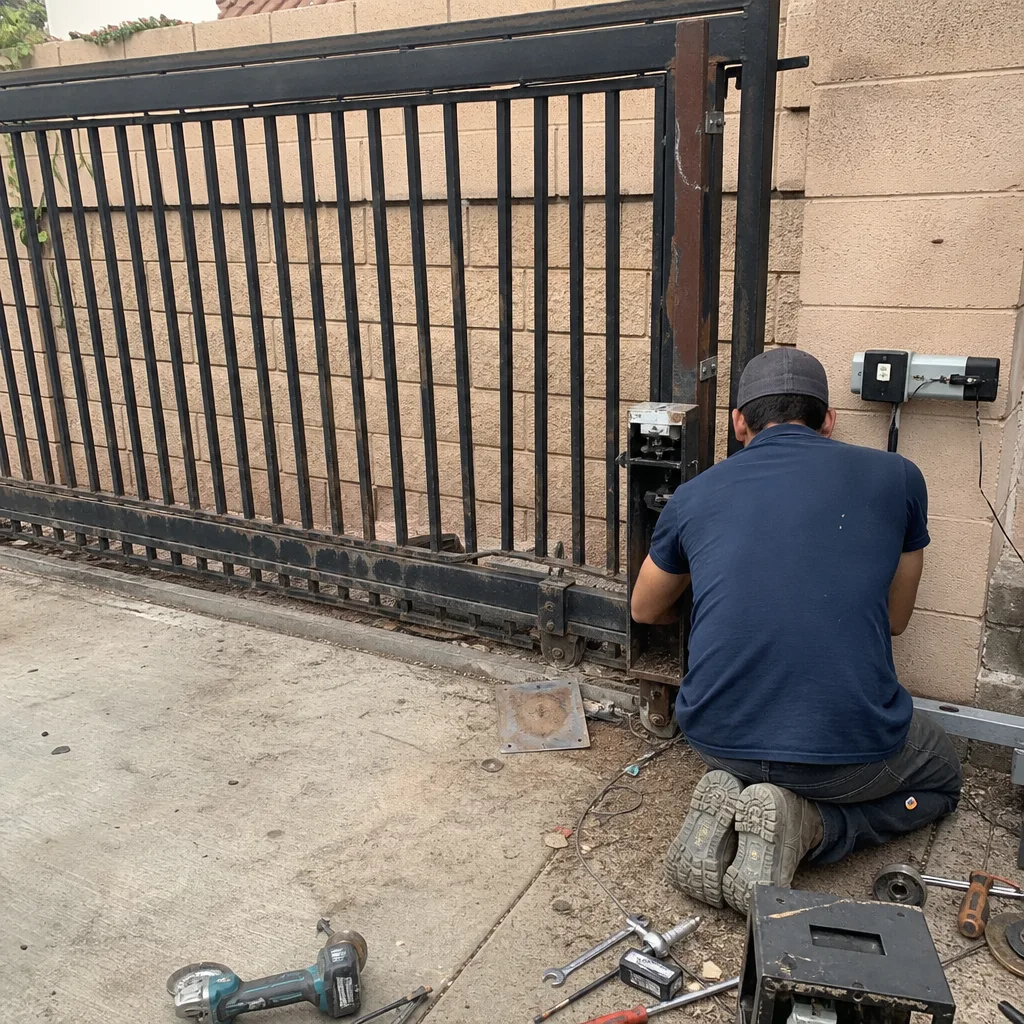 Before
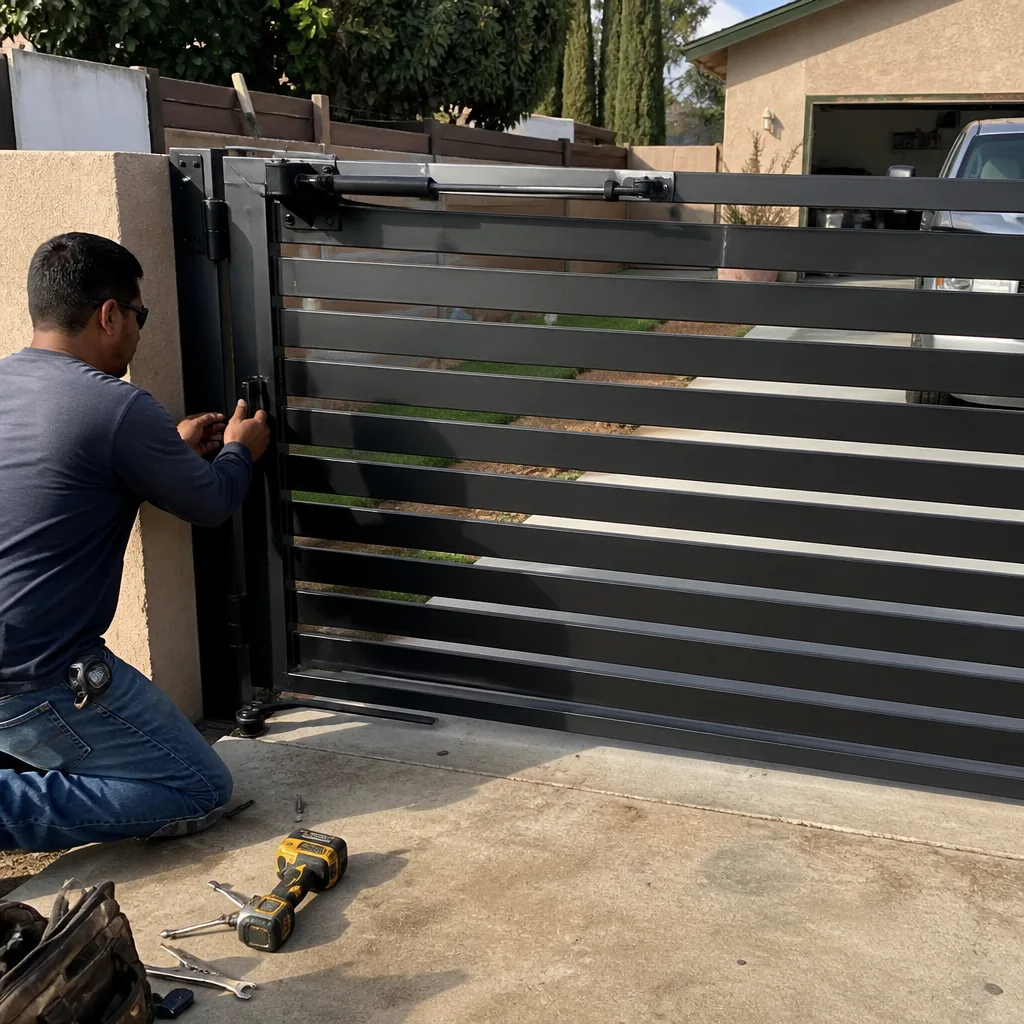 After
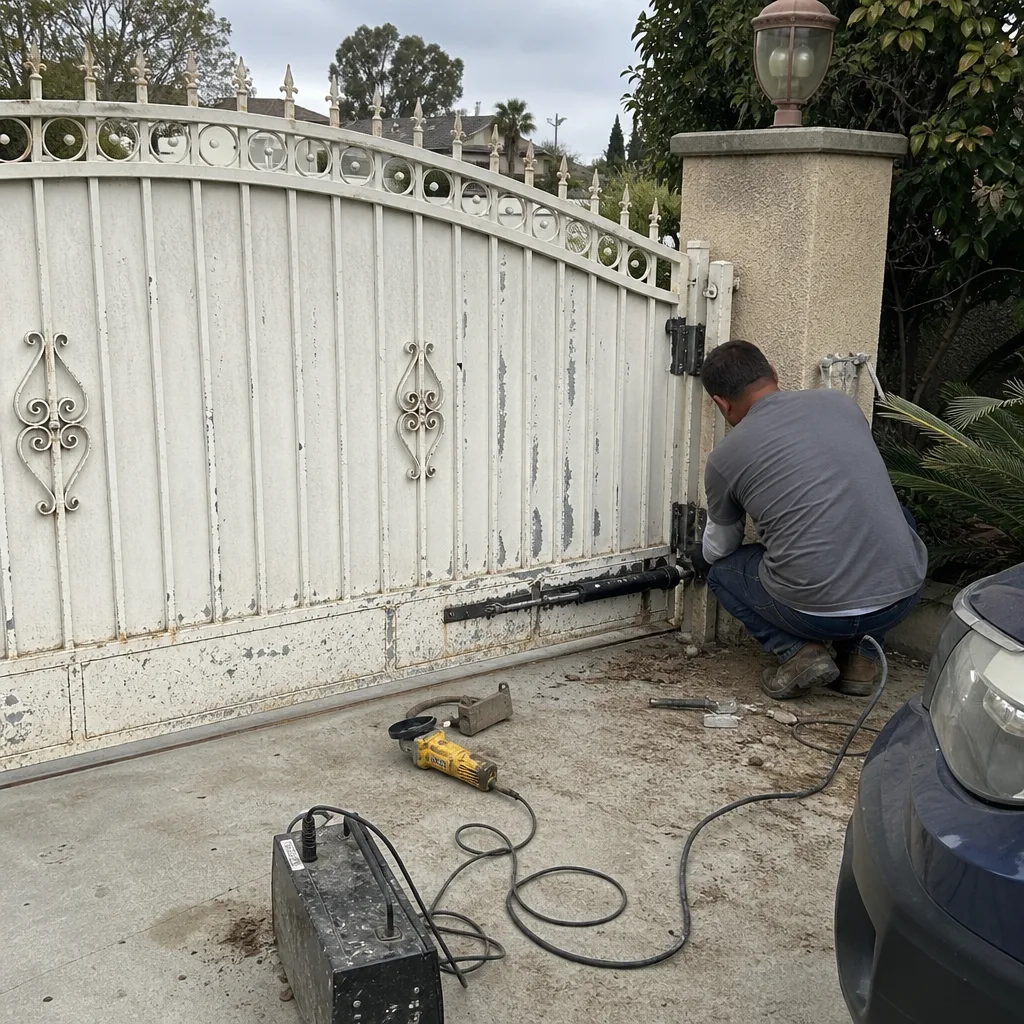 Before
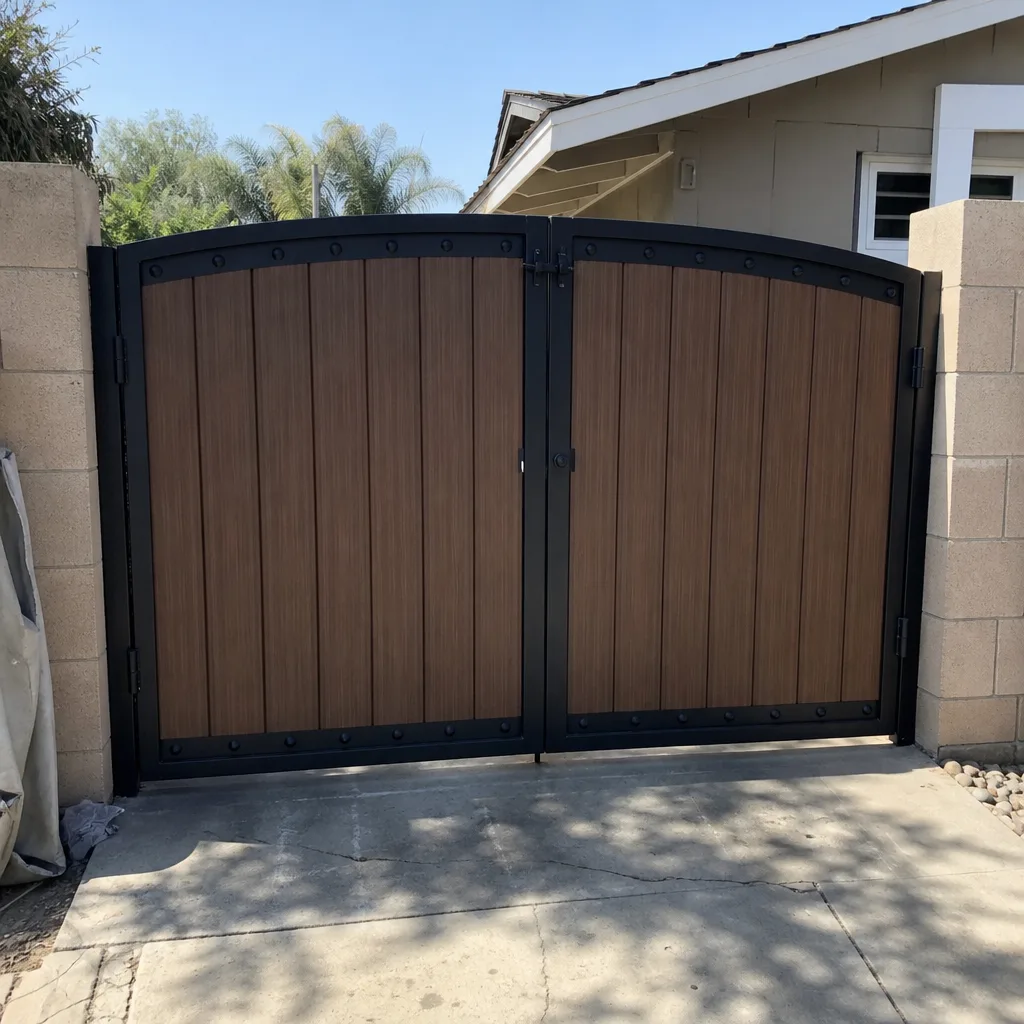 After
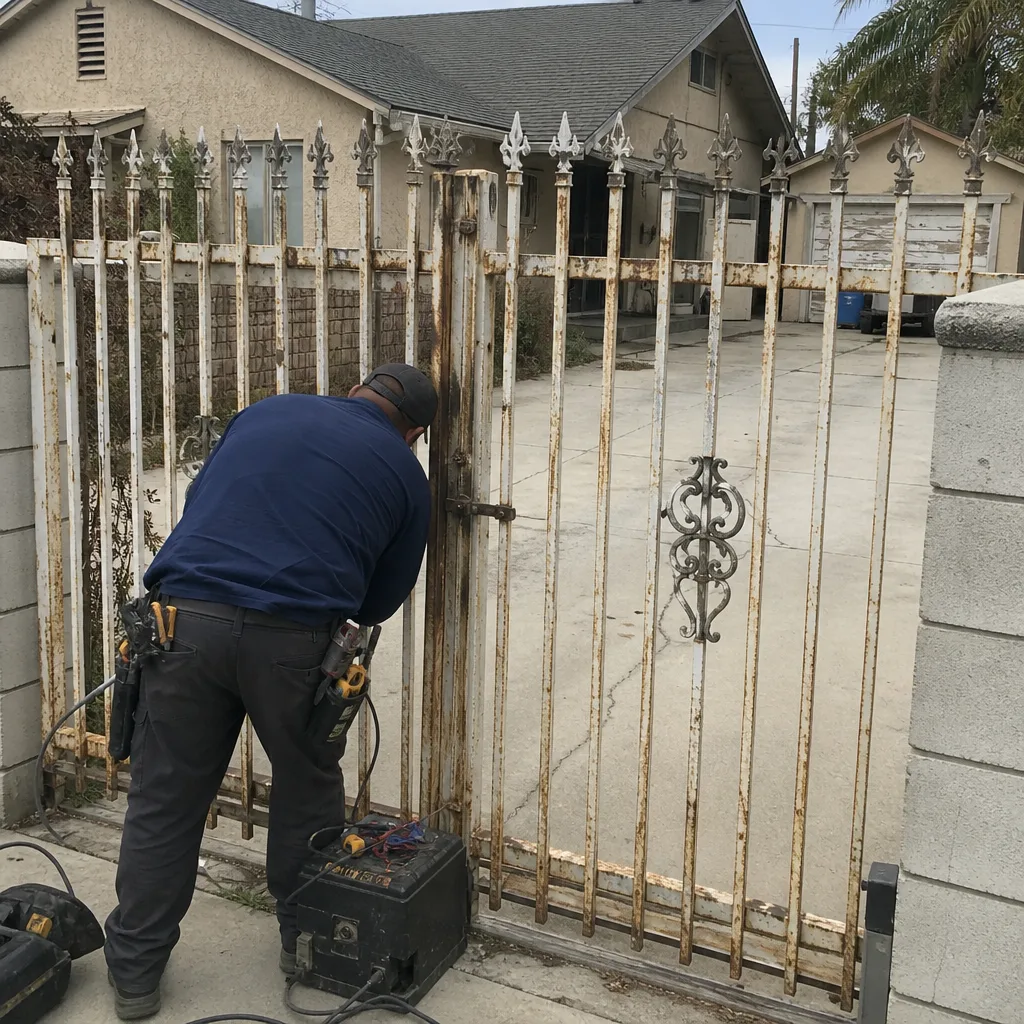 Before
 After